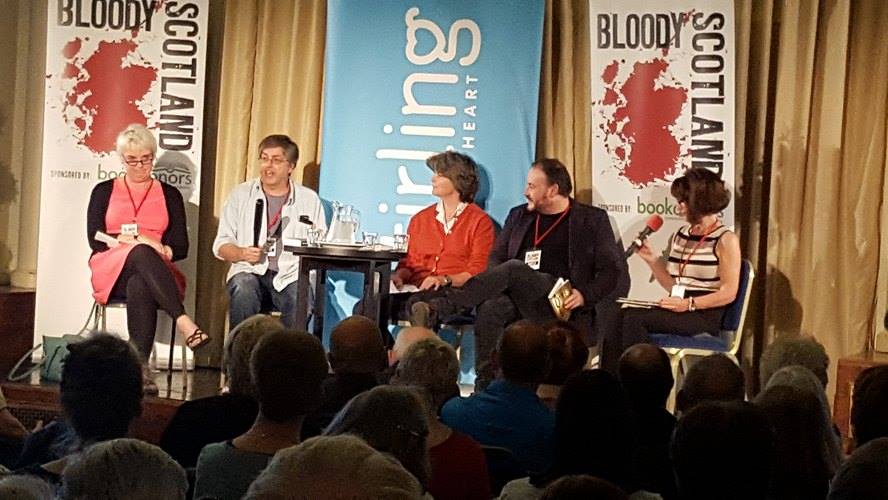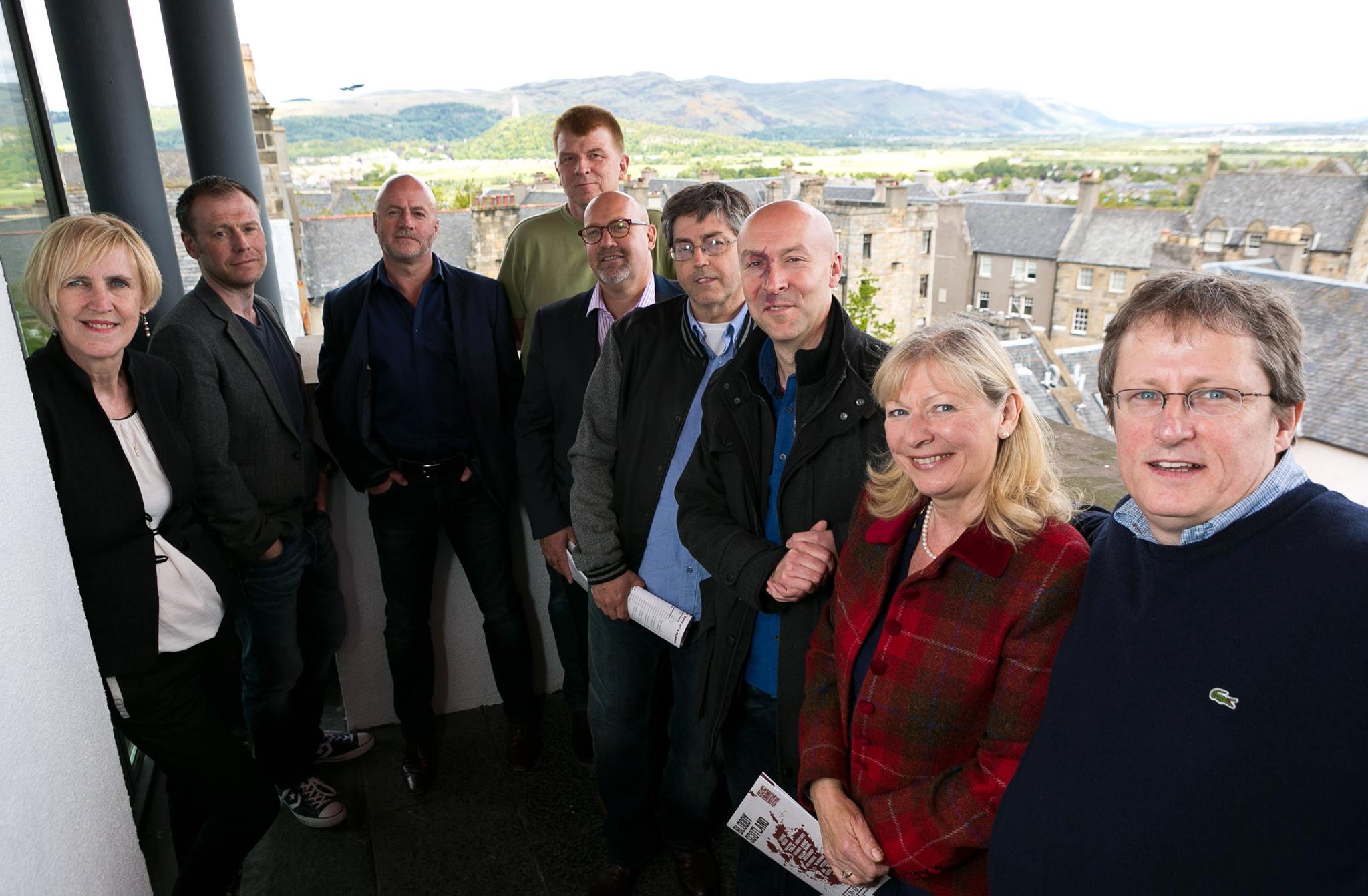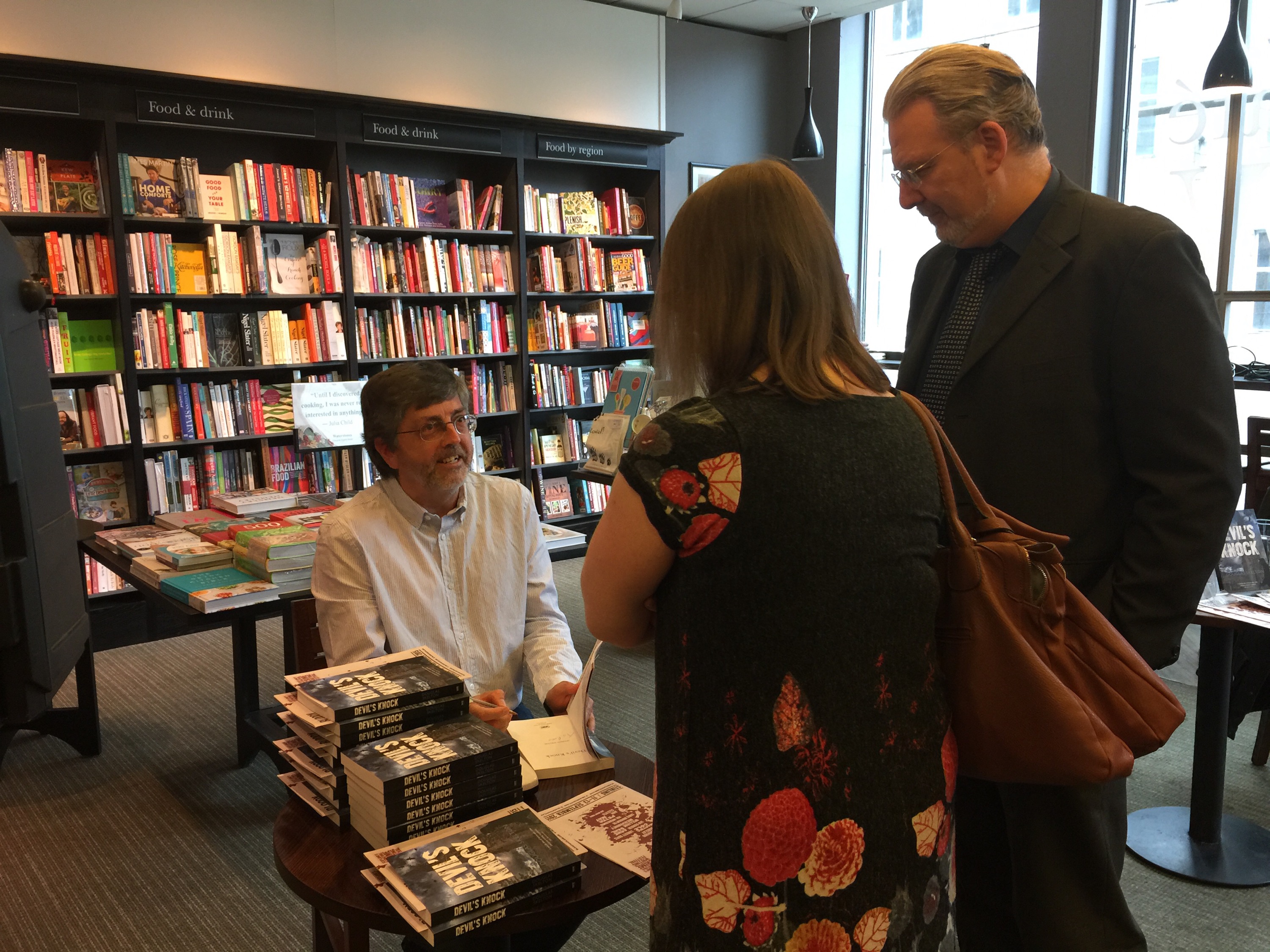
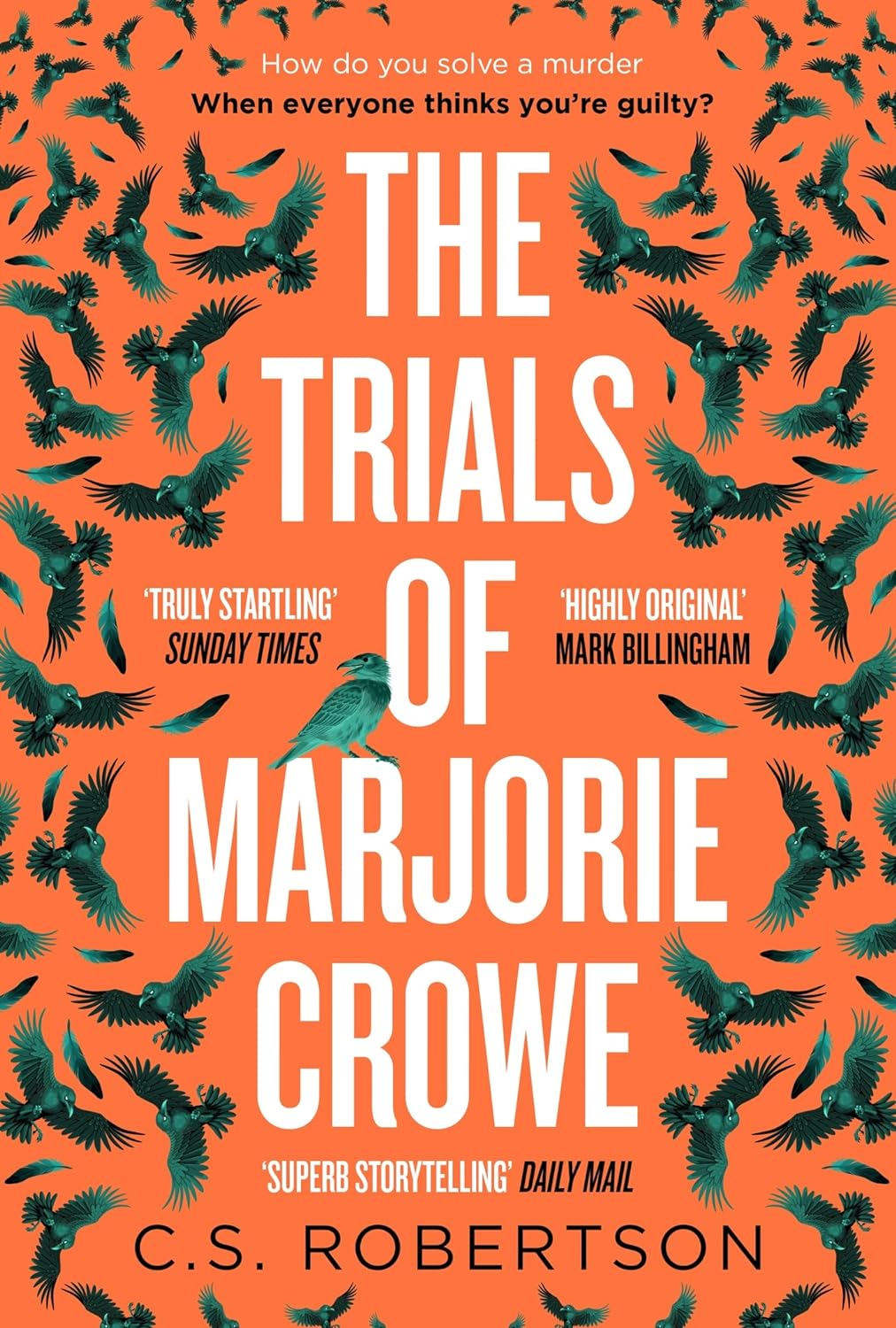
I recently chaired in the Book Nook, Stewarton, author Craig Robertson whose new book ‘The Trials of Marjorie Crowe’ is a crime story that features accusations of witchcraft and a crazed witch hunt by social media. In chatting to Craig I recalled my brief account of the witch craze in Scotland, when thousands of innocent people were tortured and put to death on evidence that would be charitable to term spurious.
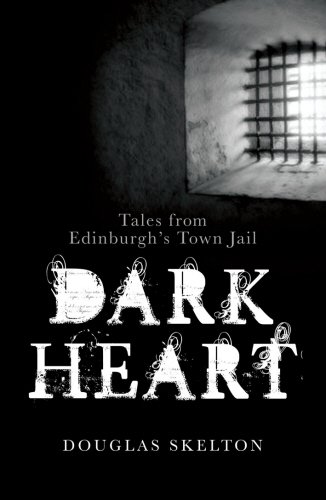
I’ve dug the material out from my unedited manuscript of DARK HEART (now out of print), my non-fiction account of the Edinburgh Tolbooth where many of those accused of witchcraft were held and suffered before execution.
NOTE: Parts of this account may prove disturbing.
Part one
IN the late fifteenth century, the Church of Rome was becoming increasingly concerned with the growth of heresy and so a Papal Bull was issued by Pope Innocent VIII in order to stem the flood of souls being seduced by the dark side – witchcraft and Satanism. This led to the creation of the Holy Office, or the Inquisition as it is more popularly known, which famously found in Queen Isabella of Spain a willing patron and in the Dominican friar Tomas de Torquemada a more than willing instrument of terror.
The book used by the holy men of the Inquisition as a guide to rooting out those who had fallen under the glamour of the Devil and all his works was the 1486 bestseller Malleus Maleficarum, the ‘Hammer of the Evildoers’ or ‘Hammer of the Witches’. Its authors, Jacobus Sprenger and Heinrich Kramer, were a pair of German friars who had grown concerned over the high level of heresy in their own country. This hefty volume – running close to a quarter of a million words – taught would-be witch hunters how to spot dabblers in the Black Arts and how to put them to the question.
Fear of witchcraft even reached the shores of Scotland, although many of the earliest recorded cases seem to have been motivated more by love of money or power than a love of Christ. A popular theme was an accusation of threats against the King, as in 1479, when John Stewart, Earl of Mar, was accused of trying to harm James III by melting a waxen image. The fact that the Earl was the King’s brother did not help him, for he was imprisoned in the Castle where he bled to death while overly enthusiastic doctors applied leeches to combat a fever. The King’s other brother, Alexander, Duke of Albany, was also accused but he showed just how slippery he could be when he killed his guards and drooped down the rockface on a rope made out of bed sheets. A page boy who escaped with him broke his legs in a fall and Albany carried him to Leith from where he escaped to France. He did not return until James was imprisoned by his Barons. Meanwhile, the man who made the allegations, Robert Cochrane, became Earl of Mar, which was no doubt his plan all along. He received his comeuppance during the Barons’ rebellion, when he was among the King’s supporters executed in Lanarkshire.
In 1535, Lady Jane Douglas was accused of conspiring by means of sorcery to poison King James V. The accusation was levelled by William Lyon, a relative of her first husband, Lord Glamis, who had quite fancied becoming her second husband. However, she had rejected his suit and married another kinsman, Lord Lyon. The accusation was taken seriously and Lady Jane, her husband, her son and the family priest were brought to Edinburgh to face trial. There was some misgiving about the whole proceedings, but William Lyon seemed to have considerable pull for he convinced the courts to torture the accused on the rack until they confessed. Lady Glamis was then carried to Castle Hill where she was chained to the stake and burned alive, barrels of tar and rags dripping in oil piled up around her as an accelerant. Like Albany over fifty years before, her husband attempted a daring escape from his cell in the Castle but, unlike Albany, fell to his death. Later, William Lyon’s conscience moved him to confess that his accusations had been false.
By the 16th Century, Europe had suffered almost two hundred years of Church-sponsored terrorism in the form of the Inquisition. Scotland, of course, would have no truck with such Papist hocus-pocus because, by that time, the country was rabidly Calvinist. That did not mean it denied the existence of witches, for the Presbyterians were not slow to unleash the wrath of God on anyone who did not follow their path. Duringthe reign of Mary, Queen of Scots, the first laws were introduced to curtail witchcraft. An Act of Parliament, passed on 4 June 1563, stated that: ‘Nae person take upon hand to use ony manner of witchcrafts, sorcery or necromancy, or give themselves forth to have ony sic craft or knowledge thereof, there-through abusing the people …’ It also stated that no person should ‘seek ony help, response or consolation at ony sic users or abusers of witchcrafts …’ Of course, it ended with the customary admonition ‘on pain of death’.

And there was a great deal of pain and death awaiting anyone accused of being in league with the Devil. Torture was commonplace and it was used with some glee in trying to extract confessions from the accused. The authorities believed that traffickers with Satan did not act in isolation and so they felt it their duty to subject any person suspected of being a witch or wizard to the direst of tortures to loosen their tongues and name names. Women had their heads shaven, were stripped naked and thrown into the coldest cell of the Tolbooth where the gaolers delighted in beating them, starving them, depriving them of sleep and tormenting them by applying lit candles to their flesh. They could be ‘thrawed,’ during which a rope was wrapped around their head and tightened. Their nails could be wrenched off with pincers, or needles pushed under them. They could be whipped and branded. A leg could be encased in an iron brace and the brace placed into a fire and the fire stoked until the metal grew white hot and roasted the skin. They could be thrown into deep water to sink or swim. If they sank and drowned they were deemed innocent. If they did not then they were guilty. In Edinburgh, the Nor’ Loch (now the site of Princes Gardens and Waverley Station) was the favourite spot for this punishment. It was also, incidentally, a handy spot to exact swift punishment on less occult-based malefactors found guilty at night courts. Finally, whether or not the witches had confessed – although generally they had – and whether or not they had implicated others, they would be burned at the stake, just like Lady Jane Douglas. Some were lucky to be first ‘wirreit’ – strangled and then burned – but others were ‘burnt quick’ which often meant being put in a tar barrel and burned alive.
It was in the time of Mary’s son, James Vl in Scotland and James l everywhere else, that the line ‘Thou shalt not suffer a witch to live’ may well have been inserted into the Bible when what was to become known as the Authorised Version was being written. He may have been ‘the wisest fool in Christendom’ but Jamie the Saxt was obsessed with the Black Arts, which he deemed ‘a synne most odious’ and that Old Testament line gave those of a holy disposition just cause to stamp out anything deemed unholy. Intelligent he may have been, but James was a paranoid, suspicious little man, often with good cause, and the machinations of witches and warlocks were yet another threat to his wellbeing. He even wrote a tract on the subject called ‘Daemonologie’ which, along with the ‘Malleus Malifecarum’, became something of a ‘How To’ handbook in the seventeenth century for the growing body of witch hunters.
Superstition, jealousy, greed and religious fervour could all come into play during witchhunts. Single women living alone could be accused of being witches. If they used natural remedies – the old ways – to heal human or animal, they could be accused of being witches. If they were attractive and turned the heads of married men, they could be accused of being witches. Of course, it may well be that some of the accused probably did believe themselves to be in league with Devil, whether through insanity, substance abuse or mass hysteria. Then, of course, they might actually have been witches or, rather, adherents to ways older than the Christian Church. Like many a religion, Christianity has often shown itself less than keen to tolerate older beliefs and what traditions it did not welcome into the embrace of its own customs (for instance, Hallowe’en, Easter and even Christmas) it declared anathema and resolved to root them out.
In 1590, in Tranent, East Lothian, a local Baillie and landowner suspected a servant girl of being a witch – and set in motion one of the most infamous, and far-reaching, witchhunts in Scottish history. Before it ended, over 70 people were accused of being part of a coven that threatened the life of the King and his new wife, and by extension, the security of the nation. Before it ended, blood was shed in the Tolbooth and screams heard on the Castle Hill as people succumbed to the executioners’ rope or roasted over an open flame. Politics once again reared its ugly head as a powerful nobleman who scared the little king was accused of being at the centre of the plot.
(To be continued)