

Way back in 2001 I went on a space odyssey. The space in question was Scotland and the odyssey was research for a book called ‘Devil’s Gallop.’
I’d written a few true crime books by then, including the epic task that was ‘Frightener’, the campaigning book about the so-called Ice Cream Wars.
I wanted to do something lighter. I wanted to be fun and frothy. But, being me, I still wanted to deal with dark subjects.
The result was ‘Devil’s Gallop’, a series of trips into Scotland’s dark and bloody past laced with a liberal dose of humour. The idea was to outline what people could see on a series of tours from Glasgow all over the country that were of a bloody nature – whether fact or myth – but get some fun out of it. Horrible Histories was then only just taking shape and I thought the jokey nature of the approach was novel. I enjoyed doing it but the result was patchy at best and Bill Bryson has very little to worry about.
The book is now out of print so every now and again I’ll post a wee snippet along with a photograph of the location in question.
This first one occurred to me yesterday as I drove to Kirkcaldy and I passed the monument at Kinghorn. People drive past these things and never wonder what they’re for.

DEATH OF A KING
A short distance from Burntisland, a tall memorial marking the spot where Alexander 111 was found dead looms over the Firth of Forth.
This was the event that led to the rise and fall of William Wallace, the bloody wars of Independence and the emergence of Robert the Bruce as a nation’s hero.
Alexander had come to throne in 1249, when he was just eight years of age. Whilst on the throne he had done much for his country, most notably defeating giving the Vikings a bloody Norse at Largs in 1263.
He also formed an alliance, albeit an uneasy one with much sticking out of tongues, with the English king Edward Plantagenet by marrying his sister Margaret.
She gave him two sons and a daughter but Alexander outlived them all.
Then, in 1285, he married Yolande, daughter of a powerful French noble.
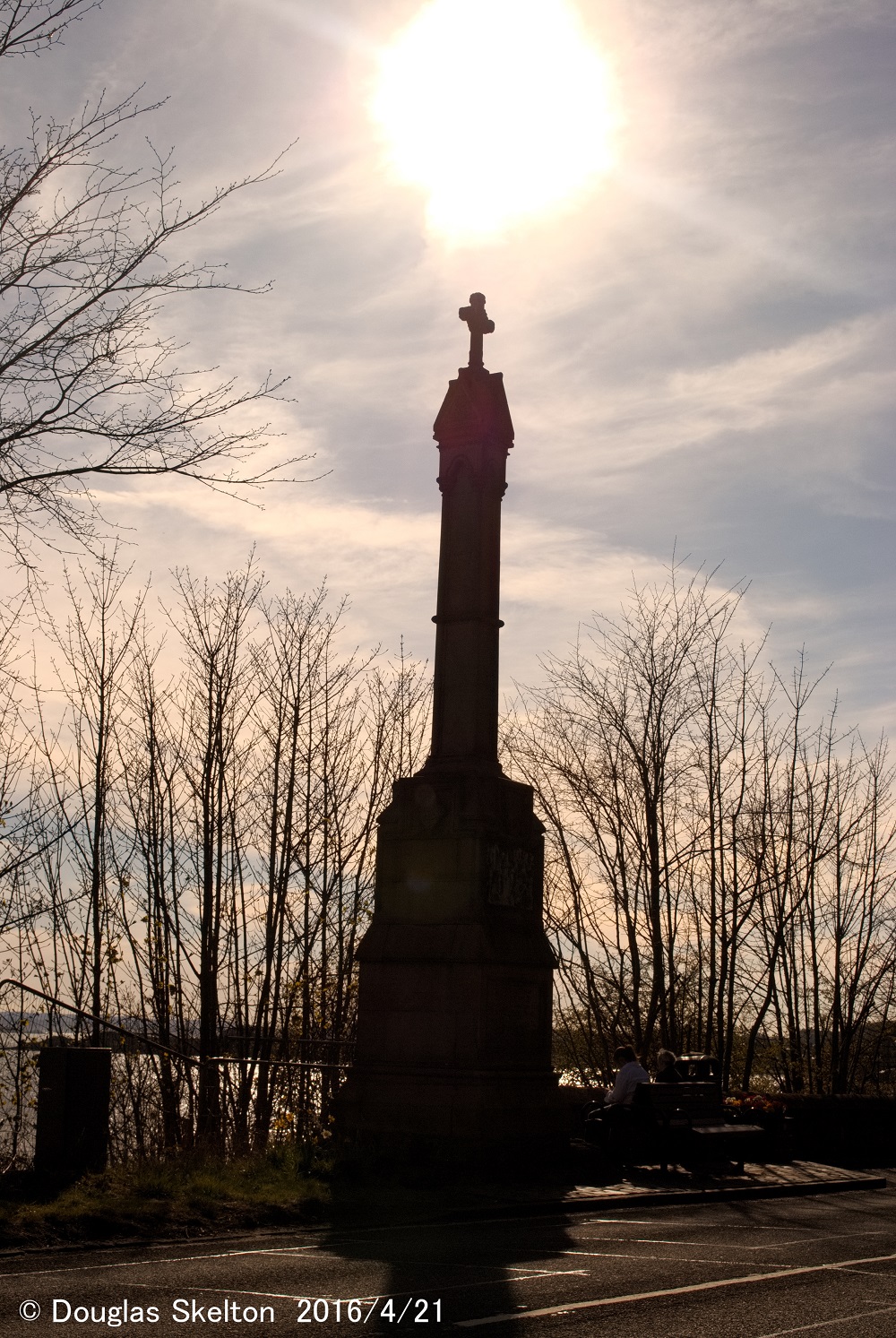
On 18 March 1286, Alexander left Edinburgh to travel across the Forth to Fife, where his young wife was waiting at Kinghorn Castle (of which nothing now remains).
The weather was filthy and the ferrymen had to be bribed to take the king across the choppy waters. Once safely on the other side the King dashed ahead, no doubt eager to get down to the business of providing the nation with a male air by entering the promised Yolande. That gives the name Kinghorn a whole new meaning.
But on the cliffs above where the monument now stands his horse stumbled and the king was thrown from the saddle to his death on the shore below. He was the last of Scotland’s Celtic kings.
The question remain, though – did he fall? Or was he pushed?
