

I recently chaired in the Book Nook, Stewarton, author Craig Robertson whose new book ‘The Trials of Marjorie Crowe’ is a crime story that features accusations of witchcraft and a crazed witch hunt by social media. In chatting to Craig I recalled my brief account of the witch craze in Scotland, when thousands of innocent people were tortured and put to death on evidence that would be charitable to term spurious.
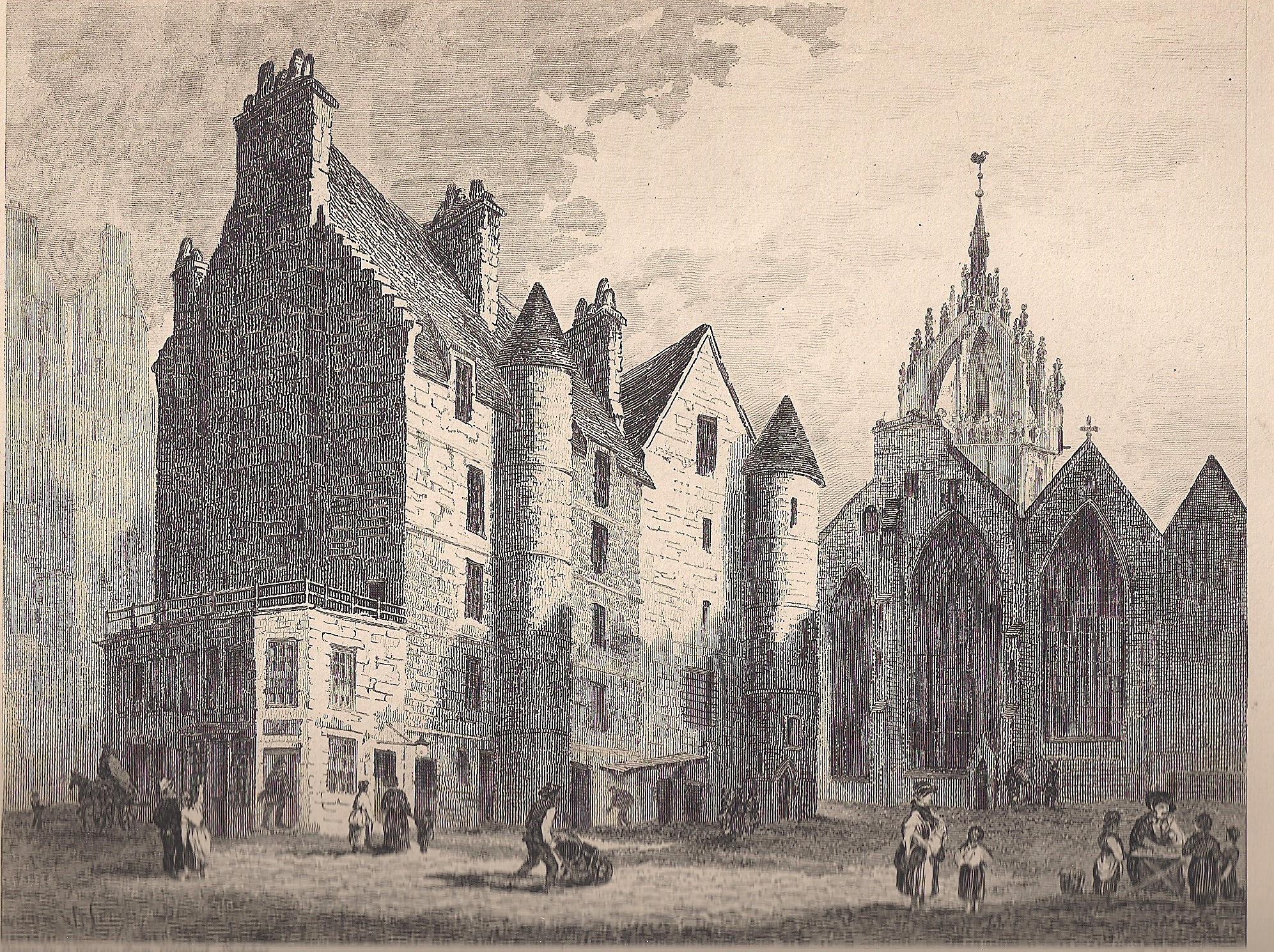
I’ve dug the material out from my unedited manuscript of DARK HEART (now out of print), my non-fiction account of the Edinburgh Tolbooth where many of those accused of witchcraft were held and suffered before execution.
Here I look at the notorious North Berwick witch trial.
NOTE: Parts of this account may prove disturbing
Part 2
Serving-girl Geillis Duncan was young, she was pretty and she had one particular skill – she could heal the sick. Her ability to bring comfort to the ailing, and her habit of sneaking out at night, aroused the suspicion of her master, David Seaton. He felt duty-bound to investigate the notion that her arts were more occult than Hippocratic, although why the Devil would give his followers the ability relieve suffering is a bit of a puzzler. So, pretty young Geillis was put to the question. Seaton had her arrested and interrogated regarding her alleged involvement in sorcery. The girl denied the charge but that was not enough for the good men of Tranent and so the pilniewinks were brought into play. This device, bastard kin to the thumbscrews, saw the girl’s fingers wedged between two plates of iron which were then tightened by means of a screw until the flesh ruptured and the bones fractured. It was, as was noted at the time, ‘a most grievous torture’ but still the girl would not break. Then a search was made of her body for the Devil’s Mark, a part of her body that was impervious to pain and did not bleed. It could be something as simple, not to mention commonplace, as a birthmark or even a mole. Unsurprisingly, such a spot was found on her neck. She was thrown into a Tolbooth cell where she was further tormented until her spirit was broken and she freely admitted being in league with the Devil. In addition, she named others as being in her coven.
So began the North Berwick Witch Trials. In the weeks and months that followed, around 70 people, mostly women, were rounded up and questioned. The best known of the women implicated was Agnes, or Annie, Sampson, a local midwife. Like Geillis before her, this seemingly respectable woman stoically denied all the charges against her. Only at first, though, for she was ordered to be taken to the Tolbooth where she was to ‘receive such torture as hath lately beene provided for witches.’ She, too, was ‘thrawed’, deprived of sleep and forced to wear the ‘witches bridle,’ a special version of the ‘branks’ or ‘scold’s bridle’ which were reserved for nagging, gossiping or blaspheming women. An iron frame was fitted over the head and a spiked metal gag thrust into the mouth that could pierce the cheeks, tongue and palate. She was denied food and water and led around by a chain attached to the branks, each tug of which would have been agony. When a search was made of her naked body, a Devil’s Mark was found on her private parts and she finally confessed all. She was found guilty of 53 counts of witchcraft, including healing the sick. She was to be bound to a stake and strangled until she was dead, and thereafter her body burned to ashes, all her moveable goods were forfeit and brought ‘in to the use of our sovereign lord.’ So, James not only got rid of a cadre of demonic plotters, but also topped up the Royal coffers.
Coven membership was truly republican in nature, for it not only numbered serving-girls and midwives but also reached into some of the highest echelons of local society. Barbara Napier was the widow of the Earl of Douglas who held the imposing Tantallon Castle near North Berwick. She was accused of having used her Black Arts to murder her husband by mysterious means in 1588. She was acquitted of that charge but was found guilty of consulting with witches. She avoided the direst punishment by ‘pleading her belly’ – in other words she was pregnant. Leniency was later shown when she was released, although James was sharply criticised for sanctioning this by ministers who said that he and his council were not assisted by God in reaching the decision. The reason for God withholding the wise council of killing the woman, apparently, was ‘because (the King) had not repented sufficiently for his former sinnes.’ Another accused, Euphame Mackallean, or Maclean, was the daughter of dead Court of Session judge Thomas Mackallean. This did not help her in the end, for she was found guilty of nine counts, including using sorcery to murder a child and treason. She also tried to escape the stake by claiming she was with child but she was either lying or not high-born enough for she burned, screaming her innocence, on 25 June, 1591.
It was not just women who were accused. Men were also named and no leniency was shown. According to the testimonies elicited from the tortured women, one of the principal warlocks of their coven was Prestonpans schooteacher Dr John Fian (often spelled Fean, Fain, Fane or Feanne), or Cunningham. Little is known of his early years – but his death is well-documented. He managed to escape shortly after his arrest, which was a mistake, for when he was recaptured, he was taken to the Tolbooth where he was subjected to what an English witness described as ‘a most straunge torment.’ Needles were driven under his fingernails ‘even up to the heads’. The nails were then pulled off using the ‘torkas’, a set of pincers peculiar to the Scottish torture chamber. He refused, even then, to confess to being part of the coven, and so they resorted to the ‘bootes’. They hammered in wedges one by one but he refused to tell them what they wanted to hear, so they hammered in more until ‘his legges were crusht and beaten together as small as they might bee; and the bones and flesh so bruised that the bloud and marrow spouted forth in great abundance.’ Naturally, he confessed all. That confession was retracted when it came to his execution, although he did confess to adultery with thirty-two women.
Among the charges of which Dr Fian was found guilty were one of being approached by the Devil while in a house in Tranent (the Devil unaccountably, being dressed in white) and of being marked by him with a white wand, which sent him into ecstatic trances (some of which were witnessed by the King during questioning). He was also guilty of abusing his body with a widow but, at Satan’s command, refusing to marry her. He was also transported from his bed in Prestonpans to North Berwick Kirkyard where he and others, including Agnes Sampson, paid homage to the Dark One. In addition, he was found to have moles’ feet in his purse which ensured he never lacked money.
Another man arrested, Robert Grierson, or Greyson, died ‘it is thought by the extremyty of the tortours applied to him. He hath confessed litle, and yet it is said by the rest that he was pryvy to all their accions.’
James VI took a great interest in the proceedings, even going to the length of questioning Agnes Sampson and Dr Fian himself, during which the accused told some incredible stories. The reason for the King’s fascination was simple – the brutal investigation had apparently uncovered a conspiracy to kill him and his new Queen, Anne of Denmark. In October 1589 he had sailed from Leith to bring her back for the wedding but rough seas delayed the return trip – and when they did finally set sail in May 1590, a storm blew up that threatened to swamp the ship. The Royal couple survived but when he heard that it was the North Berwick witches who had summoned the tempest, at the behest of Satan himself, he was beside himself with rage. The same storm, in September 1589, sent a ferry running from Burntisland to Leith to the bottom of the Forth.
In November 1590, a letter was sent to Lord Burghley in England, saying ‘The King and Counsaill is occupied with the examinaciouns of sundry witches taken in this contrye, and confessing both great nombers and the names of their fellowes; and also strange and odiouse factes done by them …’. Later, the same correspondent described the actions of the accused as ‘ filthy, lewde, and phantasticall.’
According to the wild tales told under torture, the Devil had appeared to them, ‘his body hard lyk yrn; his faice was terrible; his nose lyk the bek of ane egle; gret handis and feit lyk the griffon, and spak with a low voice.’ He took them out to sea in a ship ‘lyke ane chimnay’, which sounds like a demonic steamship, and there they threw a cat into the waves. This poor feline had already had its paws knitted to the private parts of a dead man, been drawn through a fire nine times, one for each life, and christened as the King. This apparently summoned the gale that was to kill the Monarch and his wife, although, in the end, James’ tremendous piety saved him from a watery grave. They then retired to the kirkyard at North Berwick, as they had done on other occasion, access gained by using the ‘Hand of Glory’ – cut from the corpse of a murderer, stuffed with herbs, pickled, dipped in wax and used as a candle. The hand could open any lock and protect the user from being observed. Here they danced to the sound of pipes and the Jew’s Harp (dancing was seen by the Calvinists as the work of the Devil) and their Dark Master appeared to them again. They feasted on the flesh of the dead before Satan, they said, ‘caussit them to kiss his erse.’ Unsurprisingly, it was described as ‘cauld lyk yce’
The witches also gave the King details of the pillow talk between the royal newlyweds on their wedding night, which proved that some dark magics were being employed in the nation.
The conspiracy did not end there, for – perhaps conveniently – the witch hunters uncovered yet another name, one that may well have struck fear directly into the King’s heart, and that was Francis Stewart, Earl of Bothwell. nephew to Mary Stuart’s third husband. The Bold Earl was, like his uncle, a free-booting Border lord, part rebel, part outlaw, fond of violence although in his case prone to madness. He shared with his uncle a fondness for action, once even storming the Tolbooth to free one of his men. He disliked the King and had little respect for him, once famously bursting in on the little monarch while he was on the toilet. Some of the witches claimed that the attempt on the lives of the King and Queen were made at his insistence. It was convenient for James that Bothwell had been implicated in the witch conspiracy for it gave him the excuse he needed to have him arrested again. Agnes Sampson, for one, had been forced to claim he was in league with the Devil. Another man arrested, Richard Graham, claimed that the border lord had sent him money while he waited in prison and told him to stand fast to the denial that Bothwell had any part of the conspiracy.
Bothwell himself insisted that he be heard in answer to the charges against him. He denied them as ‘incredible and unnatural accusations’, demanding trial by combat. No-one came forward to answer his challenge. He admitted he had acquaintance of Graham and to receiving a ring from him ‘of sundry colours’ which he was told had clairvoyant powers. Graham, it was said, had healing skills that could only be learned through following the dark arts. Bothwell knew of this and said he had sent Graham to tend the sick Earl of Angus – whose death prompted the charge of murder by witchcraft against Barbara Napier. On another occasion, Bothwell said he had met Graham who showed him ‘a sticke with nickes in yt, all wrapped about with long heire eyther of a man or a woman, and (Graham) said yt was an enchanted stick; to which speech I gave small regard.’.
The King dithered over bringing the swashbuckling border lord to trial and eventually decided that he merely be outlawed. In June 1591, it was proclaimed that Bothwell ‘for the bettir executioun of his wickit intentioun and tressonabill conspiracie aganis his Majesteis awin persoun, had consultatioun with nygromancris, witcheis, and utheris wickit and ungodlie pirsonis, bayth without and within this cuntre, for bereving of his Hienes lyff, confessit be sum of the same kynd alreddy exceute to the deid and sun utheris yit on lyve reddy to be execute for the same cryme.’ The Earl was to be banished from the realm, never to return unless by permission of the King. The reasoning behind this was that nowhere was secure enough to hold him – and he had too many powerful friends ready to come to his aid. In February 1592, Richard Graham, described as an ‘arch-sorcerer of the day’, was executed. Right up until he was throttled to death on the stake at the Cross, he continued his assertions that Bothwell had used magic to bring about the King’s death.
Bothwell returned to Scotland without permission and in 1592 raided Falkland Palace in a bid to kidnap the King. In August 1593, he was finally brought to trial on the witchcraft charges and cleared. He proved to the Lords judging him that Graham’s evidence was false, pointing out that by executing the man, they showed they did not believe him. He called many ‘diverse honest men of Edinboroughe’ to testify that Graham had told them that ‘he must eyther accuse the Erlse Bothwell falselye, or else endure such tormentes as no man was able to abyde.’ Graham’s brother said that Richard was forced to make the allegations out of ‘feare of maymynge with the bootes and other tortures.’
Bothwell ended his days in Italy, penniless, and reduced to performing conjuring tricks. The King could not punish the Earl but revenge could be wreaked on his brother, Hercules Stewart. Much to the chagrin of the mob, who believed Stewart was ‘ane simple gentleman, and not ane enterpriser’, he was arrested, tried and convicted for being concerned in the treasonous crimes of the exiled Earl and on 18 February 1595 was hanged at the Cross. As his struggles ceased, he was cut down and carried to the Tolbooth to be dressed for his funeral but after a short while he began to move. Word was sent to the King to request a reprieve but orders had already been given that the man was not to survive. In the Tolbooth, just as he had a second chance at life, Hercules Stewart was throttled to death by Royal command.
The uproar died and the ashes of the dead cooled, yet the fear of witches continued. James unified his Scottish Crown with that of England in 1603 when Elizabeth I died and he took his paranoia with him to London, In Scotland, other women were declared witches, tortured and executed until the Witchcraft Act was repealed in 1735. Until then, witch hunters ran rampant, unscrupulous men who often used the superstition and religious frenzy of others to line their own pockets. The most notorious in England was the so-called Witchfinder General Matthew Hopkins. In Scotland, the most infamous was John Kincaid, from Tranent. He was a ‘pricker’, a seeker of the Devil’s Mark. Prickers were paid according to the number of witches they exposed and some used trick needles that retracted into itself when placed against the skin. Others used sleight-of-hand to make it look as if the pin was being pushed in. A few, like Kincaid, had such knowledge of the human anatomy that they knew how and where to insert their needle without causing pain. He, and others of his ilk, were much in demand but their activities brought disquiet to the more level-headed men in power. In 1662, Kincaid was imprisoned in the Tolbooth for ‘unwarrantable pricking of persones suspect of witchcraft.’ However, he was released by order of the Privy Council because he had become ‘ so infirme and diseased of bodie, being ane old man, that if he be not speedilie put to libertie it will be to the great hazard of his life…’
Kincaid was duly ordered not to ‘prick or torture ony persone suspect of witchcraft in tyme comeing without a warrant from the Lords of Counsell or his majesties Justice Deputttis, as he will be answerable to his utmost peril…’. Other notorious prickers in Scotland were John Dick, John Balfour and, according to Dennis Wheatley, a person named Paterson from Inverness who was later revealed to be a woman in disguise.
Edinburgh, though, had not heard the last of demons and devils. Less than 100 years after the flames reduced the last of the North Berwick witches to ashes, the fire of the righteous was lit again. This time, though, the identity of the old Devil was to shock the pious brethren to the very core – for he was one of their own.
(To be continued)
