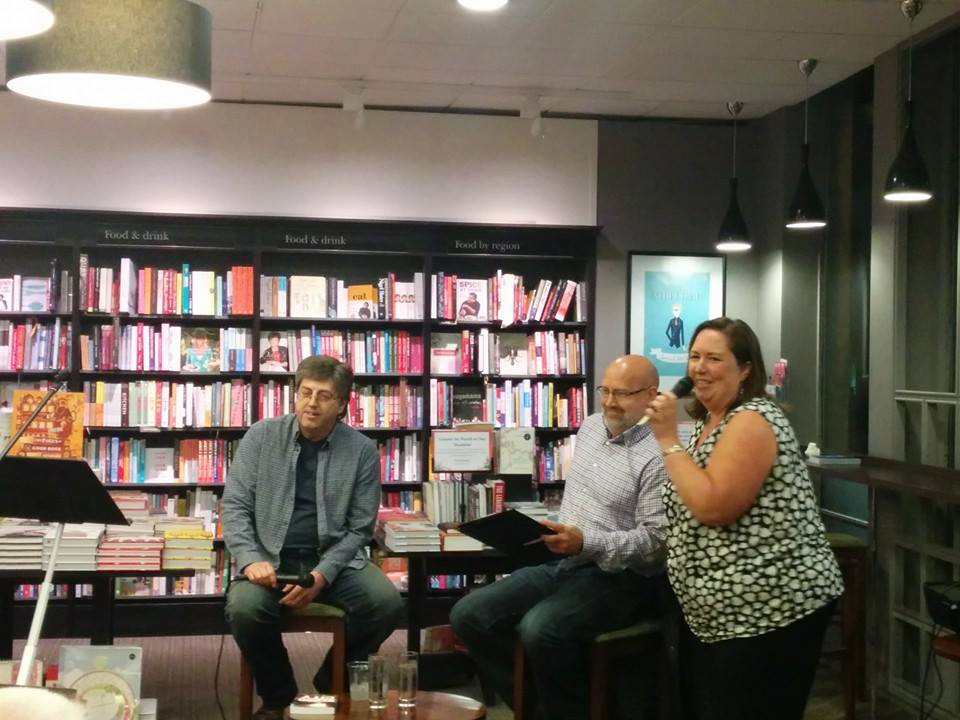
I had a great time in Motherwell Library on Thursday night.

It was part of the North Lanarkshire Encounters Festival, an annual event that attracts some top writers (and me) to venues across the Shire.

The audience on Thursday seemed to appreciate my act and asked a number of great questions.

One was, how risky was it to write books from the point of view of criminals when the majority of the readers are law-abiding?

I didn’t think of it as risky but I know what the person was saying.

The majority of crime fiction, certainly in the UK, is written from the point of view of law enforcement – Cops, private detectives, lawyers, even journalists.

When I started the Davie McCall series I decided not to go that route.

It was already being done and being done very well. There was nothing I could add.

US style

In America it’s slightly different. Yes, you have your cops and private eyes and your hacks. But there is a long tradition of crime fiction focussing on the darker side.

Dennis Lehane’s ‘Mystic River’ is one example. Its central characters all inhabit a twilight world on the edges of legality. As does ‘They Live By Night’ and his latest novel, ‘World Gone By’. And his screenplay for ‘The Drop’ is almost totally focussed on small-time crims.

While British TV still gives us an almost daily diet of small screen coppers, US cable companies have presented us with ‘The Wire’, ‘The Sopranos’ and ‘Boardwalk Empire.’

‘Ray Donovan’ also stumbles over the line into the dark side.

Going back in time, Richard Stark was a regular visitor to that twilight world, as was George V Higgins. Even Ed McBain put his 87th Precinct badge down every now and again to write one-off novels centering on hoods and thugs – ‘Guns’, springs to mind, and ‘Big Man.’
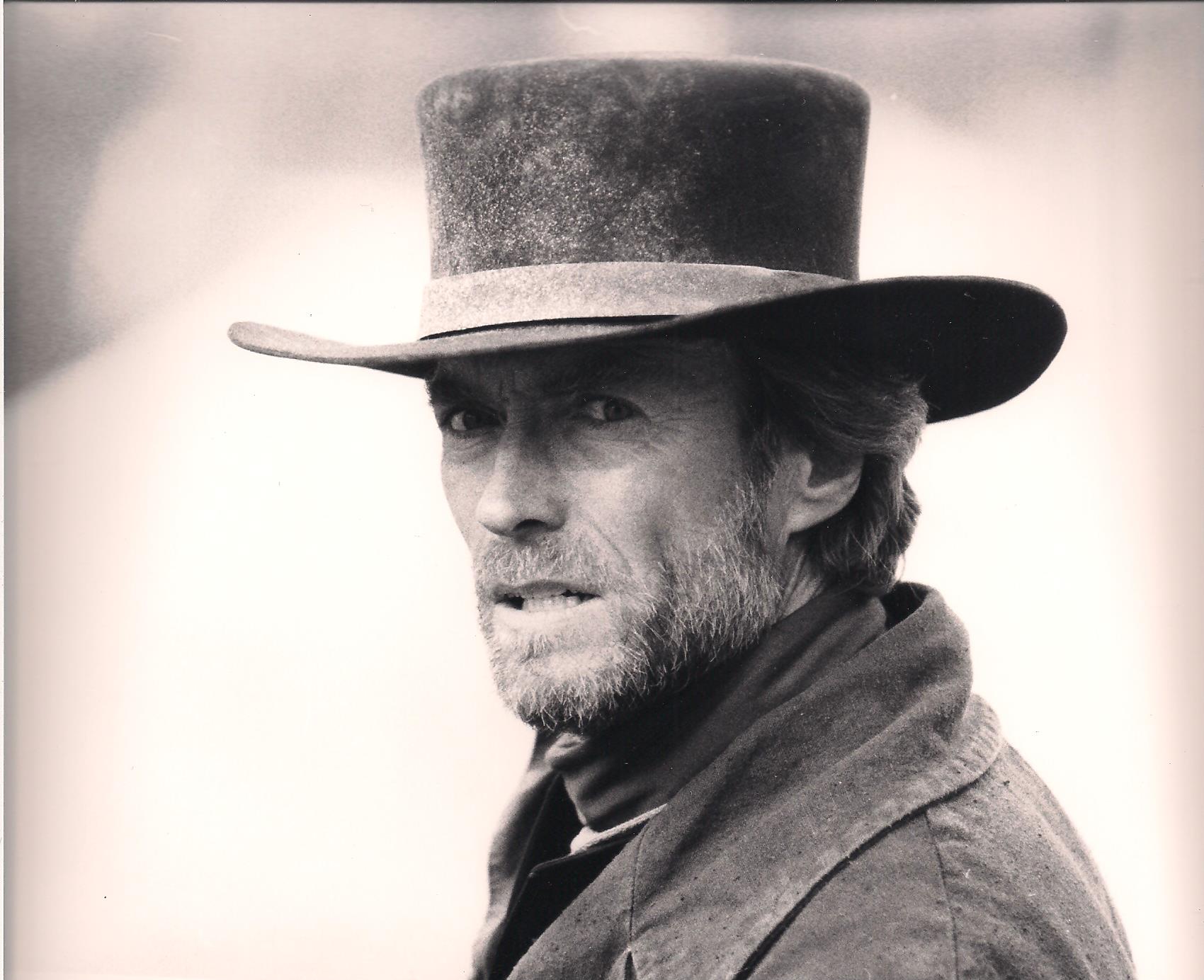
Davie McCall follows in a Western tradition of a man trying to escape his past, like Josey Wales or William Munny, both played by Clint Eastwood

Davie McCall follows in a Western tradition of a man trying to escape his past, like Josey Wales or William Munny, both played by Clint Eastwood

Anti-hero

I do have police officers in the Davie McCall books, and journalists and lawyers. I have crooks and straight arrows, bad guys and good guys and guys you can’t really tell if they’re good or bad.

Another question was whether Davie is based on a real person or an amalgam of people.

My answer was that Davie is a traditional anti-hero – tortured, brooding, with a lot of good in him.

As any regular reader to these musings will know, I’m a huge fan of western movies and I’ve often likened Davie to the gunfighter who wants to take off his belt and hang his weapons away. He’s ‘Shane’, if you like or Josey Wales or William Munny in ‘Unforgiven’ – a man who cannot escape his past.

It’s a theme I’m revisiting in something I’m writing at the moment. It’s a book that may never see the light of day but I’ve just realised that one of the characters is a man with a particular set of skills, as Liam Neeson said in ‘Taken.’

I’d like to thank everyone who came along on Thursday. It was great to meet people who have read and enjoyed the Davie McCall books. They actually get Davie, which is a relief!

Also thanks to the staff of North Lanarkshire Libraries for inviting me along.


So I’ve got a new book coming out. I may have mentioned it once or twice.

Authors can be an anxious bunch at the best of times but more so when they’ve a new title about to hit the shelves.

They’ve sweated over every word, they’ve laboured over every sentence, they’ve strained over every chapter. It’s taken months of blood and tears, of writing and rewriting and chopping and changing and slicing and dicing until, finally, the printed book is in their hands and about to be unleashed on the world.

The launch comes first. That’s when you sit in front of an audience, generally made up of people who know you but ‘proper’ readers are always welcome, and you talk about yourself and your book. They’re fun affairs, very relaxed, and the publishers generally provide free wine, which proves an attraction to friends and relatives who are fed up hearing you talk.

After that, the book’s out there on its own. Your baby, fending for itself with bloggers and reviewers, fighting for breathing room on bookshop shelves, desperate to be face out but often finding itself spine out, until the author or some gallant friends come along and fix things.

Worry lines

I’m sure there are authors who don’t give a tup’penny damn whether people like their books. They may be so certain that people will buy them that they can breeze through this process with a song in their heart and a confident smile on their lips.

I’m not one of them and I don’t know any authors who think that.

I worry. I mean, real worry. I even seek solace in whisky. Okay, I do that even when I’ve not got a book out.

Here’s what goes through my head …

Is it good enough?

Will they like it?

Will it sell?

Does it make sense?

Will it get good reviews?

Will it get ANY reviews?

Will it sell?

Is it too sweary?

Is it too violent?

Should I have taken that sex scene out?

Should I have kept the aliens/dinosaurs/vampires/zombies/superheroes/animated characters in?

And finally…

WILL IT SELL?

My sleepless nights began on Monday night. It’s now Wednesday. The launch is tomorrow.

Now, where’s that whisky..?

Devil’s Knock will be launched in Waterstones, Argyle Street, Glasgow at 7pm. Entry is free but we may charge a fee to get back out again! If you’d like to go, and you are most welcome, please phone the store on 0141 248 4814.

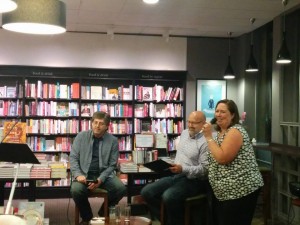
Caron Macpherson of Waterstones Argyle Street introduces Michael J. Malone and Douglas Skelton at the launch of 'Crow Bait' in 2014.

Caron Macpherson of Waterstones Argyle Street introduces Michael J. Malone and Douglas Skelton at the launch of ‘Crow Bait’ in 2014.


Okay, so let’s talk about criticism.

Time was, the only people who could praise or criticise an author’s work publicly were, well, critics.

Now, of course, everyone and their dog can get stuck in. If their dog knows how to access the internet, of course. And can remember his password (mine can’t, but he’s not the brightest bark in the kennel.)

Authors have to develop a thick skin. You might believe you have written the best thing to hit the printed word since Caxton first battered in a block but here’s a newsflash – that doesn’t mean everyone will agree.

Face it, there will be people who think your storyline has more holes than a string vest, your characters lack character and you’d better call an undertaker because your deathless prose? Not so much.

No-one likes to be criticised but it comes with the territory now. Some of the comments are valid – hey, no-one is perfect and those who think they are the least imperfect of all. But others defy logic.

So how do you deal with it?

Rule Number One (of one) – Never engage.

Let me put that another way…

NEVER ENGAGE!

A wise man once said that opinions are like arseholes, everyone’s got one. And yes, it’s true, some people talk through them. But if someone says your work sucks like a super-strength Dyson, resist the impulse to respond. That is that person’s opinion and they’re entitled to express it, no matter how hurtful it is.

No good will come of taking anyone task.

The problem is, we can have all the verbal applause in the world but we will focus on the bad notices. And they can fester.

I’ve seen authors post their bad reviews on-line. A few even affect a devil-may-care attitude over it but it still hurts. You have, after all, slaved for months over a book, your pals have told you it’s great (they’re your pals, of course they have), your significant other thinks sliced bread takes second place to your luminosity, your editor – once you’ve done what they tell you – believes it’s an award winner, your dog even wags his tail appreciatively.

But then someone goes on-line and says ‘This is the worst book I have ever read. Thank God I only paid 99p.’

Really? The worst book you’ve ever read?

I’ve had my share of bad reviews, and not just on-line. One reviewer of my first true crime book said I was illiterate. I took offence once I hit the dictionary to see what it meant.

There have been a few critical comments for both BLOOD CITY and CROW BAIT, you can go look them up if you want. I read them, cried a little (I’m not ashamed to say), moved on.

And that’s my advice to all authors, old and new. Look at criticism, take it to heart if it’s reasoned, ignore it if it’s not.

But above all, remember Rule Number One.

And keep your dog on a leash.

keyboard web2

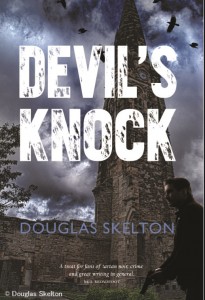
Glasgow webDEVIL’S KNOCK, the third book in the Davie McCall quartet, will hit the streets in June – and here’s a quick blurb for what you can expect.


‘The devil came knocking …  and you let him in, didn’t you, son?’’


The ghosts of Davie McCall’s past won’t leave him alone. The devastating events of Blood City and Crow Bait continue to haunt him.

But life – and death – go on.

A shocking murder in a city nightclub kickstarts a gangland war and Davie is caught in the middle.

An old pal’s grandson faces life in jail unless a vital witness is found but with bent cop Jimmy Knight also on the case it’s a race against time.

And then there’s the Hollywood star who wants to pick Davie’s brains.

Det Sgt Frank Donovan has his own problems. He’s in hock to a loan shark and he can’t pay.

And the body count is rising…


You can pre-order the book a your local bookstore or on-line.