A blank page.

That’s what all authors begin with.

Pristine white, apart from the blink of the cursor, flashing like some kind of Morse Code challenge.

Come on, it says, amaze me. Thrill me. Fill me with wonder.

Sometimes though, the author stares back, knowing that filling anything with wonder is just not on the cards. Not today, thank you.

I’m often asked the question, “Do you know your ending before you begin?”

The answer is always, “Sometimes.”

Let me give you an example – I know how my current Work in Progress ends. I know who did it. I know what’s going to happen to that person.

It’s getting there that’s the problem.

You will have guessed that I’m not a planner. I don’t meticulously work out the book ahead of time. I don’t do chapter breakdowns. I don’t have a white board. I don’t have cards.

I do have lots of Post-It notes on which I scribble character names, ideas and aide memoires as I write. Not to mention phone numbers, names, computations and other notes which I often incomprehensible, my handwriting being on the chaotic side of legible.
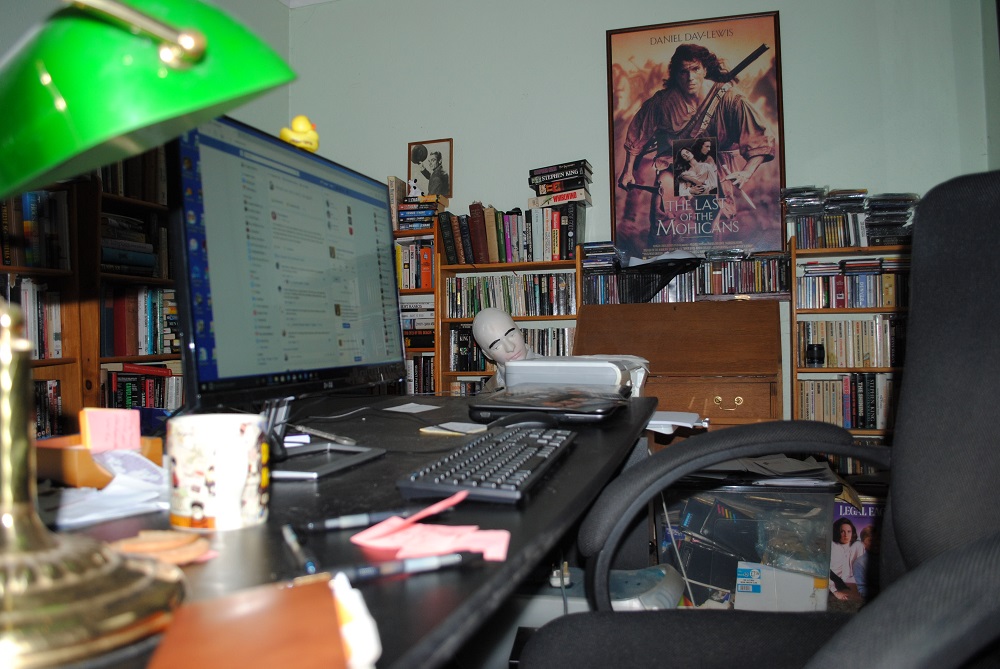
My writing approach is just  as chaotic and I wish I could take the time to really think about the plot and characters.

The thing is, I want to get on with it and all that preparation seems to me – well – too much like work. Also, I want to have a sudden epiphany that will surprise or even shock the reader as much as it surprises or shocks me that I thought of it in the first place.

Here’s an example – I didn’t know I was going to kill off one of the main characters in my first crime novel ‘Blood City’ until I actually did it. I also didn’t know the character who pulled the trigger was going to turn out to be the big bad. Had I planned that ahead of time the delicious pleasure of going all Game of Thrones on Glasgow crime would have been denied me. In my mind, at least.

The opposite also happened – a character I’d planned to kill off survived to die another day, in another book. All spontaneous, as I wrote, in the moment.

Now, planners might get the same thrill as they plot it all out, I don’t know. I’m too eager, or perhaps too lazy, to sit down and try it.

When writing ‘The Dead Don’t Boogie’, the first of my Dominic Queste thrillers, I set out to follow Raymond Chandler’s advice about whenever things are dull, have a couple of guys kick the door in with guns in their hands. I knew roughly what my protagonist was going to be, although I added layers as I wrote. I knew he was searching for a young girl in a seaside town in Scotland. I knew there would be other people searching for her.

What I didn’t know was why.

I was well over half way through, moving from one plot twist and action beat to another (let’s just say a LOT doors were kicked), when I realised I’d have to decide what the hell was going on. I did work it out and it required some additional scenes earlier on but hey – that’s what second and third drafts are for!

Would I recommend my approach? Actually, no. Deep down, I may even grudgingly agree that planners have the right idea.

Am I going to change my approach?

Hell, no. I’m WAY too impatient to do that….
I had a great time in Motherwell Library on Thursday night.

It was part of the North Lanarkshire Encounters Festival, an annual event that attracts some top writers (and me) to venues across the Shire.

The audience on Thursday seemed to appreciate my act and asked a number of great questions.

One was, how risky was it to write books from the point of view of criminals when the majority of the readers are law-abiding?

I didn’t think of it as risky but I know what the person was saying.

The majority of crime fiction, certainly in the UK, is written from the point of view of law enforcement – Cops, private detectives, lawyers, even journalists.

When I started the Davie McCall series I decided not to go that route.

It was already being done and being done very well. There was nothing I could add.

US style

In America it’s slightly different. Yes, you have your cops and private eyes and your hacks. But there is a long tradition of crime fiction focussing on the darker side.

Dennis Lehane’s ‘Mystic River’ is one example. Its central characters all inhabit a twilight world on the edges of legality. As does ‘They Live By Night’ and his latest novel, ‘World Gone By’. And his screenplay for ‘The Drop’ is almost totally focussed on small-time crims.

While British TV still gives us an almost daily diet of small screen coppers, US cable companies have presented us with ‘The Wire’, ‘The Sopranos’ and ‘Boardwalk Empire.’

‘Ray Donovan’ also stumbles over the line into the dark side.

Going back in time, Richard Stark was a regular visitor to that twilight world, as was George V Higgins. Even Ed McBain put his 87th Precinct badge down every now and again to write one-off novels centering on hoods and thugs – ‘Guns’, springs to mind, and ‘Big Man.’

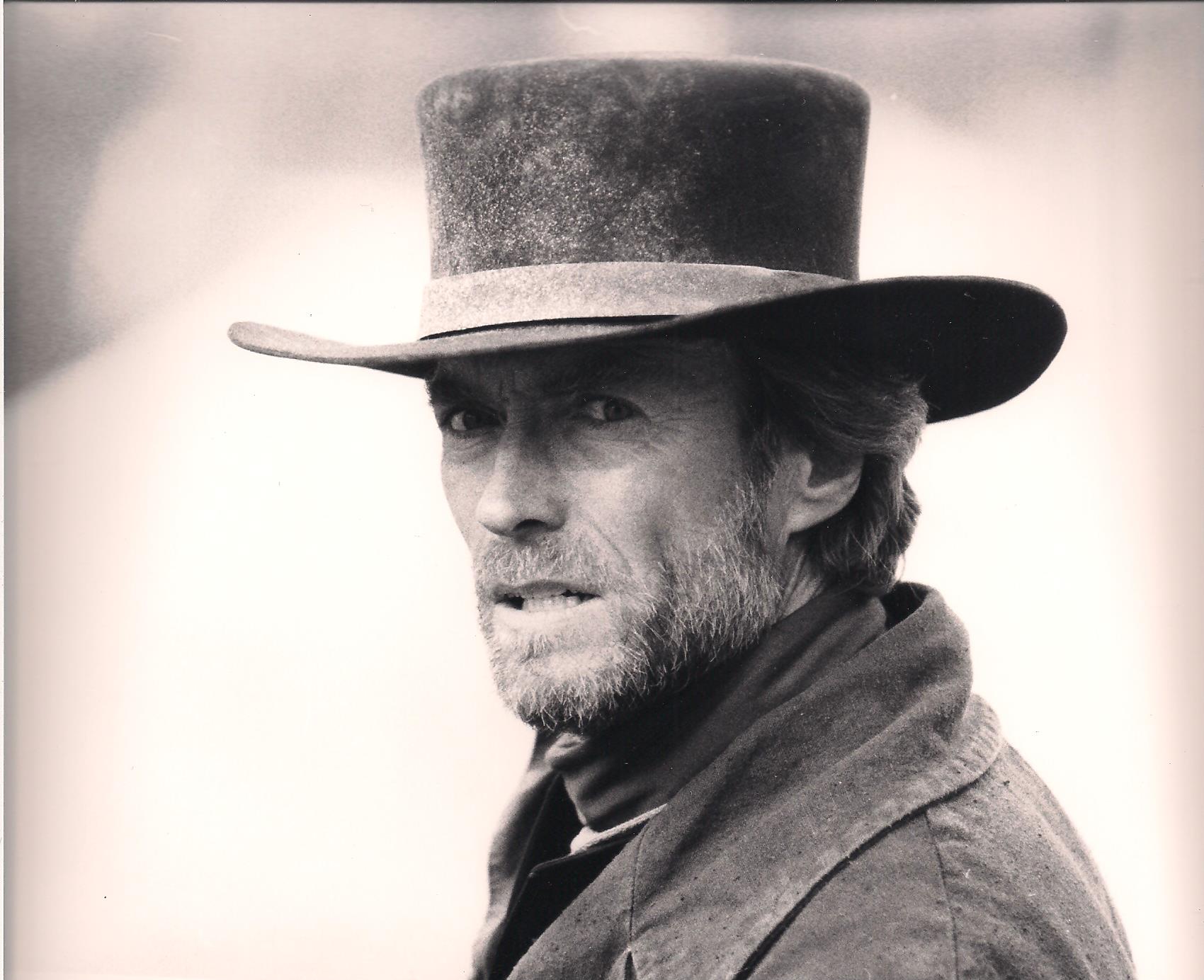
Davie McCall follows in a Western tradition of a man trying to escape his past, like Josey Wales or William Munny, both played by Clint Eastwood

Davie McCall follows in a Western tradition of a man trying to escape his past, like Josey Wales or William Munny, both played by Clint Eastwood

Anti-hero

I do have police officers in the Davie McCall books, and journalists and lawyers. I have crooks and straight arrows, bad guys and good guys and guys you can’t really tell if they’re good or bad.

Another question was whether Davie is based on a real person or an amalgam of people.

My answer was that Davie is a traditional anti-hero – tortured, brooding, with a lot of good in him.

As any regular reader to these musings will know, I’m a huge fan of western movies and I’ve often likened Davie to the gunfighter who wants to take off his belt and hang his weapons away. He’s ‘Shane’, if you like or Josey Wales or William Munny in ‘Unforgiven’ – a man who cannot escape his past.

It’s a theme I’m revisiting in something I’m writing at the moment. It’s a book that may never see the light of day but I’ve just realised that one of the characters is a man with a particular set of skills, as Liam Neeson said in ‘Taken.’

I’d like to thank everyone who came along on Thursday. It was great to meet people who have read and enjoyed the Davie McCall books. They actually get Davie, which is a relief!

Also thanks to the staff of North Lanarkshire Libraries for inviting me along.


I’ve been kicking Book Four of the Davie McCall series into some kind of shape. Boy, is my foot sore. It’s called ‘Open Wounds’ (well, for now) and it’ll be the final instalment in the series. Given that it was originally written before ‘Blood City’ – the first in the series – I thought it would be an easy job. A few tweaks here and there, that’s all.

Eh, no…

It would’ve been simpler if I could just put lots of violence and swearing down on the digital page but my editor’s a stickler for stuff like character and motivation. And boy is that hard. I mean, really hard. Who knew your books had to be about people and emotions and – gulp – the human condition? Louise, my editor, has never used that phrase but she likes to see a bit of humanity here and there.

I’m kidding, of course. Naturally I know that the books can’t be all about the action stuff. The humanity has to be there, the quiet moments, the moments that help your characters become more than a collection of words and take flesh. I hope I manage it. I certainly work hard at it.

I’ve been thinking a lot about Davie McCall and not just because of the books. I’m heading to Bristol this week to take part in Crimefest, a fabulous convention for crime writers and readers, and the panel I’m on is discussing central characters who are not paragons of virtue. And that pretty much sums up most of my characters.

bristol web 1

Off to Bristol this week for Crimefest

Off to Bristol this week for Crimefest

Having a Glasgow hard man as your hero, or anti-hero, can be problematic. There are readers who just cannot accept it. He’s a crook, a thug, he hurts people. Yes, he does, but then so does James Bond and Dirty Harry. At least McCall can agonise about it afterwards, if only to himself. For that’s the trick with him – the reader knows he’s not quite the monster he’s painted, but not the characters in book. He’s involved in the underworld because that’s what fate had in store for him. His father was a crook and a killer, his mentor a crook and a killer, his friends were crooks, some of them killers. There really was no other direction Davie McCall could go.

The question is, will be stay on that path?

That, really, is what the four books are about. He found love in book one, lost it by book two. Book three – DEVIL’S KNOCK, due next month – will see him face further challenges. All leading to book four, of course.

Will it end happily?

The author smiles enigmatically and turns away…


Okay, so let’s talk about criticism.

Time was, the only people who could praise or criticise an author’s work publicly were, well, critics.

Now, of course, everyone and their dog can get stuck in. If their dog knows how to access the internet, of course. And can remember his password (mine can’t, but he’s not the brightest bark in the kennel.)

Authors have to develop a thick skin. You might believe you have written the best thing to hit the printed word since Caxton first battered in a block but here’s a newsflash – that doesn’t mean everyone will agree.

Face it, there will be people who think your storyline has more holes than a string vest, your characters lack character and you’d better call an undertaker because your deathless prose? Not so much.

No-one likes to be criticised but it comes with the territory now. Some of the comments are valid – hey, no-one is perfect and those who think they are the least imperfect of all. But others defy logic.

So how do you deal with it?

Rule Number One (of one) – Never engage.

Let me put that another way…

NEVER ENGAGE!

A wise man once said that opinions are like arseholes, everyone’s got one. And yes, it’s true, some people talk through them. But if someone says your work sucks like a super-strength Dyson, resist the impulse to respond. That is that person’s opinion and they’re entitled to express it, no matter how hurtful it is.

No good will come of taking anyone task.

The problem is, we can have all the verbal applause in the world but we will focus on the bad notices. And they can fester.

I’ve seen authors post their bad reviews on-line. A few even affect a devil-may-care attitude over it but it still hurts. You have, after all, slaved for months over a book, your pals have told you it’s great (they’re your pals, of course they have), your significant other thinks sliced bread takes second place to your luminosity, your editor – once you’ve done what they tell you – believes it’s an award winner, your dog even wags his tail appreciatively.

But then someone goes on-line and says ‘This is the worst book I have ever read. Thank God I only paid 99p.’

Really? The worst book you’ve ever read?

I’ve had my share of bad reviews, and not just on-line. One reviewer of my first true crime book said I was illiterate. I took offence once I hit the dictionary to see what it meant.

There have been a few critical comments for both BLOOD CITY and CROW BAIT, you can go look them up if you want. I read them, cried a little (I’m not ashamed to say), moved on.

And that’s my advice to all authors, old and new. Look at criticism, take it to heart if it’s reasoned, ignore it if it’s not.

But above all, remember Rule Number One.

And keep your dog on a leash.

keyboard web2

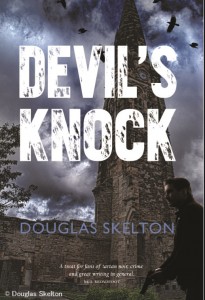
Glasgow webDEVIL’S KNOCK, the third book in the Davie McCall quartet, will hit the streets in June – and here’s a quick blurb for what you can expect.


‘The devil came knocking …  and you let him in, didn’t you, son?’’


The ghosts of Davie McCall’s past won’t leave him alone. The devastating events of Blood City and Crow Bait continue to haunt him.

But life – and death – go on.

A shocking murder in a city nightclub kickstarts a gangland war and Davie is caught in the middle.

An old pal’s grandson faces life in jail unless a vital witness is found but with bent cop Jimmy Knight also on the case it’s a race against time.

And then there’s the Hollywood star who wants to pick Davie’s brains.

Det Sgt Frank Donovan has his own problems. He’s in hock to a loan shark and he can’t pay.

And the body count is rising…


You can pre-order the book a your local bookstore or on-line.