Douglas is off to Nairn in September to take part in a wine and crime event as part of the fabulous Nairn Book and Arts Festival.
Jonas Flynt, specifically A Thief’s Justice, will provide the crime and the wine will already be there!
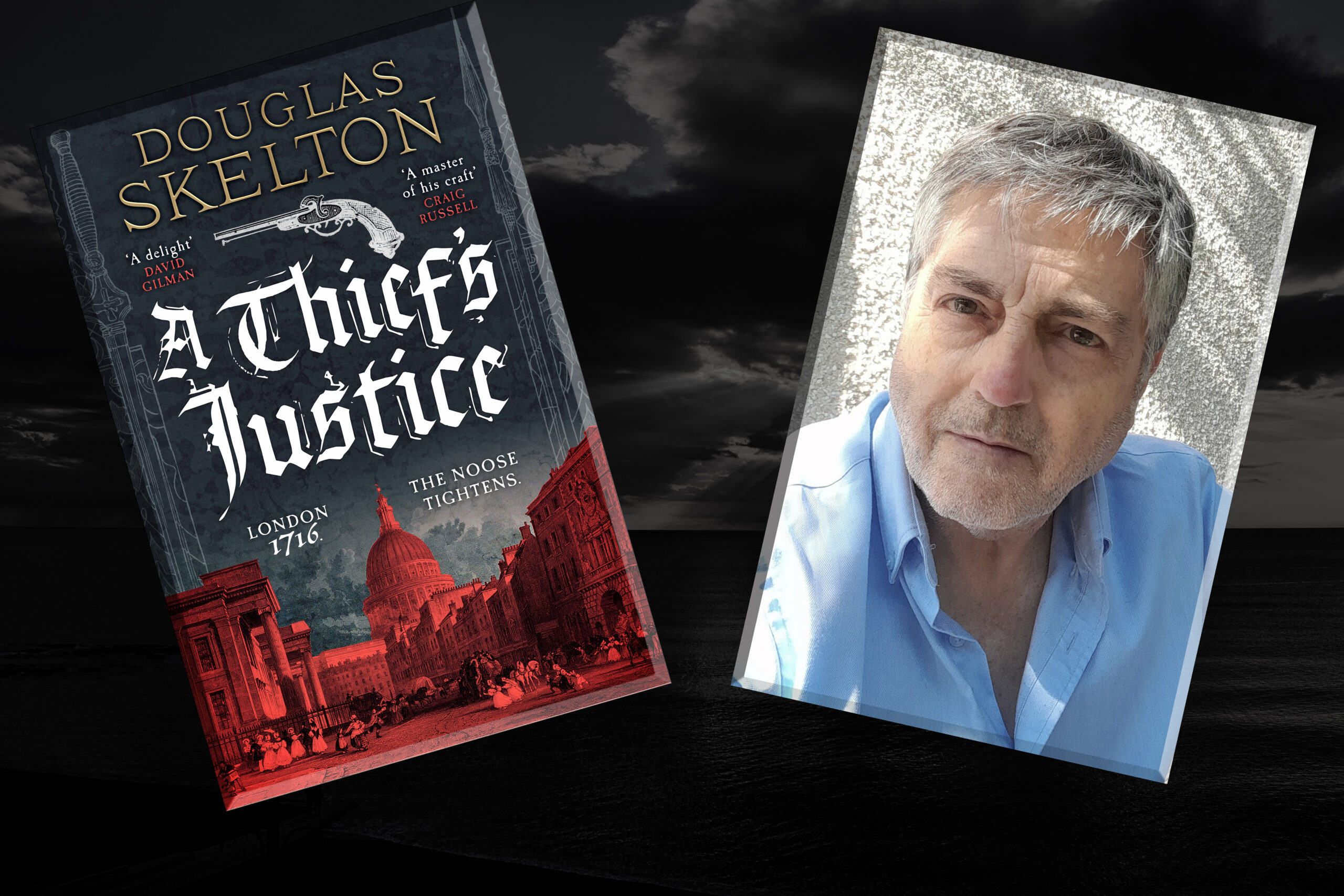

Douglas is off to Nairn in September to take part in a wine and crime event as part of the fabulous Nairn Book and Arts Festival.
Jonas Flynt, specifically A Thief’s Justice, will provide the crime and the wine will already be there!

If you know me, you’ll know that I’m a big fan of the movies/films/cinema/flicks, call them what you will.
I have been for as long as I can remember. Black and white, colour, mono, stereo, Dolby, even some silent comedy, I don’t care what they are, I enjoy them. I’ve never taken to 3-D, though.
As a child, thanks to telly when they used to show such fare regularly, I was introduced to James Cagney and Humphrey Bogart and John Wayne and Errol Flynn. I was a Glasgow boy so it was the two-fisted stars I was drawn to. Later I learned to appreciate other kind of films – romance, musical, comedy, horror – but back then if a western or gangster or a sword-fishing picture was on, you’d find me sitting there and watching with rapt attention.
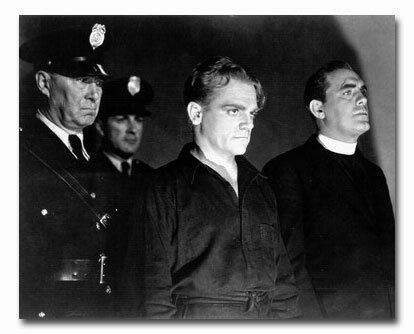
I can never forget Cagney’s final scene in ‘Angels With Dirty Faces’ as he is being led to the electric chair, at first defiant, then craven. Did his tough little mobster really show yellow, or was it in response to a plea by his best friend – a priest, no less, in the shape of Pat O’Brien – to not let the young men who idolised him be further impressed by bravery?
Likewise his death scene in ‘The Roaring Twenties’, on snow-covered church steps. He used to be a big shot but not anymore.
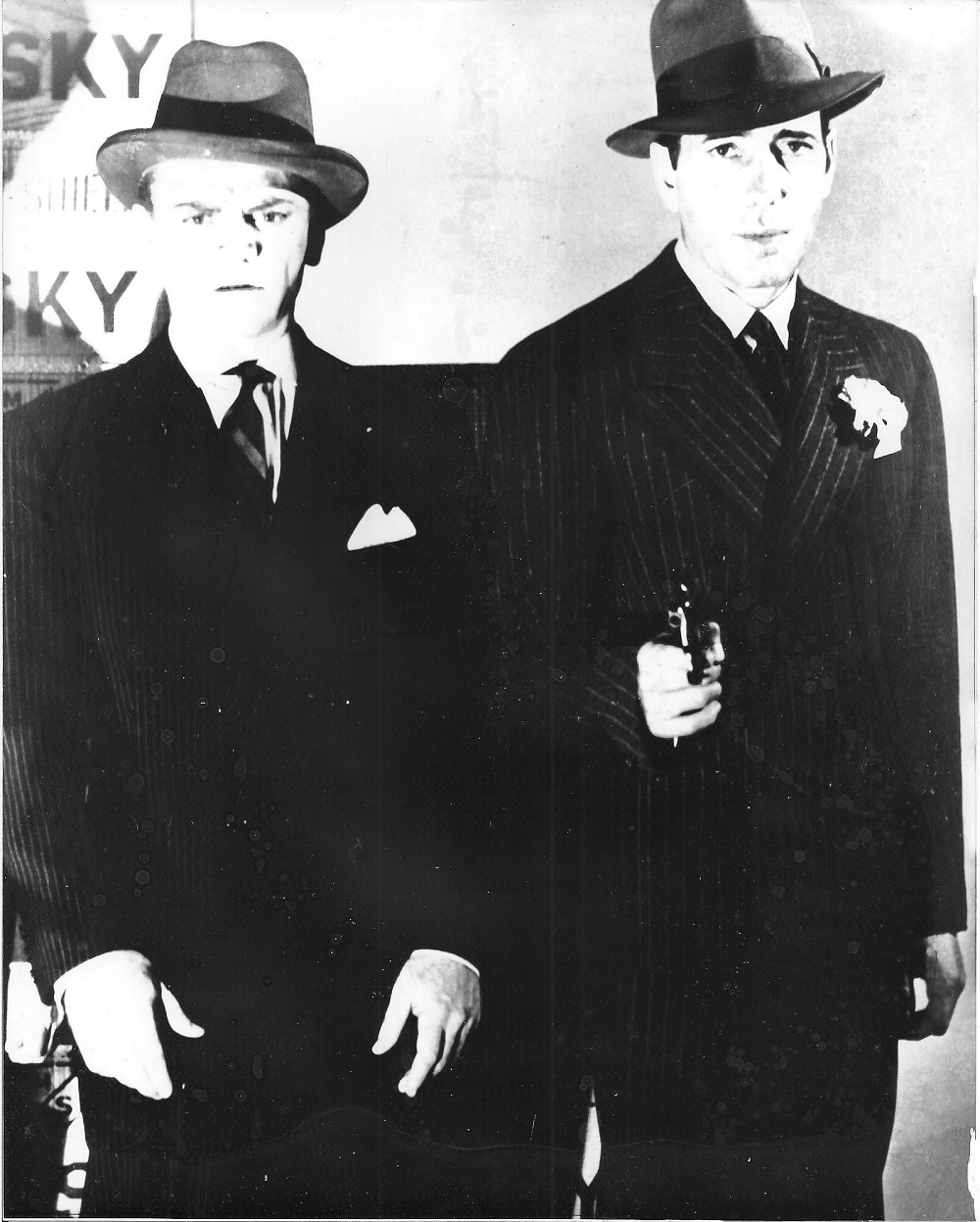
And Bogart, cracking wise as Philip Marlowe and being tough as Sam Spade, and getting all moody when Dooley Wilson tinkles out ‘As Time Goes By’ in ‘Casablanca.’ He’ll always have Paris but the problems of two people didn’t matter a hill of beans.
John Wayne, riding tall in the saddle (because it was on a horse). Twirling that Remington in ‘Stagecoach’, leading the cavalry in John Ford’s westerns, and telling James Stewart who really shot that varmint Liberty Valance. And, later, doing the twirling thing two-fisted and telling ‘Lucky’ Ned Pepper to fill his hand in ‘True Grit.’
Flynn, being helluva brave and noble as Robin Hood, saying “Welcome to Sherwood, milady” to a shimmering Olivia de Havilland (yeah, I noticed the ladies eventually) and swapping tough talk with Basil Rathbone over clashing blades.
That was my childhood (along with a host of TV shows, mostly westerns like ‘Cheyenne’, ‘Maverick’, Bronco’, ‘Bonanza’, ‘Sugarfoot’) and it extended into adulthood. I watch movies, I read about movies, I listen to movie scores (I present a weekly movie music show on Southern Sound radio – you can listen on the web every Saturday at 4pm on www.southernsound.org.uk), I have movie posters on my walls.
Yeah, I kinda like movies.
I used to write about them, too, as a critic with a local newspaper in the west end of Glasgow. That was fun.
I’m still writing about them, but these days it’s a little bit more subtle.
There are little cinematic Easter Eggs littered throughout my fiction. Some are obvious, some perhaps not so much.

In my latest book, A THIEF’S JUSTICE, (published by Canelo in hardback and ebook this week), there is a tiny little nod to ‘Raiders of the Lost Ark.’ If you read it, you can’t miss it.
Do you do it on purpose, I hear you ask, or is it accidental?
Well, I’ll tell you. (That single line there is a tug of the forelock to ‘Fiddler on the Roof.’ I can’t help myself).
I do it purposely. I believe that it doesn’t get in the way of the storytelling and it gives me an additional level of fun in the writing.
They don’t all make it to the final book. Editors will suggest lines are cut for various reasons, either they don’t work, or they get in the way of the narrative.

In the first Davie McCall book, BLOOD CITY, there was an entire section that never appeared in print concerning Davie and his friends settling down to watch the John Wayne western ‘Rio Lobo’ on TV, only to find it has been delayed by the storming of the Iranian Embassy in London in 1980. One character was not pleased at his viewing pleasure being disrupted by the live feed of the SAS freeing the hostages from the group who held them captive. However, the section didn’t add anything to the story, apart from providing a sense of the period and that had been established earlier.
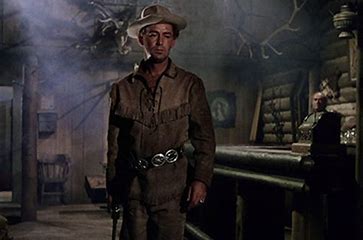
The entire series is inspired by the book and film ‘Shane’. That inspiration, a man who has grown tired of the life he has led, extends to the Jonas Flynt books today.
The Dominic Queste novels are one long tribute to movies and popular culture, thanks to Queste himself being a movie buff. ‘The Janus Run’ was effectively my own tribute to the action and conspiracy thrillers that I love from 70s and 80s, and the works of Robert Ludlum, although set in present day.
Even the Rebecca Connolly thrillers have movie references throughout. A line here, a reference there, a genuflection to something I love.
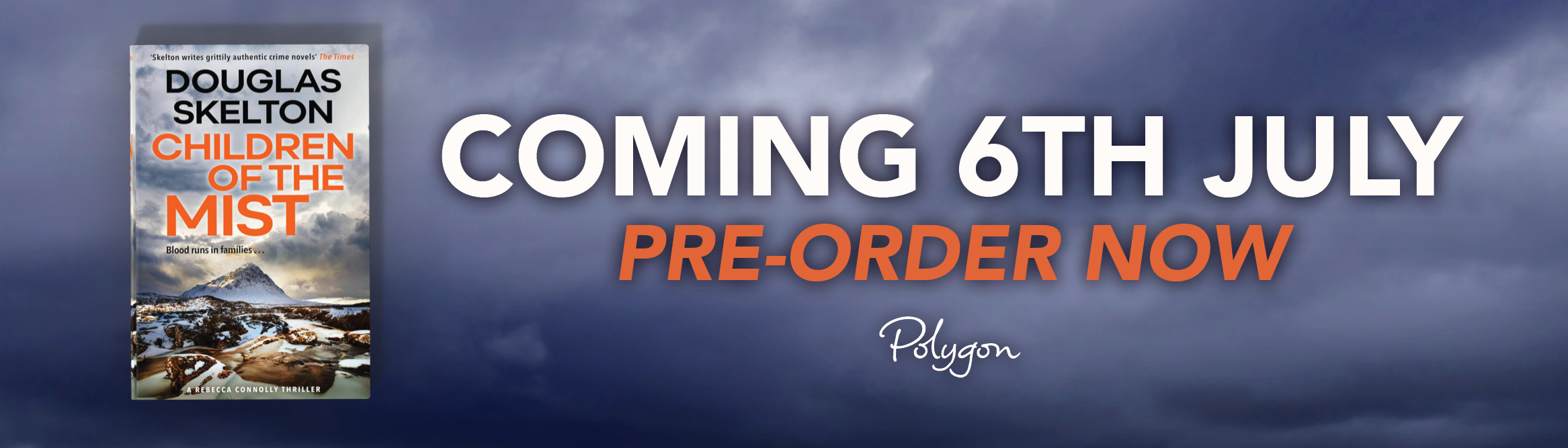
See if you can spot any in CHILDREN OF THE MIST, coming in July.
Maybe some day I’ll give you a list of my favourite films of all time. But right now, I need to go.
I’ve got a movie to watch…
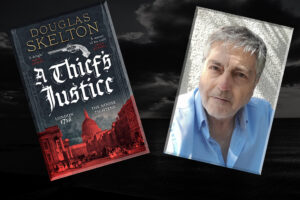
Douglas will be launching his new Jonas Flynt historical thriller, A THIEF’S JUSTICE, in The Book Nook, Stewarton.
He’ll be in conversation with author and broadcaster Theresa Talbot.
Call the number below to book a free ticket, or click on the Book Nook link.
Or just want to buy a copy? Check out the buying links here: https://geni.us/AThiefsJustice

Theresa Talbot
The city is caught in the vice-like grip of a savage winter. Even the Thames has frozen over. But for Jonas Flynt – thief, gambler, killer – the chilling elements are the least of his worries…
Justice Geoffrey Dumont has been found dead at the base of St Paul’s cathedral, and a young male sex-worker, Sam Yates, has been taken into custody for the murder. Yates denies all charges, claiming he had received a message to meet the judge at the exact time of death.
The young man is a friend of courtesan Belle St Clair, and she asks Flynt to investigate. As Sam endures the horrors of Newgate prison, they must do everything in their power to uncover the truth and save an innocent life, before the bodies begin to pile up.
But time is running out. And the gallows beckon…