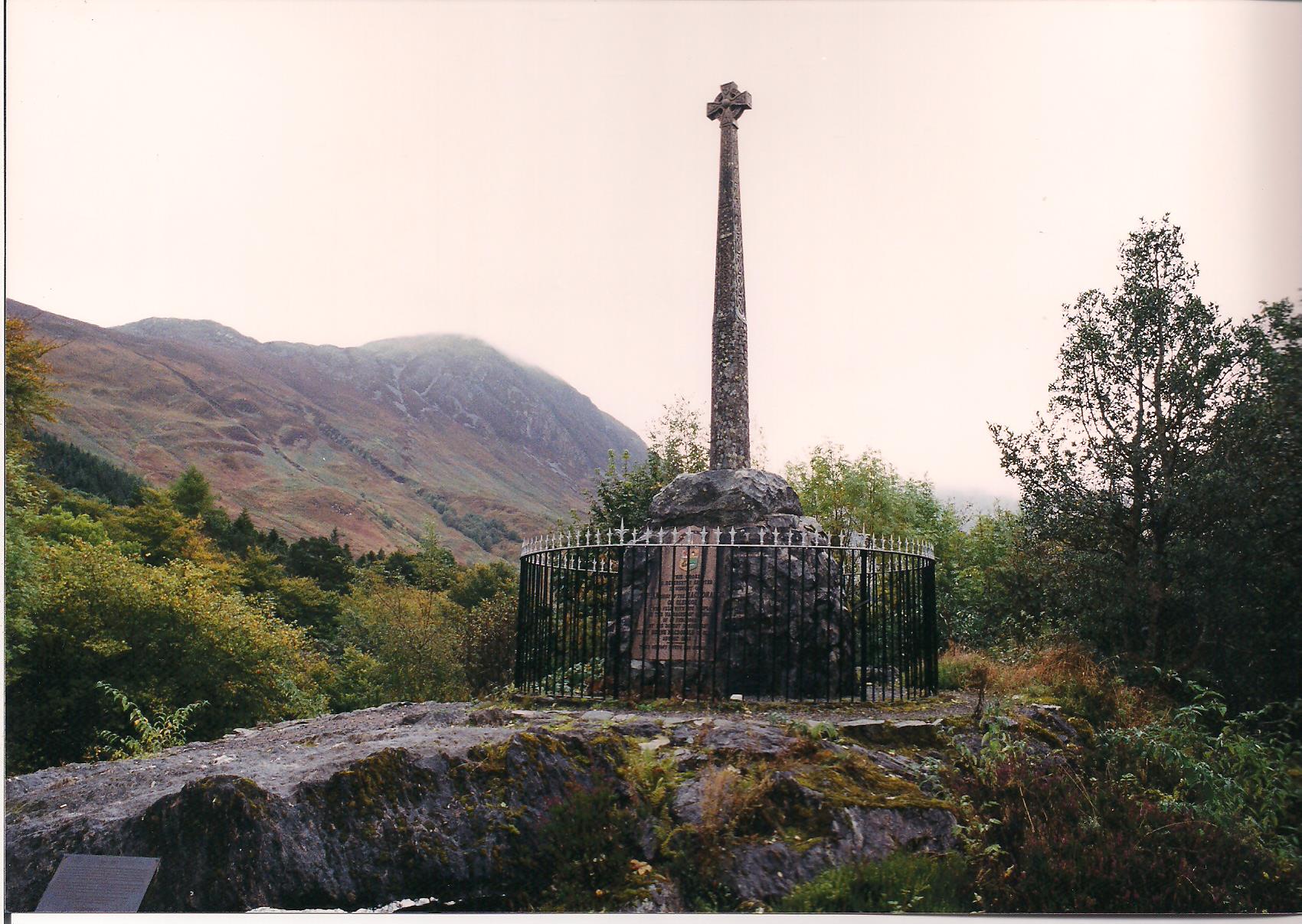
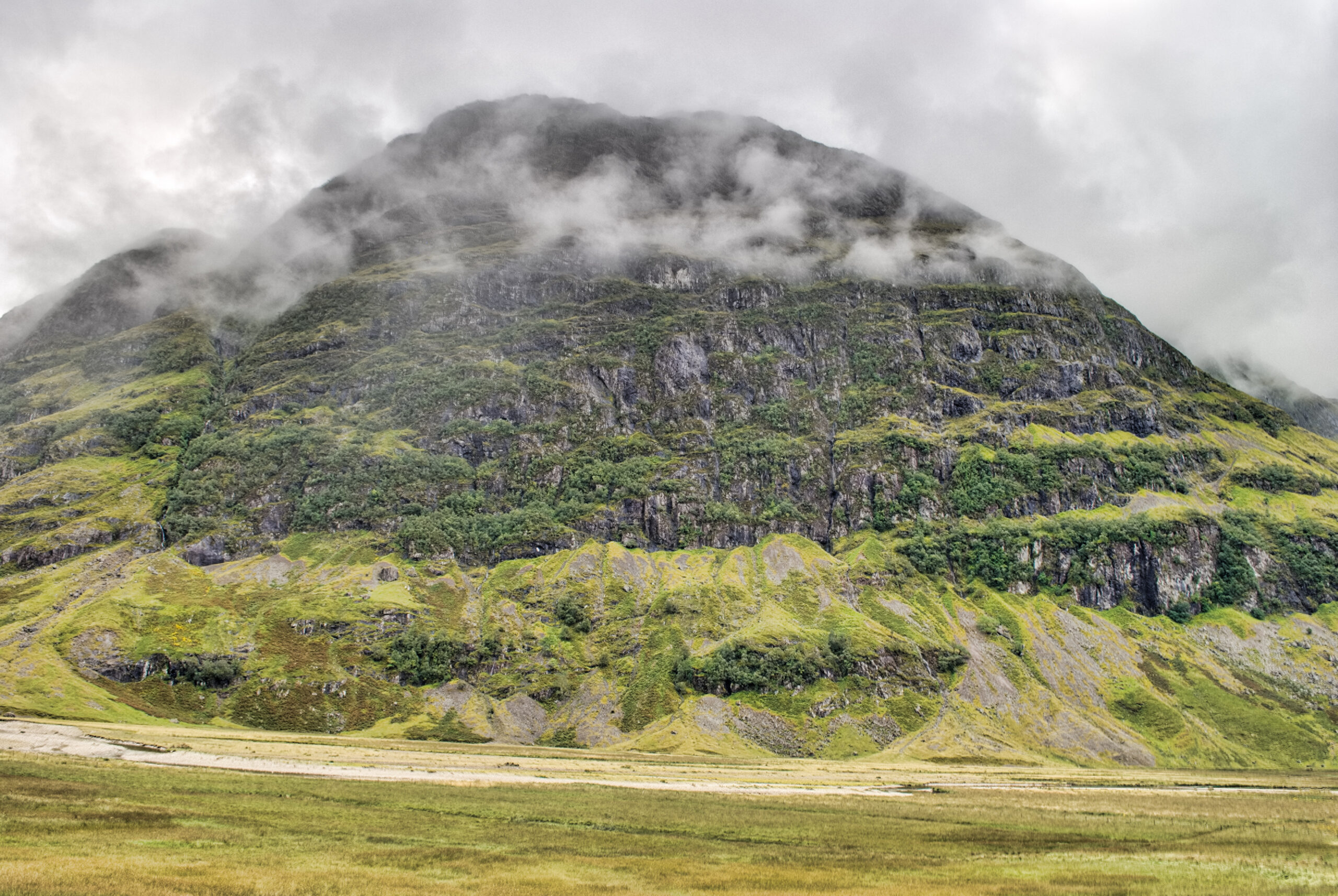
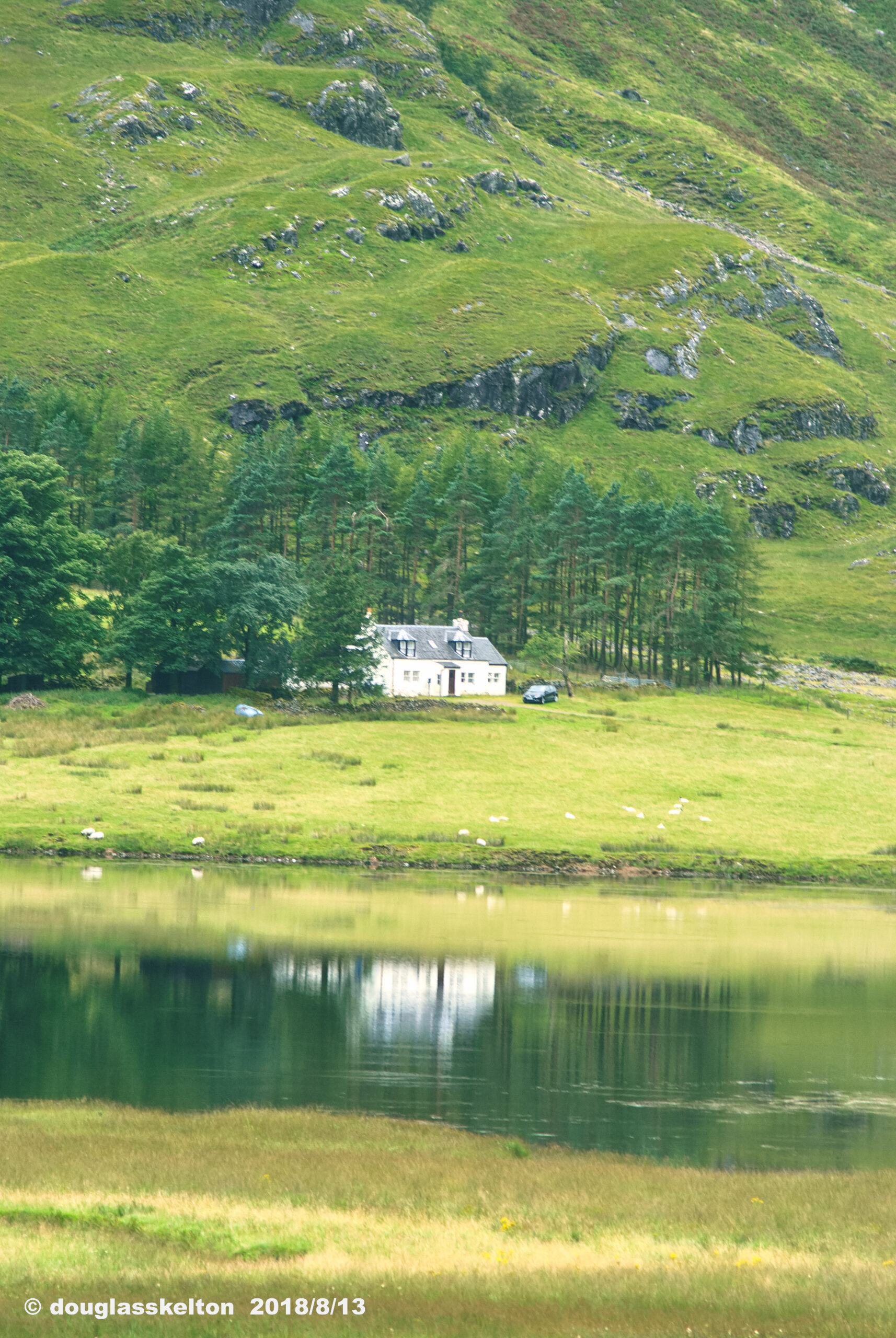
I recently dug out this extract from my out-of-print non-fiction book ‘Devil’s Gallop’ for a friend who wanted too know a little about Glencoe and the infamous massacre. I thought I might share it here. The book itself was a tongue-in-cheek series of tours of Scotland’s dark past but this entry was devoid of humour. It had to be.
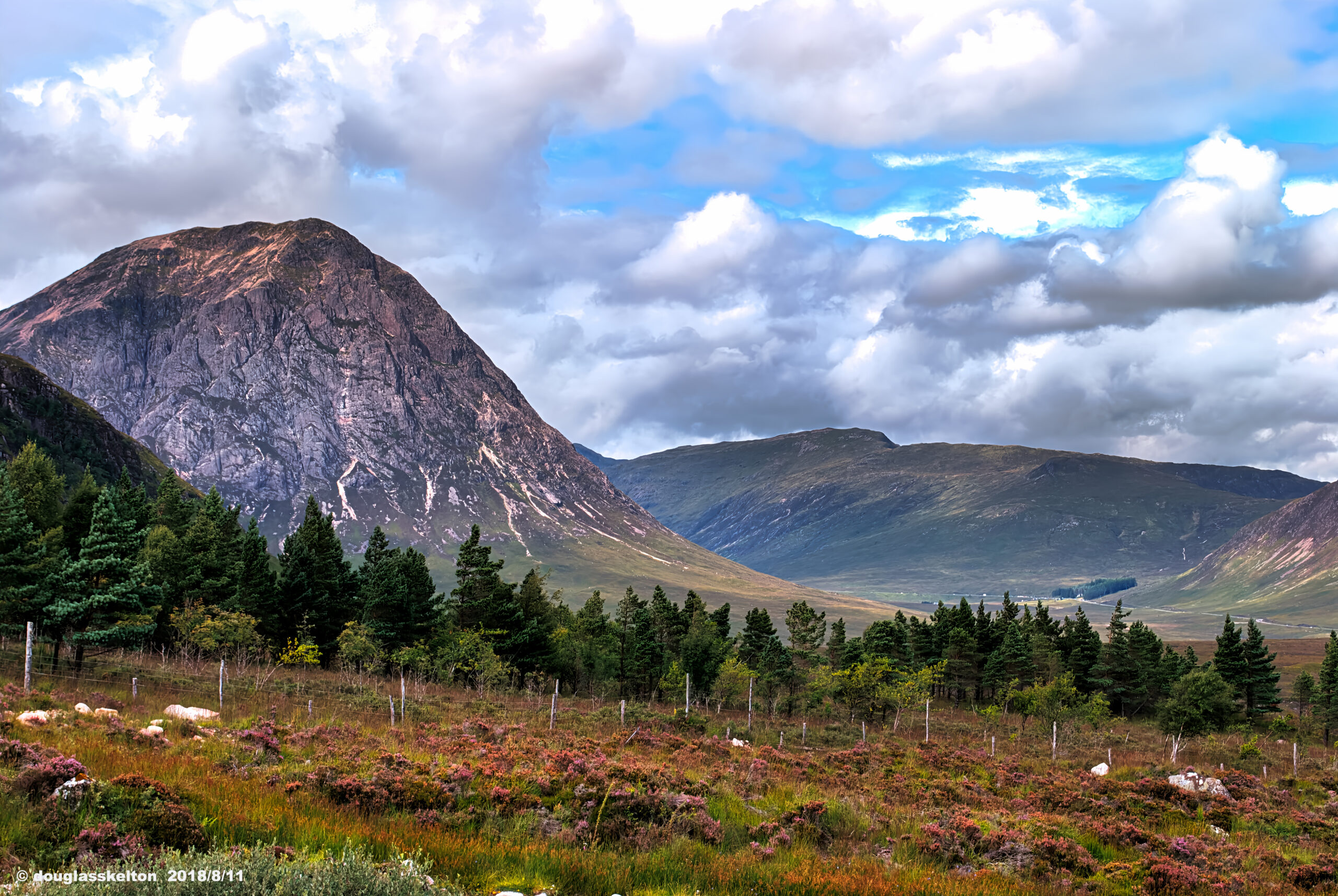
As I plunged into the valley peppered with sheep and walkers making their way to hillside paths, I thought about the events one snow-filled night in 1691. Like many another incident in Scottish history, the full story of the massacre in Glencoe is not as well known to many Scots as it should be. Most know an atrocity was committed here, perhaps even that it was a blatant breach of the highland laws of hospitality. There are those who believe it was the English who carried it out, but they are wrong. For this was an example of Scots’ cruelty towards their own kind, albeit in the name of a Dutchman on an English throne.
The Macdonalds came to Glencoe after Robert the Bruce granted them the lands following his victory at the Pass of Brander. Like the other clans – in particular the MacGregors – the MacDonalds of Glencoe were accomplished cattle thieves, who perfected the trick of lifting the cows from their neighbours and spiriting them away to hidden gullies and valleys in Glencoe. On one raid into Breadalbane, their swag bag was so filled that they ruined many families, notably that of Captain Robert Campbell of Glenlyon, who was related by marriage to the Glencoe MaDonalds. Their larcenous behaviour reached such a pitch that they became known as ‘The Gallows Herd’.
The MacDonalds of Glencoe were also Jacobites who had fought at Killicrankie for Bonnie Dundee against William’s forces. The battle ended in victory for the Jacobite cause but was in reality, with the death of Dundee, the beginning of the end for that particular dream (see REBEL MARCH). Two years later, a magnanimous William offered all Highland rebel chiefs a pardon, as long as they declared their allegiance to him before 1691 was out. Certain bribes were offered at Achallader. The astute chiefs realised that for them the future was Orange and swore their oath. By the end of the year only MacIan of Glencoe hesitated. Some say he could not swear loyalty to the Orange King unless the exiled King James gave his permission. Others claim he was too proud and defiant to give in so easily. Whatever the truth, MacIan waited until December 31 to set off to Fort William to take the oath. However, there he was told that the oath could only be taken by the sheriff – at Inveraray, 60 miles away. It took MacIan and his party some days to reach the Campbell stronghold in Argyll through biting winds and freezing snow and even then there was a delay for the sheriff was not present. Eventually he promised allegiance to the king in London and was assured word would be sent to Edinburgh that the last of the clans had fallen into line. With letters promising the protection of the Fort William garrison tucked in his sporran, MacIan then began to make his way back to his home in Glencoe. But in London and Edinburgh, Scottish politicians were already planning his death.
Sir John Dalrymple, Master of Stair, was Secretary of State and keen to see the MacDonalds brought to heel. MacIan’s delay in pledging allegience was used as an excuse by him and the Campbell Lord of Argyll to carry out “a great work of charity…in rooting out that damnable sept, the worst in all the Highlands.”
On 1 February, 60-year-old Captain Robert Campbell of Glenyon, who had lost what was left of his lands through gambling and drink, arrived in Glencoe with 120 of Argyll’s men claiming there was no room for them in Fort William so they were to be billeted with MacIan’s clan. The old chief was bound by the rules of Highland hospitality. He had to take the soldiers in. For over ten days he soldiers ate with the MacDonalds. They slept in their homes. They played games with their children. Captain Campbell drank with MacIan and his sons.
Finally, on 12 February, Captain Campbell received a written order that was to be the death warrant for the MacDonalds. It read, ‘You are to put all to the sword under seventy. You are to have special care that the old fox and his sons do on no account escape your hands. You are to secure all avenues, that none escape; this you are to put in execution at five o’clock precisely….”
The orders told him that reinforcements were to arrive at that time to help with the massacre, but they did not come, whether by accident or design no-one knows.

According to tradition, a fire was lit on Signal Rock (which is in the woods about 20 minutes walk behind the visitor’s centre) to mark the beginning of the murder. However, the snow was so heavy that few, if any, of the soldiers would have seen it. What followed, though, was horrific – even by Highland standards.
MacIan was shot as he rose from his bed, a pistol ball tearing off part of his head. His wife was stripped forcibly, the rings on her fingers torn off by soldier’s teeth. Families were shot or bayoneted, their blood staining the snow red. Children were gunned down as they pleaded for their lives. Families were lined up against dung hills and cut down. Captain Campbell, either sickened by the brutality or stunned by a letter he found on one potential victim which promised military protection, tried to save the man but another officer took the MacDonald and put a bullet in his head. Homes and byres burned red through the snow, cattle and sheep were driven off and everywhere there was the sound of gunfire and screaming and the lamentations of women.
They say that not all the soldiers took part in the killing and that two officers resigned their commissions on the spot. There is a belief that the Argyll soldiers knew about the orders before that night and that a few tried to warn their hosts. According to one tale, a soldier told a dog in the hearing of the family that if it knew what was good for it, the hound would sleep in the heather that night. Another is said to have told a rock, known as McNeil’s Stone, that if it knew what was going to happen that night even it would be up and away. By the time the killing stopped, only 38 MacDonalds were dead, the rest had managed – or were allowed – to escape into the hills. Some of them died there.
History has blamed the Campbells for the horrors of that February night and to an extent they must accept that. Attempts have been made to excuse Captain Campbell for his actions, saying that he was only a soldier following orders, but that is not good enough. He could have refused to follow them. He could have stood back and let his men do it. But he took an active part in the massacre – until he found that letter.
An Irish journalist got wind of the events in Glencoe and published a pamphlet which excited great interest. King Billy had sanctioned the orders but later denied even reading them. The Master of Stair was, eventually, forced to resign but was not for long away from the corridors of power. Captain Campbell drank himself to death and was buried in a pauper’s grave.
There is one story worth retelling. I read it in JJ Bell’s ‘The Glory of Scotland) (1932). A traveller was passing through the glen one dark and snow filled night and heard a child crying against the wind. He stopped at a cottage and rapped on the door. An old shepherd appeared and the traveller told him he could hear a child crying as if lost. The old man looked out into the blizzard sadly and nodded.
“Aye,” he said, “there is a child out there and it is crying, sure enough. But there is nothing you can be doing for it, the soul, for it has been crying since long, long ago.”