
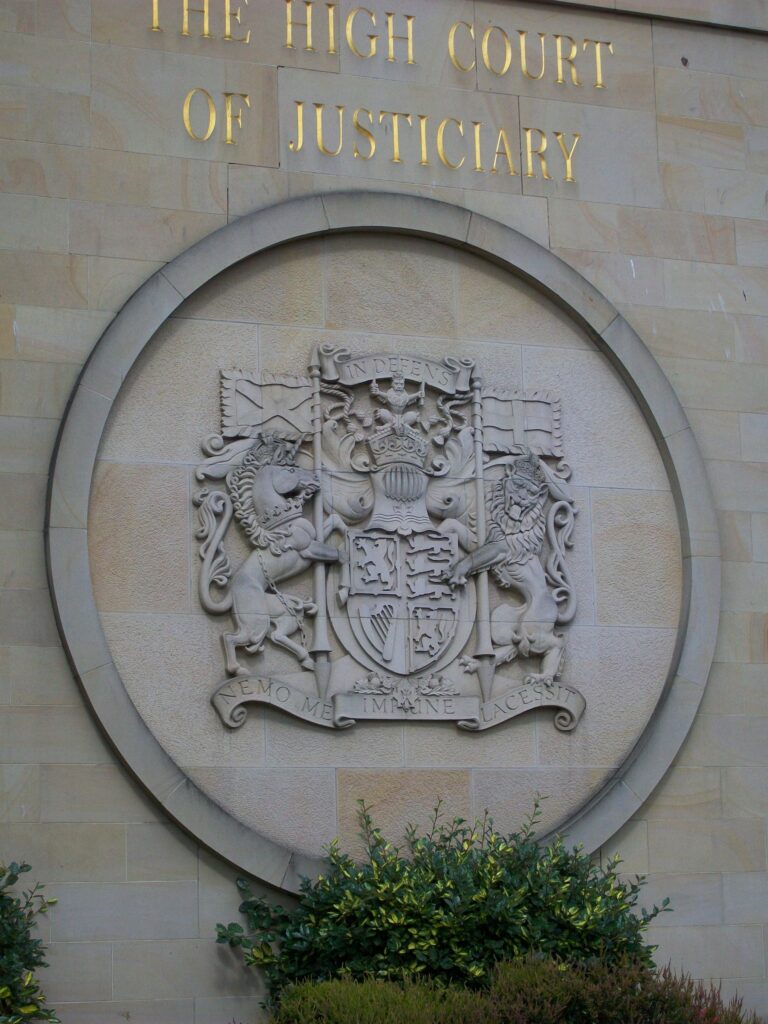
By the early 19th century, the civic, prison and court facilities in Glasgow’s Tolbooth at the Cross were insufficient to meet demand. A new base was needed for the city’s dignitaries, the lawyers and judges – and those accused and convicted of crimes – was needed.
But the area selected was far from fragrant…
The stretch of land at the foot of the Saltmarket was an isolated site, approved of by prison reformer John Howard because it had ample space looking towards Glasgow Green and the river to the south. However, it was the site of the town’s slaughterhouse and on a portion known as the Skinner’s Green the tradesmen dried the freshly-skinned fleeces and skins of the slaughtered beasts. For years, dung and unused animal guts were piled onto the ground here and allowed to rot until they were totally putrefied. Houses in the area were occupied by ‘scullions and tripe cleaners’, while the police used the banks of the river near to the old bridge ‘as a receptacle for the filth from the streets.’ In 1810, a new slaughterhouse with 77 killing rooms and two cattle yards was opened on an acre of land south of the Bridgegate. The associated industries moved with it.
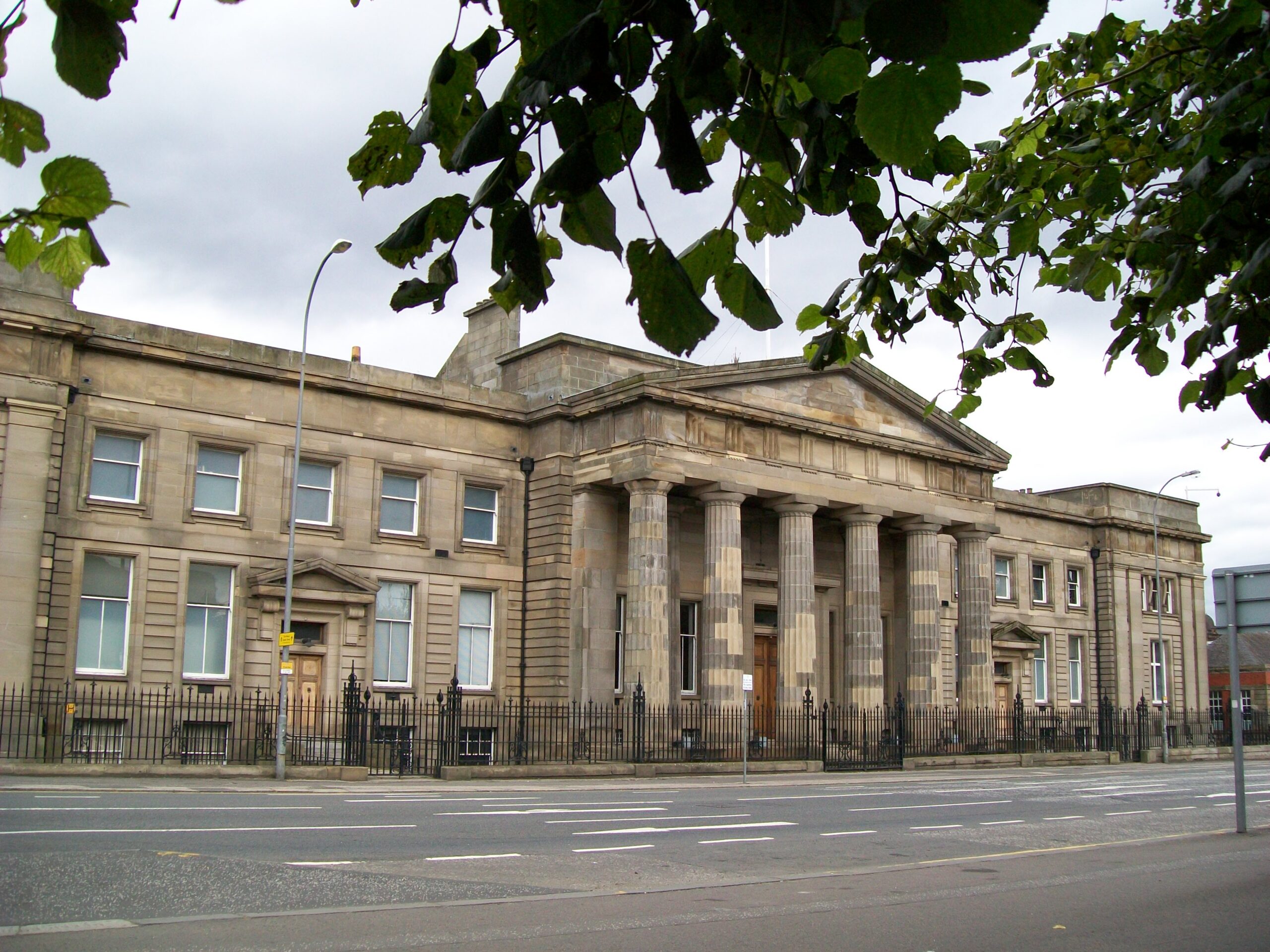
Two years later the first part of the new court house was opened. As the town’s treasury had to cough up for the new building some parts of the grand design – including a grand dome – had to be scaled down to keep the costs to only £34,811. However, the court building was still impressive, with grand Doric columns rising from an impressive stepped entranceway to face onto the Saltmarket. Now the visiting judges and the juries made up of gentlemen, farmers, merchants and two lawyers had a proper courthouse in which to decide the fate of accused persons from Glasgow, Lanarkshire, Renfrewshire and Dunbartonshire. Even so, many cases continued to be heard in Edinburgh, much to the chagrin of local officials.
Then, on 14 February, 1814, 35 of the town’s prisoners received a grand Valentine from the council – for they were the first to be moved to the brand new jail. Half of what was now known as the Glasgow Burgh Prison, later the South Prison, was given over to debtors. Their cells had fireplaces and windows, while the ‘delinquents’ had neither. Unlike the Tolbooth, the new jail had large rooms to allow the prisoners to associate with each other and galleries for fresh air and exercise. Each of these galleries had a water closet (toilet) and an unlimited source of fresh water. This was handy for the daily washing down of the court room if not for the cleanliness of the inmates, many of whom were almost total strangers to soap, unless like condemned thief Robert Hunter Guthrie, they stole it. Criminals were expected to work while in prison and what money they earned was used to pay prison expenses.
Those confined to the four condemned cells, of course, were not allowed to avail themselves of the galleries or exercise areas. If contemporary reports are to be believed, they spent what little time they had left in contemplation and prayer.
The prison was thought to be large enough to hold the city’s criminals. But ‘if you build it, they will come’ for within five years of opening the 35 inmates had grown to 158, one hundred of whom were ‘delinquents’ – and 16 of them female. The remaining 58 were debtors, who were not as much being punished for their debts as being coerced into paying up. At the time, debtors could be jailed in Scotland for small amounts and remain there until the debt was cleared. After 1835, a debt had to be over £100 Scots, or £8 six shillings and fourpence Sterling, before imprisonment was an option. By then, debtors were no longer placed in the South Prison but found themselves in the extended Bridewell in Duke Street, now known as the North Prison. Some sources refer to it as the Bridgewall.
After twenty years, the council offices moved from the site, first to the County Buildings on the north side of Wilson Street. The smaller courts went with them. In 1888, the municipal authority established their grand City Chambers headquarters in George Square, where they still sit.

In 1856 a second court added to the Saltmarket site took up part of the cell areas and one of the exercise yards of the prison. In 1870, the South Prison was all but closed, a few cells only being used as an overflow for remand prisoners awaiting trial when the spaces under the courthouse were full. Its function had by then been taken up by the expanded Duke Street Prison and later, in 1882, by the newly constructed Barlinnie Prison, the land for which had been bought in 1879 from the Barlinnie Farm Estate for £9,750.
But the area between the court building and the parkland of Glasgow Green served another judicial purpose…
To be continued…
