

Those who know me are aware of my love of westerns. Even some who don’t know me, and who perhaps have attended any of my events, will be aware because I don’t make any secret of the fact that much of my writing is influenced by many years (many, many, MANY years) of enjoying the genre on film, on tv and in print.
As a boy, when they were in vogue on the small screen, I revelled in the weekly adventures of ‘Cheyenne’, ‘Maverick’, ‘Bonanza’, ‘Gunsmoke’, ‘Bronco’, ‘Sugarfoot’ et al. Any younger readers happening to click onto this will now be scratching their heads wondering if I’ve begun to simply make up names. But no, they were all real TV shows back in the day.
On the big screen there was, of course, John Wayne. I believe I would have been introduced to him with TV screenings of ‘She Wore a Yellow Ribbon’, ‘Rio Grande’, ‘Fort Apache’ – the cavalry trilogy he made with director John Ford. I then went on from there to appreciate many of his other films, though my preferences are for his work in the late 50s, into the 60s and 70s, beginning with ‘Rio Bravo’ and then onto the likes of ‘El Dorado’, ‘The Sons of Katie Elder’, ‘The Comancheros’, ‘Big Jake’, ‘The Train Robbers’, ‘The Shootist’ and, of course, ‘True Grit’.
Then came Clint Eastwood. I was too young to see the trio he made with Italian director Sergio Leone on first release but I did catch up with them later and was blown away. Granted, my addiction to film music helped, given Ennio Morricone played a blinder with all three.
I knew who Eastwood was. I’d already been a fan of his when he played Rowdy Yates in the series ‘Rawhide’. He learned his craft on that’s how, not just in acting but, in watching seasoned old hands behind the cameras, how to direct with economy.
So why am I telling you all this?
Well, this past couple of days I found myself left to my own devices and decided to take the opportunity to have a western weekend (with a James Cagney gangster flick and a horror thrown in for balance). (There was a time, when I was much younger, that I would have been party central, but that was long ago and far away and I don’t have the energy. I mean, all that cleaning afterwards!)
I began with a rewatching of Kevin Costner’s epic ‘Horizon’ (Sky Movies). I’d made an increasingly rare trip to the cinema to see this and enjoyed it, even though I did recognise the difficulties.
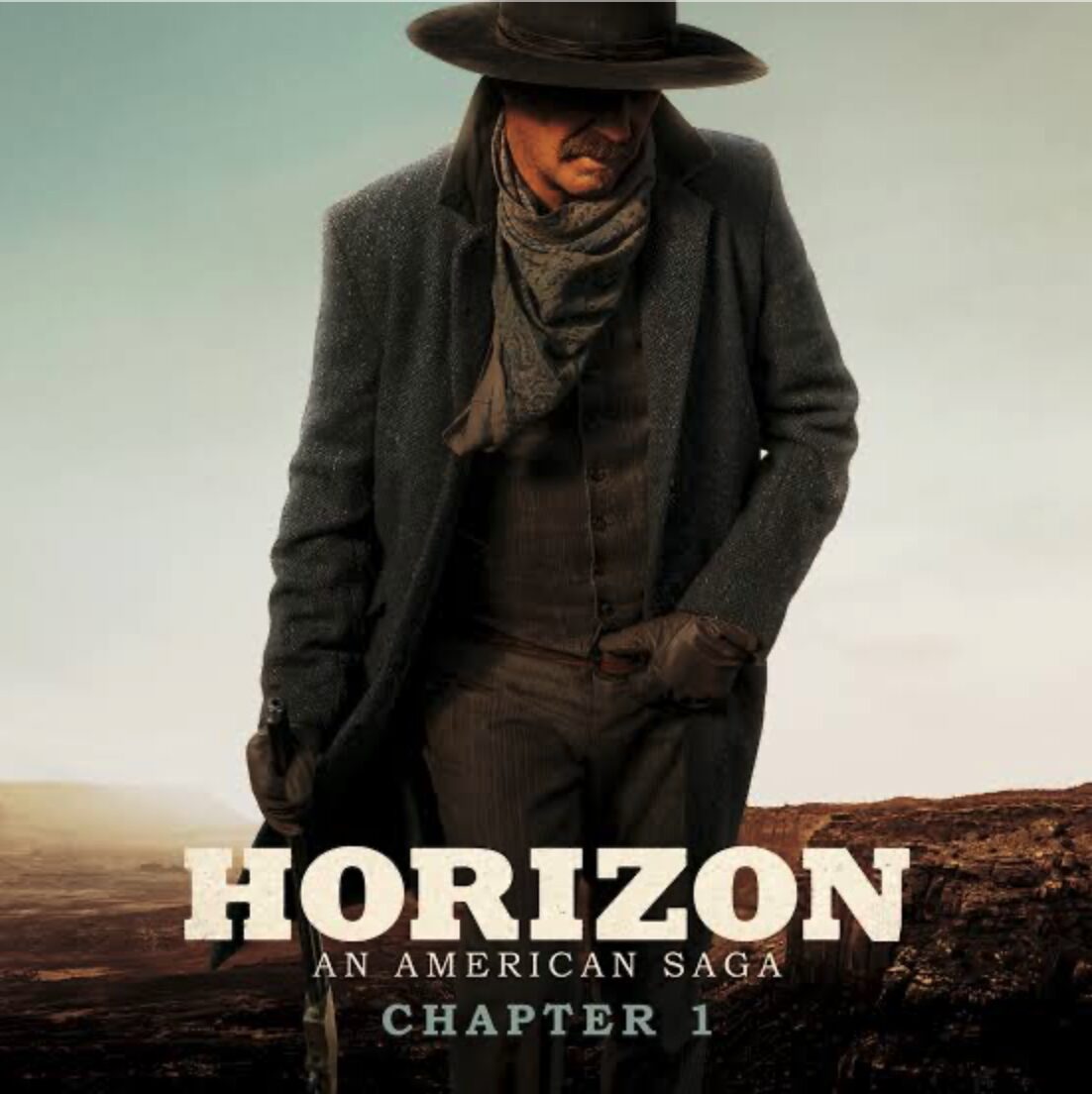
One of those difficulties is that fact that some characters seem to come and go with no apparent reason. I mean, what happened to Scottish actor Angus McFadyen’s character? He’s there for two or three scenes at the start and then gone. Similarly, Glasgow born actor David O’Hara is somewhere in there, as bowler-hatted surveyor, but I missed him again. And Giovanni Ribisi is mentioned predominantly in the credits but only appears briefly at the end, during a preview of the next in the series.
Were there scenes missing, I wonder? Scenes cut to bring it down to its three hour running time? Or do these actors return somehow?
There is a lot to commend in this film, some very fine moments indeed, and John Debney gives us a score that is, when needed, both exciting and touching. The film is at times tender and brutal, with impressive action scenes. Costner’s ambition is impressive, this was the first part of a proposed saga stretching to three very long films, and it’s a shame that this first one didn’t shoot ’em up at the box office. The second instalment has been filmed but awaits a release. I hope it does, even if only on some streaming service.
My next trip to the old west was Viggo Mortensen’s ‘The Dead Don’t Hurt’ (Paramount Plus). If you have read some of my past work, you will also know that they don’t have a tendency to boogie.
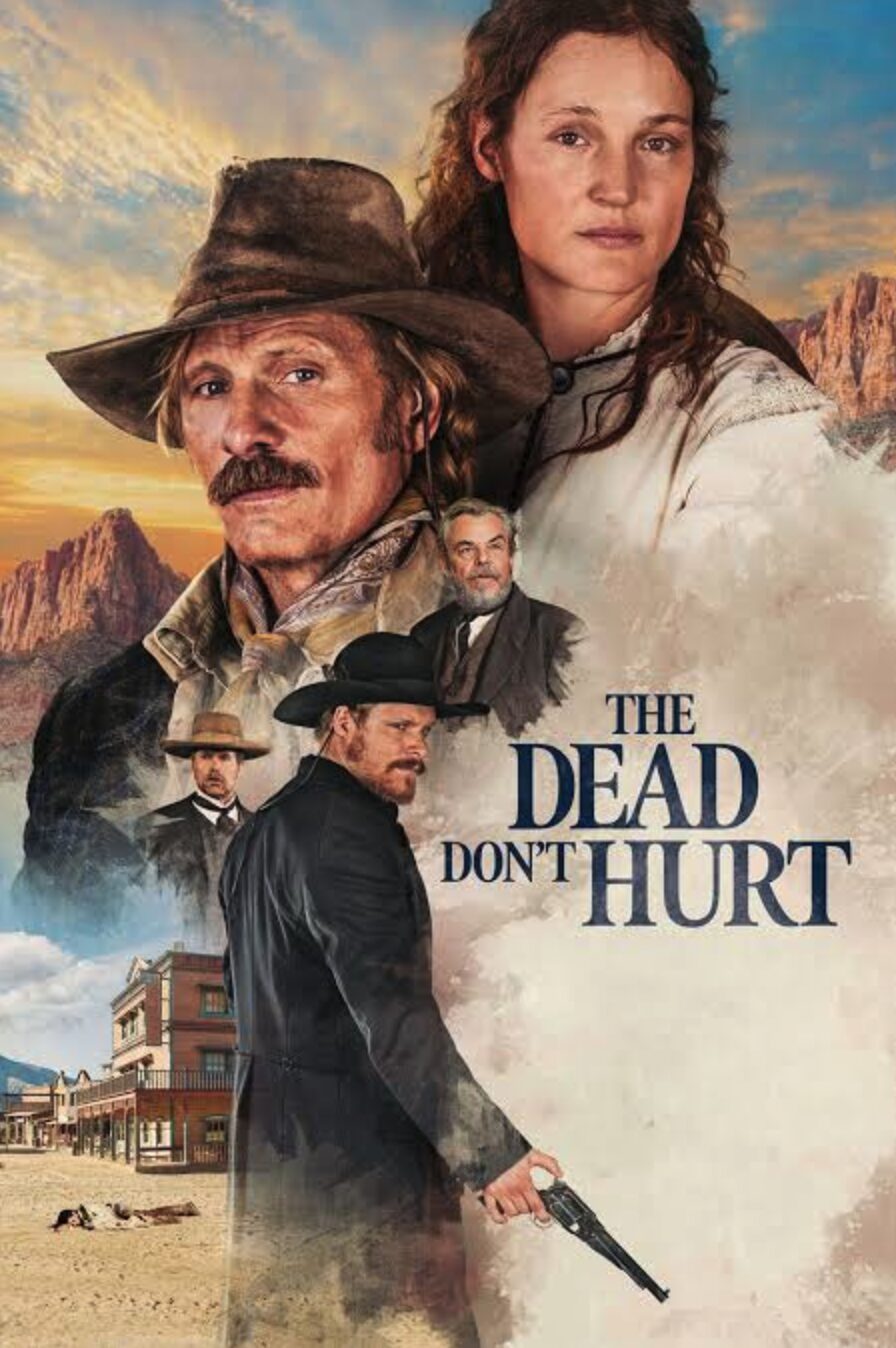
Viggo, a fine actor, not only stars but wrote, directed and composed the music for this downbeat tale of love and revenge. This is no John Wayne oater, this is serious stuff, more serious even than ‘The Shootist’ which saw a dying and ageing gunfighter stage one last hurrah before he went into the final sunset.
On the face of it, Viggo’s film is a traditional western. There is a hissable bad guy, some slimy corrupt officials, there are gunfights and fist fights. But there’s a depth here that is lacking in some other films, a believability, an intelligence. Even the villain has some shades of grey.
My only criticism is the scenes where characters are speaking French with no subtitles. We’re not all bilingual. Some of us are barely monolingual.
Speaking of Big John, I took in a bit of ‘The Big Trail’ (Talking Pictures), his first starring role in 1930. This was a 70mm film – yes, in 1930 – in which he played the scout of a wagon trail heading west (where else?). Despite the outdoor locations, this remained fairly stagey. Talkies had only been going for four years, remember, and actors had been drawn from the stage and some tended to project their lines as though they wished to hit the back wall. Wayne seemed awkward and unsure of himself. He’d not yet perfected his on-screen persona. That would come later, thanks to John Ford.
I also took in a bit of the Randolph Scott western ‘Ten Wanted Men’ (Great Movies). I’m a fan of the westerns he made with director Bud Boetticher in the late 1950s, seven films known as the Ranown cycle, some written by the under-appreciated Burt Kennedy. This one was NOT part of that magnificent seven and it shows. The dialogue was awful, the music overly dramatic in places, Scott seemed bored. Even Richard Boone, an actor who could usually be relied upon to bring some kind of quirk to his lines, was shallow and unremarkable.
And then it was onto the final western of my mini festival.
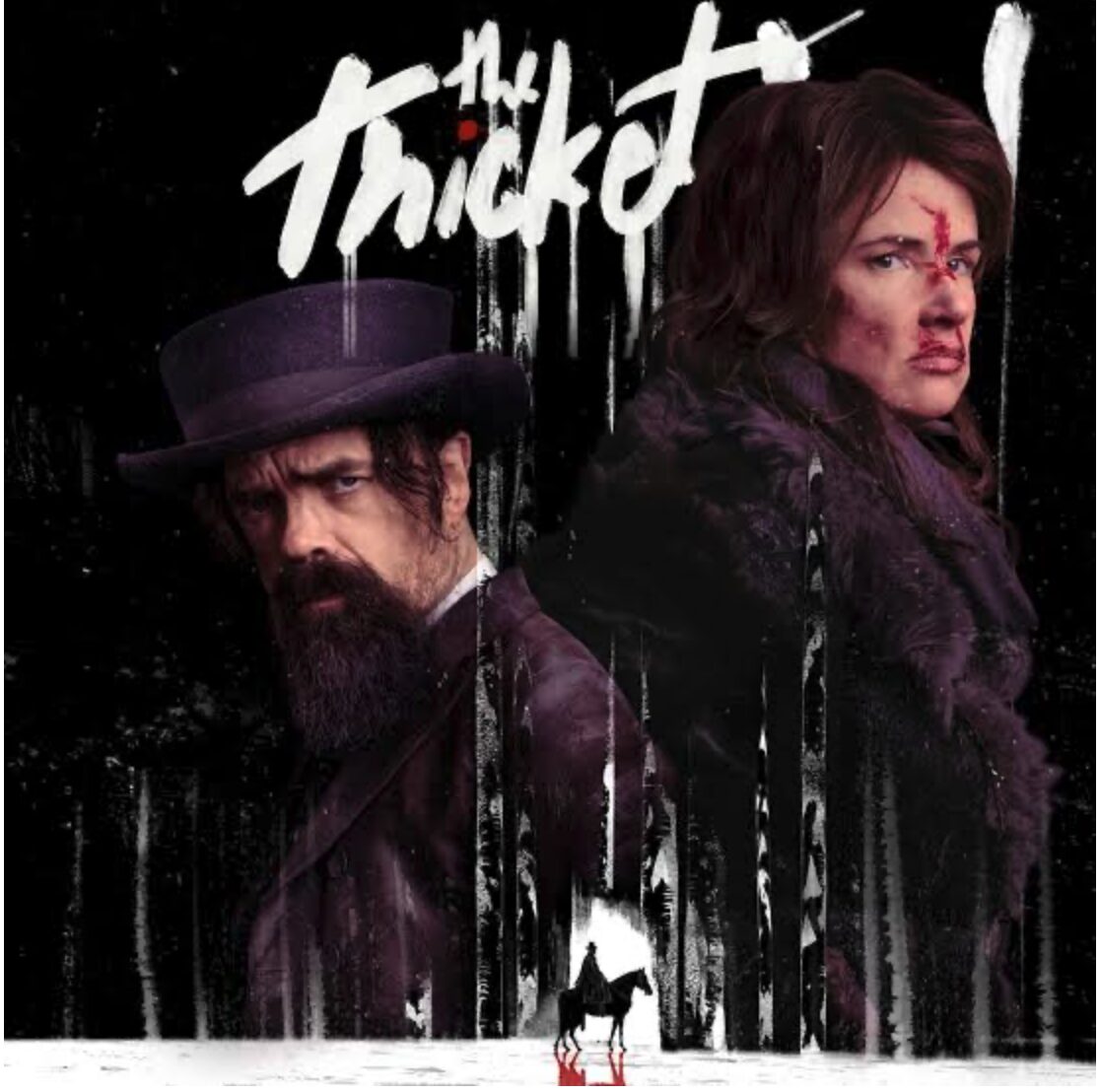
‘The Thicket’ (Sky Movies) is based on a book by Joe Lansdale and was something of a passion project for Peter Dinklage, who also stars. It featured some fine snowbound locations as Dinklage and others searched the wilderness for a young woman kidnapped by the villainous and deranged Cutthroat Bill, played Juliette Lewis (her full name was Wilhelmina).
As with most modern westerns, this was bleak stuff. The action was tough, there’s a lot of blood spilled, and the performances were excellent. Dinklage is always good while Juliette Lewis seemed to relish her role. (She’s also getting to look more and more like her father, Geoffrey Lewis, who appeared in a number of films with Clint Eastwood).
And that was that. I’d lived through gunfights, knife fights, beatings and Indian attacks and came out the other end with no desire to experience any of them in real life. Along the way I’d seen people fall in love, grieve, have families, try to get on with their lives despite the attentions of pesky varmints. Westerns are just stories, after all, and the best of them – like all good stories – are about the people. All three of these films were, first and foremost about the people. They had depth of characterisation, perhaps not across the board, and a weight that carries them far above the likes of the Randolph Scott entry. (The Ranown Cycle made up for that, as did ‘Guns in the Afternoon’, his final film, which he made with Sam Peckinpah).
As for the gangster and horror flicks?
‘Angels With Dirty Faces’ (blue ray) remains a solid classic, even though it’s 86 years old (crivvens). Cagney was the bee’s knees.
The most recent version of ‘Salem’s Lot’ (Sky Movies) had its moments, a fairly exciting climax not featured in the book, but still pales in comparison to the 1970s mini-series. I really missed James Mason saying, ‘You’ll enjoy Mr Barlow. And he’ll enjoy you…’