Nine years following the Castle Toward case, a woman who poisoned her neighbour and a lodger caused something a fashion sensation – for the tartan she wore was subsequently shunned by the women of Glasgow for a number of years.

Elizabeth Jaffray, sometimes known as Nickleson, Shafto or Jeffrey, murdered her two victims in Carluke in Lanarkshire. Ailing Ann Newal, or Carl, died on 5 October 1837 after eating some meal and water with whisky prepared by her ‘kindly’ neighbour, who told her it was medicine.

Jaffray’s lodger, Highland miner Hugh Munro, met his death on 30 October after first eating some porridge and then some rhubarb. Her motive was that old faithful, money. The Crown stated that she owed Munro £5 but could not pay it back, so decided that murder would be the cheapest way out of the debt. However, villagers believed that she merely wanted him out of the way to take in a more profitable lodger.

Her motive for killing her neighbour? It was believed she had discussed the easiest way to poison someone with poor Mrs Newal, so that made her a liability. 

Following a trial that lasted 18 hours, Mrs Jaffray was found guilty and sentenced to hang. However, ‘a few Quakers and other eccentric individuals’ campaigned to have the sentence commuted. A broadsheet went on to say that ‘these characters say it was a mighty piece of unheard-of cruelty to execute BURKE!’ 

‘But we have no patience with them,’ the writer continued. ‘Their mawkish ravings are an outrage on nature and common sense, how humane, and kind, and charitable they are to the cold blooded murderer – while not a sigh is given for the innocent butchered victims!’

Mrs Jaffray was executed in Glasgow and a large crowd clustered on the Green to see her go. She had refused to confess to her crimes and feeling against her ran high. As she stepped onto the platform wearing a shawl in the distinctive red and black check of the Rob Roy tartan. Such was the revulsion for her crimes that the design immediately went out of disfavour.

The poison she had used was arsenic which she had purchased under the pretext of poisoning rats. That very substance was allegedly used by another woman six years later.

Everyone knew that Christina Gilmour was unhappy in her marriage to Renfrewshire farmer John Gilmour. He was not the man she wished to have by her side. The match was only six weeks old when he died after a violent illness, setting tongues wagging over rat poison she had purchased. What made matters worse, she had fled the country with the aid of her brother. By that time, the heavy mortsafe, which protected her husband’s corpse from bodysnatchers, had been hauled off and the body examined by experts. The rumours proved correct – his body was riddled with arsenic traces.
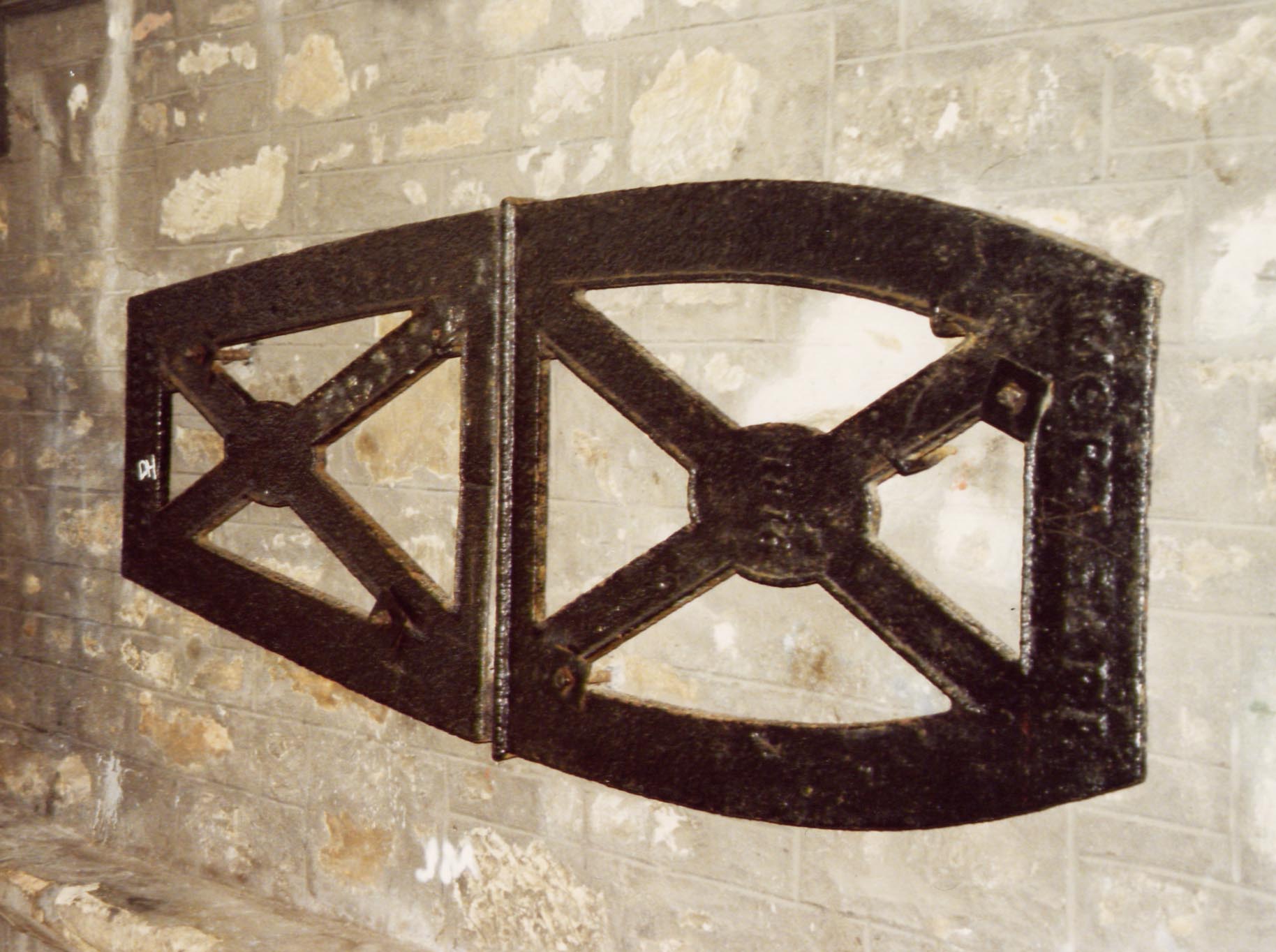
An example of a mortsafe, heavy metal lids placed over graves to deter bodysnatchers. This one hangs in the lychgate of Ayr Auld Kirk.

A dogged Superintendent of Renfrewshire Rural Police traced Christina’s movements to Liverpool, where she had taken ship for New York in the company of a man she didn’t know until introduced by an intermediary. Supt George McKay took a faster vessel and was on the quayside to meet her. Her companion, who had proved to be far from a gentleman during the voyage by making unseemly advances, vanished into the crowds.

The 24-year-old suspected murderess gamely battled extradition. Her US lawyer cited a recent extradition treaty between the two nations that stated a person accused of a crime could only be sent home if there was clear evidence of criminality. During the hearing she even feigned insanity. It was all to no avail for in August 1843 she was sent home to face the legal music.

In January the following year, Christina Gilmour stood in the High Court at Edinburgh to face trial for murder.

During the two day trial, dressed in black, a simple gold wedding band on her left hand, she listened dispassionately to the evidence. She heard witnesses speak of her purchases of arsenic. She relived her late husband’s extended, agonising death. She watched as medical witnesses produced a grisly succession of the dead man’s internal organs to illustrate their belief that he had been poisoned. 

The law prohibited accused persons from giving evidence but their declarations could be read into the record. In it she denied murdering her husband. The arsenic was not to kill rats, as she had claimed at the time, but to kill herself, such was her unhappiness in her marriage. Her husband was not a bad man but he was not the man for her.

Her defence counsel raised the possibility that John Gilmour had killed himself. He already kept arsenic around the house for the control of vermin and he had shown a somewhat dramatic nature during his courtship when he had threatened to kill himself if Christina, dithering over another man who she saw as her real love, did not agree to marry him. He knew his wife was unhappy, it was even said that the marriage was unconsummated, and it was possible those earlier thoughts of taking his own life had resurfaced.

Would this attempt to raise the famed shadow of a doubt be enough to save this young woman from the gallows?

The jury was out for only an hour.

Christina, a cup of water in her hands, sat immobile as the fifteen men delivered their verdict on whether she would live or die. The packed courtroom hushed, as if everyone present was holding their breath, and the solemn voice of the Clerk floated towards the high ceiling. 

‘The jury, after a careful and mature consideration of the evidence brought before them in this case, are unanimously of the opinion that John Gilmour died from the effects of arsenic poisoning.’

That much was expected, the medical evidence had been so compelling. But had the jury decided that his wife had in fact laced his food and drink with the poison? Journalists’ eyes watched for some emotion from the woman in black sitting in the dock but there was none. Then the Clerk spoke again.

‘But find it not proved against the prisoner at the bar, as libelled.’

The court room erupted, for there was strong support for the accused, and the judge demanded order, finally quietening the public gallery with strong threats of contempt. Still Christina’s blank expression did not change. There was not even as much as a flicker of emotion as she left the court. She later returned to her father’s home in Ayrshire and died in Stewarton, aged 87 and still in widow’s weeds, having never married again.

Thirteen years later, Madeleine Smith stood accused of poisoning an inconvenient and mercurial lover with arsenic concealed in hot chocolate. Perhaps Christina read of it and sympathised with the plight of a woman wrongly accused. Or perhaps she smiled a secret smile…

You can find my brief account of the Madeleine Smith case here:
http://douglasskelton.com/a-lethal-dose-of-arsenic/

POISON, they say, is a woman’s weapon, the perception being that there is something decidedly unmanly in slipping a victim a noxious substance rather than facing up to him with a weapon. Like all generalisations, it does not bear up to scrutiny. 

In 1828, a husband and wife team used laudanum to dull the senses of their victims before they plundered their pockets. No-one knows for certain how many men they robbed in this way, or how many they killed by dosing them with too strong a mixture. Although convicted for only one killing, they almost certainly murdered more, making them two of Scotland’s most prolific – if forgotten – serial killers.

They called it ‘Tipping the Doctor’ – lacing drinks with opium-based laudanum and then rifling the pockets of the insensible victim. Although it was fairly common in the 19th century, it was John Stuart and his wife Catherine who seemed to take the practise to new levels.

Stuart wasn’t his real name – he was in reality John Bradfoot – and he had been married before. The respectable family of his first wife were non-too-impressed by their daughter’s choice of match and they never lost an opportunity to let him know. Eventually, he could take their constant criticism and sniping no longer and he took his bride away and joined the Marines. His wife could not stand being apart from her people and she sickened and then died in Chatham Barracks. Bradfoot obtained leave to the their young son back to Scotland, but never returned to his regiment.

Now a deserter, his low self-esteem caused him to be alienated by his friends and he fell into bad company. It was but a short step then to turning thief, if not of the top drawer, sheep-stealing, The Scotsman later observed, being his ‘boldest adventure.’ He picked pockets, he cheated at cards, he became a ‘coiner’ (a counterfeiter), he drank, he whored – and raised his standing among the ‘idled and unprincipled profligates’ he called friends when he broke out of Stranraer Jail.

It was while he was working as a coiner and forger alone – he having no faith in the honour of his fellow thieves – that he met Catherine Wright. She was 20 years of age and she became besotted by him – he could be very charming when he wasn’t blind drunk. They were married over the anvil at Gretna and he introduced her to a life of the passing bad money.

Coining proved too much like hard work and they decided to try ‘tipping the doctor’. All they had to do was select their mark, load him up with booze laced with laudanum and then rip him off at their leisure. The beauty of it was that they could spend their time in taverns and inns and still make some cash. The pair set off for Glasgow, where they believed there were richer pickings.

Laudanum was a highly addictive mixture of opium and alcohol which was viewed as a cure for all ills but used by the poorer classes as a soporific. It was easily obtained and an ideal tool for ruthless crooks. It was also very dangerous and it was not long before they killed their first victim, a little man in a Glasgow bar who was simply grateful that he had some convivial company. Another was left to die in a Bridgegate tavern, having been robbed of 30 shillings. During a sojourn in Ireland, they robbed and killed a drover, taking the 20 sovereigns he had hidden in the tail of his coat. 

The man who proved to be their downfall was farmer and merchant Robert Lamont, who left his home on the island of Ulva to make his annual pilgrimage to Glasgow to buy supplies. The 50-year-old father of four met the Stuarts on the Toward Castle packet steamer as it made its way from Lochgilphead. Below decks, they plied Lamont with drink, ‘tipped the doctor’ and took his £12 in bank notes, seven guineas and silver coins. He was found seriously ill before the boat berthed and died the following day. The Stuarts were arrested on board with cash and Lamont’s hand-stitched silk purse on their person. A small bottle of laudanum was also discovered.

THE GOVERNOR’S TOWER IS ALL THAT REMAINS TODAY OF CALTON JAIL IN EDINBURGH

They were sent to Edinburgh to languish in the Calton prison until their trial. Stuart, though, believed that no prison could hold him. He and eight other ‘stout and desperate ruffians’ planned to kill their way out using home made weapons. The plot was uncovered and spikes sharpened into daggers found under Stuart’s bed.

‘It was no more than anyone else would have done,’ he said when confronted.

He was described at the time as ‘one of the most accomplished villains that ever came under the cognizance of the law. He was ardent and fearless – resembling in these respects the lower animals, which rush forward with an impetuosity which nothing can impede.’ His wife, though, was ‘very penitent’ and had been haunted with visions of their first victim, the little man in Glasgow who had been so grateful for their company.

The charge against them was that ‘they did both, and each, or one or other of them, did go onboard the Toward Castle steamship plying on the River and Firth of Clyde from Inveraray to Glasgow and, when the said steamship was between Tarbert and Glasgow, they did wilfully, wickedly and feloniously administer to Robert Lamont, a passenger, a quantity of laudanum, being a deadly poison.’

The defence bravely tried to have the charge vacated on the grounds that there was no way of knowing when the poison was administered – and indeed, the couple might have given him the laudanum with the best of reason, if he was feeling ill while at sea. If so, the capital murder charge should be reduced to culpable homicide, what they call in England and elsewhere manslaughter. The fact that they had then robbed him was a bit trickier.

The objections were dismissed witnesses were presented and the pair was found guilty by the jury (numbering 15 in Scotland). The judge described the crime as being of ‘the most novel, most dangerous, most subtle and most daring nature.’

While awaiting execution, the couple were allowed to be together and displayed deep feeling for one another.

Before they were hung on 19 August 1829, Stuart admitted that they had killed eleven men. A contemporary broadsheet stated that ‘With the exception of Burke (the notorious Edinburgh murderer who along with William Hare and their wives supplied cadavers for anatomists) no criminals have excited so much detestation.’

In the midst of a torrential downpour, over 10,000 people thronged Edinburgh’s Lawnmarket to watch the deadly duo die. Just before the lever was pulled, Stuart reached out as best he could to grip his wife’s hand and together they fell through the trap.