
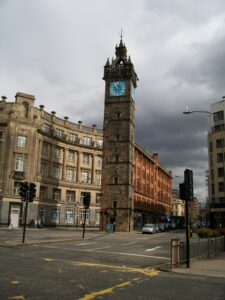
Nobody likes to be taxed but in previous centuries displeasure at the levying of duty could lead to displeasure becoming violence. In the wake of the Act of Union in 1707, feelings ran high in Scotland and the unpopular Malt Tax imposed by Parliament led to a riot and bloodshed in Glasgow.
THE tall man’s slim shoulders stooped as usual, his slight chest tucked in. It was the Sabbath and he was dressed in his Sunday best, his mind many miles away from the city parkland on which he walked. At other times he might have pondered his own mortality, for he was obsessed with his own health, the result perhaps of his brothers and sisters all dying as infants and a mother who therefore spoiled him. But hypochondria was not his concern on this day. Neither was his mind on his young wife, waiting at home, nor was he contemplating spiritual matters. No, on this fine Sunday afternoon on Glasgow’s Green, the tall, sensitive young man dressed in his finery was wrestling with more earthly matters, which would certainly not have pleased the stern Presbyterian ministers, for even in the latter half of the 18th Century it was still deemed a sin to do anything other than contemplate the Father, the Son and the Holy Ghost on the Sabbath.
The mystery on his mind was not the holy trinity but how to crack a new way of making steam engines more efficient and more powerful.
It was May 1765 and during that stroll across the Green, James Watt’s agile mind lit on the separate condenser. Contrary to popular legend, there was no boiling kettle but there was a flash of inspiration that would help kick-start what became known as the Industrial Revolution – a revolution that was to transform Glasgow into a powerhouse of industry.
Glasgow, though, was already prosperous. When St Mungo first led his oxen into that dear, green spot by the Molendinar Burn there were already men making some kind of living, sparse and basic though it may have been. As the settlement grew, so did its fortunes. The River Clyde swam nearby and could be forded at what would later become known as the Stockwell. However, the waterway was too shallow to allow anything but the most basic shipping to take coal, cloth and herring to the Continent. Something had to be done to deepen it and that was a problem that would eat at the city traders and engineers for three centuries. A port was established down river, nearer to the estuary, and it took its name from the burgeoning city inland. Port Glasgow became the city’s business gateway to the world until the advances by James Watt and others led to the creation of machines that were able to dredge channels deep enough to allow the great ships to proceed further.
Business may have ticked along but there were dark times in the late 17th and early 18th centuries. Scottish traders were prevented by their more powerful English counterparts from doing business to any great degree in the promised lands of the New World. The Darien Scheme, an ambitious plan to break the stranglehold the Spanish and English had on trade in that quadrant, ended in disaster. The colony was lost and much of Scotland’s capital with it. Then, six years later in 1707, the Scottish and English Parliaments became one. There were many in Glasgow who opposed the Union and took to the streets to voice their opinions but others, magistrates and merchants, saw that there was benefit – and profit – in the idea. With the Union came the scrapping of the Navigation Acts that prevented fair trade – and Glasgow’s first golden age arrived. Traders were soon making fortunes from sugar and tobacco, not to mention the sale of flesh, for many of the city’s great men were also slavers. They took the human cargo on board at the markets of West Africa, shipped them across the Atlantic to the plantations of the West Indies and the American Colonies then returned with the sugar and tobacco, and later cotton, from the fields. By the latter half of the 18th Century, Glasgow’s Tobacco Lords were responsible for over half of the valuable leaf imported to this country. From Glasgow the bulk of it moved on to Europe.
Beneficial as the Union ultimately proved to the pockets of the rich and growing ever richer, there were drawbacks. One was taxation. In addition to the costs of running a country, governments had very expensive wars and growing bands of politicians and bureaucrats to pay for so many forms of taxation were applied. A tax on income was mooted but viewed by the landed gentry with some suspicion (it being considered somehow ungentlemanly for one to disclose how much money one earned) so other means of duty were devised to help fill the central coffers.
The Window Tax was a property tax which was a forerunner to the much later rateable value system and the Council Tax, for it was deemed that the more windows a landowner had in his home, then the better off he would be. But homeowners simply bricked up windows to avoid paying the duty.
The Malt Tax was one of the most unpopular. It was already in operation in England and influential MPs there ensured that it was extended to Scotland. Malt was used for making ale and yeast for bread and so the tax was viewed as a government attack on two basic staples of life. After a long period of wrangling, it was finally levied on Scotland in 1725.
And for Glasgow, it was to bring trouble – and death – to the streets.
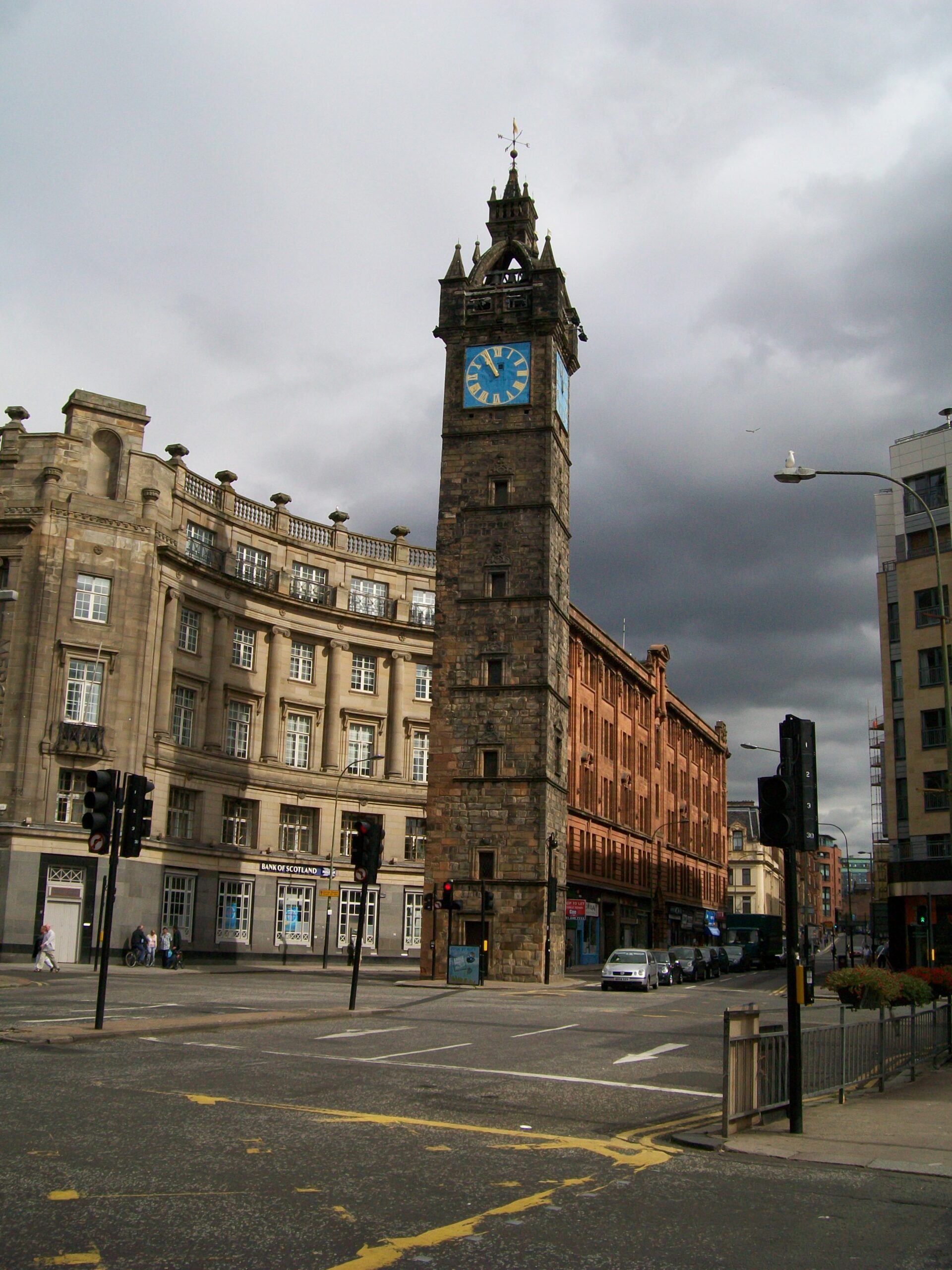
Glasgow merchant Daniel Campbell of Shawfield was one of the Scottish MPs believed to have supported the levy on his homeland. On 23 June the tax was due to be collected for the first time and crowds of people, many described as ‘idle women and boys’, thronged the streets and by-ways in and around the city to prevent the excise officers from entering those barns and premises where beer and bread were made. Wherever a group congregated, a magistrate did his best to move them along.
At this stage everything was peaceful, if somewhat voluble, and there was no pressing cause for alarm, which was just as well because there was no real military presence to keep the peace, there being only a group of town guards who were little more than nightwatchmen. It was their job to walk the streets at night and raise the alarm in cases of fire and also to tackle drunken or larcenous behaviour. However, by the following day the mob had increased in strength and in determination – and that night two companies of Lord Delorain’s Regiment of Foot arrived to take control.
They were commanded by a Captain Bushel and the town council ordered that the guard house be cleared to allow the soldiers to billet there. The mob, though, would have none of it. They attacked the men who were emptying the guard house at the south west corner of what was then known as Candle Street – now Candleriggs – and seized the keys. They then locked the doors. Lord Provost Charles Miller seemed eager not to enflame the situation so he did not ask that the soldiers force their way in but decided to have them lodged with local families. Convinced that further trouble had been avoided, he and his fellow magistrates retired to a nearby tavern for some refreshment.
Trouble, though, had not been avoided. At about ten-thirty, while they were enjoying a convivial glass or two, word reached them that the mob had turned its attention to the home of Daniel Campbell, which was ‘in one of the extremities of the town’. When they reached the mansion, near present day Glassford Street, they found a boisterous congregation of men and women armed with axes and hammers preparing to demolish it. As luck would have it, the MP and his wife were spending a few nights in their country residence just outside Glasgow. Nevertheless, the crowd wished to tax him for the duty that he had played a role in inflicting on them and his property would do just nicely.
Lord Provost Miller and his colleagues tried to convince the ‘sturdy young fellows’ to desist but they were ignored. Matters turned ugly when another group of locals showed up and threatened to ‘cut the provost and his company to pieces’ if they did not leave them to their work. The magistrates attempted to stand their ground but eventually broke ranks and fled when the rioters showed they had every intention of being as good as their word. The house was attacked with gusto and soon was wrecked.
‘The rioters being thus absolute masters of the house’, wrote a Glasgow gentleman afterwards, ‘spared nothing but the walls, floors, and roof, which they could neither so easily, nor so suddenly pull down; of the household goods, some part they destroy’d, and other part carried off: yet a good part of the most valuable furniture was saved for Mr Campbell’s use, being carried off by honest people who went in to save what they could.’
Word reached Captain Bushel at his billet, and he sent a sergeant to ask the Provost what he would have him do. The Provost considered the situation and again decided that the deployment of the military would only exacerbate an already volatile situation. The soldiers were tired after their march to the city and it was feared the beating of the drum to call them to arms could enflame the passions of the rioters. Tired soldiers, frightened soldiers, could be trigger happy. Miller sent word back that the Captain and his men were to remain in place.
At first it seemed his decision was the right one. Having vented its fury on the bricks and mortar, the mob dispersed and the following day the council ensured that the building was boarded up. By lunchtime, the soldiers were lodged in the Guard-House and the events of the past two days seemed settled – at least until mid-afternoon, when a huge crowd of people was seen heading back to Daniel Campbell’s house for another bout of ad-hoc demolition. At their head was a man for some reason dressed as an old woman, beating a drum. And those he led were armed with clubs.

At the Guard-House they paused to jeer at the soldiers standing sentry. Captain Bushel heard the commotion and ordered his men out into the streets, where they formed ‘a hollow square’ facing out into the four streets that converged on the area. Flintlocks were primed and ready and there on a summer’s afternoon the two sides faced each other – the soldiers in their proper formation with the ragged edged mob, said to consist mainly of women and young boys, crowding on all sides. Then, someone threw a stone and this was seen as a signal for others to launch a fusillade of rocks at the soldiers. Bushel picked out one young man closest to him and attacked him with his cane. It was said that he beat the man so violently that his ‘half pike’ broke into pieces. Still the shower of stones rained on he and his men.
‘If you do not immediately desist from this course of action,’ Captain Bushel cried out, ‘then I swear by God I will cause my men to fire.’
Another volley of stones was lobbed and the Captain made good on his promise. His men were ordered to present their arms and some people at the front realised what was going to happen. They tried to edge back, to get away from the broadside that was sure to follow. But those at the rear had no real idea of the danger ahead and continued to push forward. There was a rattle of gunfire and smoke puffed up from barrel and flashpan. There were screams then, as the crowd panicked and broke up but two men, said to have been innocent bystanders going about their lawful business, already lay dead, while others were wounded.
Some men playing bowls in Candle Street heard the gunfire and dashed to the corner to find out what was going on. Unarmed and guilty only of curiosity, they had to duck for cover as they were fired upon. A blacksmith walking by was hit in the head by a ball from an officer’s pistol. The same officer pulled another pistol and put another ball into a tradesman who was also passing by.
As the cries of the wounded and the dying filled the air, the crowd began to disperse, some dragging friends away from the continuing fire of the soldiers, who were now shooting at anything that moved and not just in the street. One woman was hit as she stood on a stairway in her home, another as she looked from her window.
The Provost, in the council building at the Tolbooth, accused the Captain of acting rashly in ordering his men to fire and that he should not have done so without an order from the civil authorities. The Captain replied that he and his men could not stand idly by and be knocked down in the street with stones.
While these messages were being relayed, angry citizens had broken into the council’s own armoury and carried off a variety of weapons. They also rang the fire bell for good measure, and that brought many others to the Cross to see what was going on. The Provost, fearing that further bloodshed was to follow, ordered the Captain and his men to retreat from the town. But as the soldiers began to leave the mob caught up with them and attacked.
Captain Bushell once again ordered his men to fire and a further seven people were killed instantly, with a number more wounded. A few of them would later succumb to their wounds. Among them was a shoemaker who had known nothing of what was going on. The body count has been placed as a high as twenty while a further seventeen were wounded. Only one soldier was injured. He was one of two stragglers captured during the retreat beaten by friends of the dead. The other managed to escape with the help of other townsfolk.
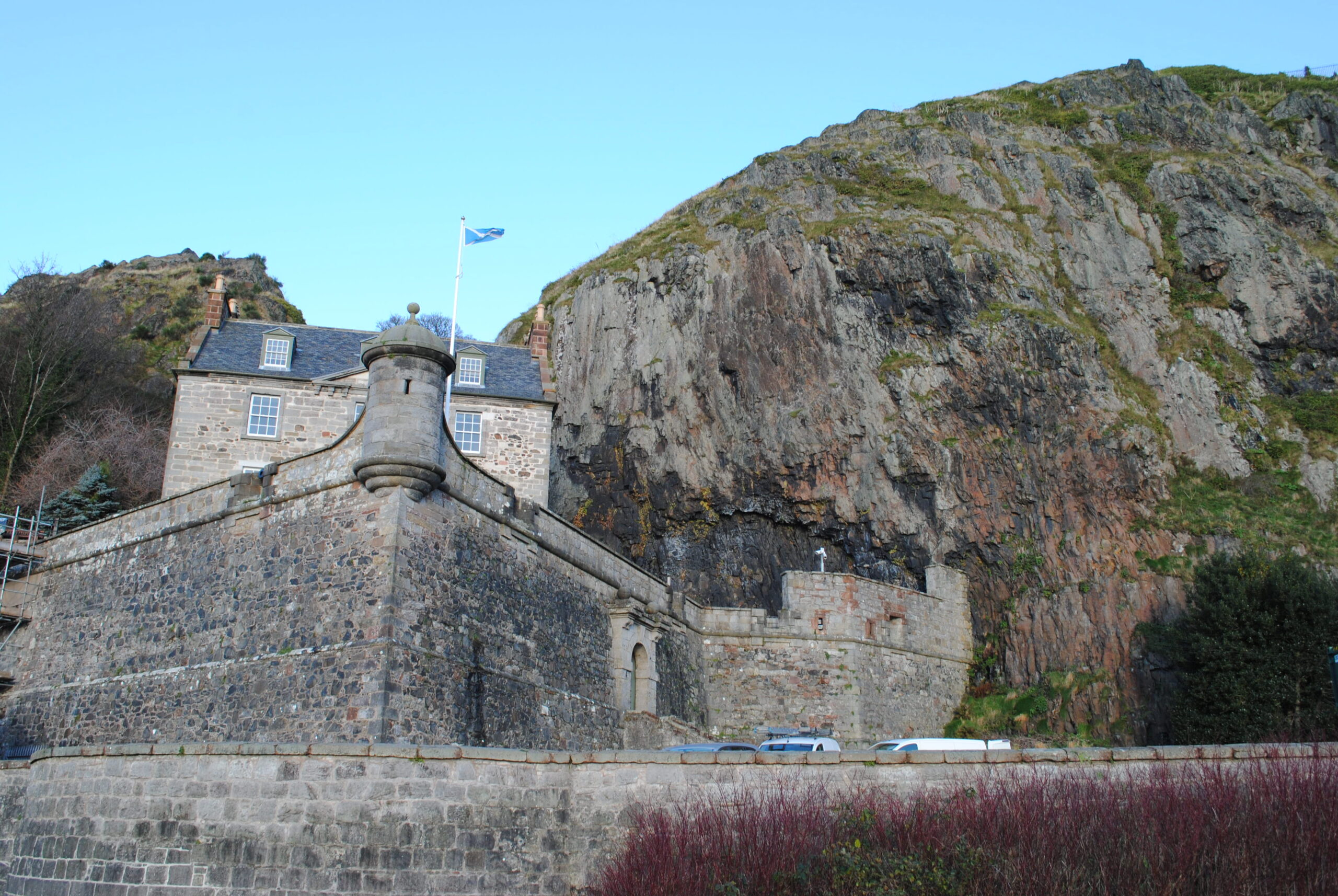
The soldiers marched to Dumbarton Castle and word was sent to Edinburgh about the Glasgow insurrection. On 9 July, 1725, General Wade – famed for his roadbuilding programme in the Highlands – was despatched to Glasgow to quell any further disturbance and to make what arrests he could. He took with him the rest of Lord Delorain’s foot soldiers as well as six troops of Royal Scotch Dragoons and a troop of the Earl of Stair’s Dragoons along with an independent company of highlanders. And just to show that he meant business, he also had a train of artillery with him. If those rebellious Glaswegians started anything with him, he would finish it.
Lord Advocate Duncan Forbes was also in the long convoy snaking its way from the east and while Wade stamped his military authority on the town, he fully intended to do the same in a legal manner. His agents mingles with the people on the streets and reported back with the names of the ringleaders. He soon had nineteen persons locked in the Glasgow Tolbooth for their part in the riots – as well as the Lord Provost and some of his fellow magistrates. It was the Crown’s belief that they had not been as ardent as they might have been in quelling the unrest.
While the nineteen men were dragged from the Tolbooth, their hands bound, and placed in the care of none other than Captain Bushel to be transported to Edinburgh for trial, the provost and his magistrates were placed under the guard of the Royal Scotch Dragoons and also taken east. It took two to three days for the prisoners to reach the capital, followed by a fifty strong party of their fellow Glaswegians who wished to show their support. There the prisoners were to be formally committed before being lodged in Edinburgh’s Tolbooth in the High Street, the notorious Heart of Midlothian. Luckily for the Provost and his friends they did not bide for long in that place for they were bailed by the Lords of Justiciary the following day and allowed to leave. On their return to Glasgow they were met by two hundred citizens on the outskirts and accompanied into the town by the ringing of bells and the cheering of crowds. No further action was taken and it was believed that the Lord Advocate had exceeded his authority in having them arrested in the first place. The nineteen named rioters were not so lucky. Some were sentenced to be whipped through the streets of Glasgow, some were banished but others were freed.
Captain Bushel was heavily criticised for his actions and faced charges relating to them. He was found guilty but subsequently was pardoned by the King and promoted to command a company of Dragoons. Many educated men believed he acted at best with ‘the utmost precipitation’, at worst that he was guilty of murder.
Daniel Campbell, it was felt, had prior knowledge that his home was to be targeted and had decamped to his country home with his family just in time. It was noted that he had managed to leave with his cash, jewels and other smaller items of value but failed to warn the authorities of the reports. However, this did not prevent him from claiming up to £9,000 in damages from the town’s authorities. The house later came into the possession of tobacco merchant and ship builder John Glasfford who gave his name to the street that now sits on the site.