
My Rebecca Connolly books are set in Inverness and the highlands and islands of Scotland. They each have a connection to either Scottish history or mythology. Both The Blood is Still and A Rattle of Bones hark back to events during and relating to the rising led by Charles Edward Stuart in 1745.
Here, I look at some of the dark incidents in Inverness over the centuries.
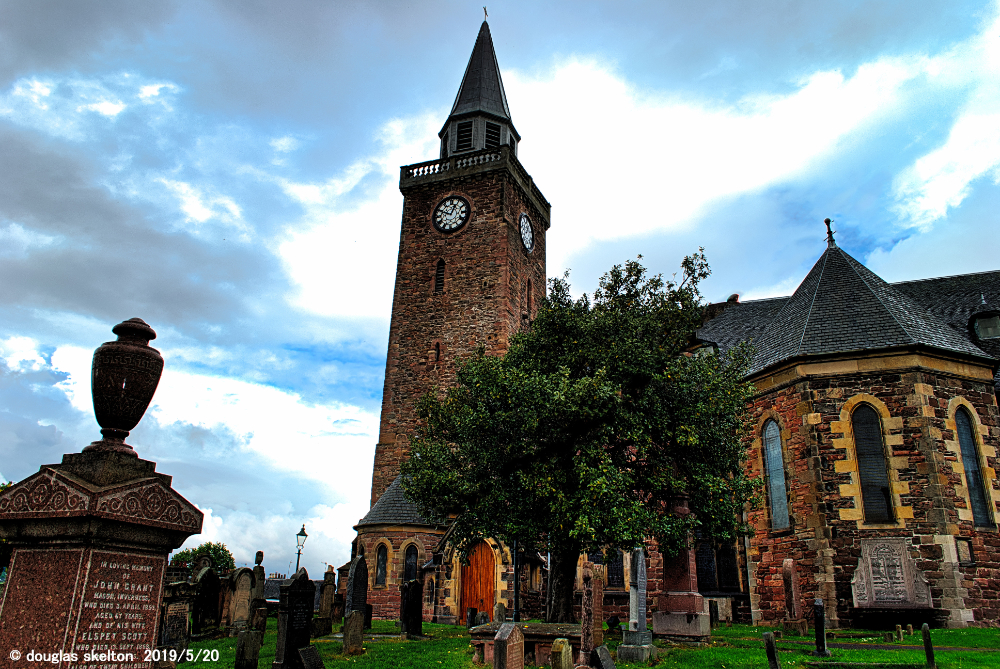
AFTER the disaster and slaughter of Culloden, Jacobite prisoners were taken to Inverness’s Old High Kirkyard in Church Street. They were held inside the building listening to the stutter of gunfire as their friends, brothers, neighbours were shot.
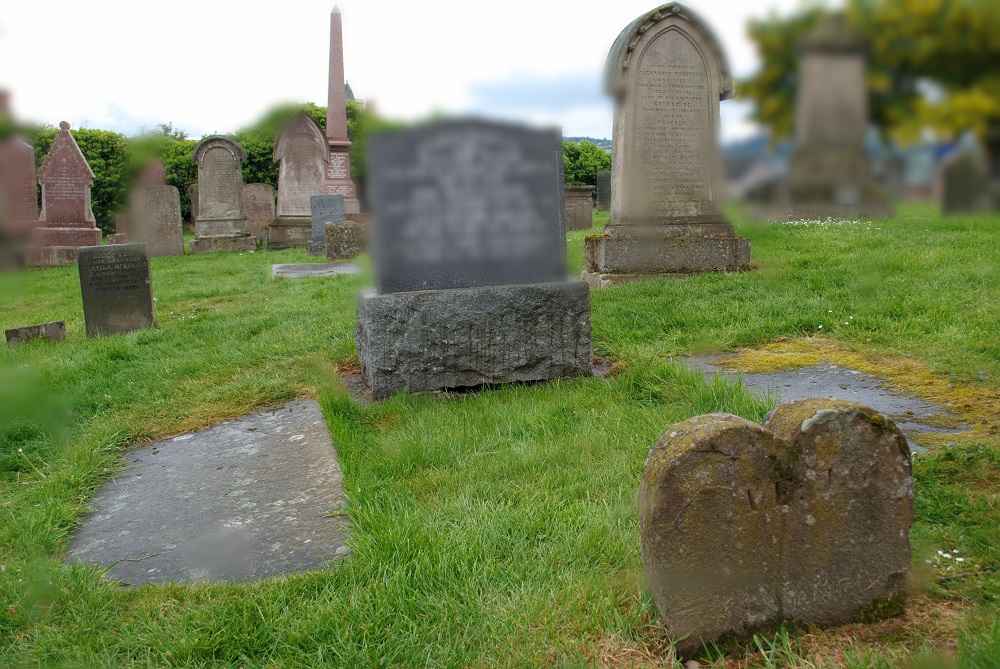
They say they were forced to stand or sit on a small headstone in the graveyard while redcoats knelt by another nearby, resting the barrels of their muskets in a hollow on the top before firing.
The town suffered greatly after the battle, for soldiers, their blood up, continued to hack and kill in the streets. John Prebble in his masterful account of the battle and its aftermath Culloden, for my money the only account you ever need to read, tells of the first trooper to enter the town chasing two men into a house near the old Tollbooth, which stood at the foot of the Castle Wynd, and cut their throats.
Prisoners were herded into the churchyards and gaols, into cellars and lofts, and into the stinking holds of ships anchored on the Moray Firth. They died in their hundreds from untended wounds, and from sickness brought on by the filthy conditions.
There was a cell known as the Bridge Hole in the old bridge across the River Ness. On good days it was half filled with water. On bad days the rats came to nip and nibble. One person sent here was Anne McKay, originally from the Isle of Skye, who was accused of helping two Jacobite prisoners escape. She lay in the foetid pit, refusing the strong drink sent to her in an effort to get her so drunk she would confess her crime and implicate others, until someone took pity on her and allowed her to leave.
Finally, those prisoners who survived the hellish conditions and brutal treatment were shipped off, for execution, for transportation to the colonies or to a life of living hell on prison hulks on the Thames.
But Inverness saw the deaths of not just Jacobites. Hanoverian deserters were marched to an execution point just outside the town and hung naked from a gibbet, their bodies mutilated after death by officers and men. One Scot who began fighting for King George but who changed sides was hung in the stolen uniform of a Major, on the direct orders of the Hanoverian commander the Duke of Cumberland, who was a hero or butcher depending on your sympathies.
And then there is the story of Murdoch McRaw, who had been arrested as a Jacobite simply because others of his name had fought for Charlie. After a ludicrous trial, he was taken to an apple tree at the town cross, all the while believing it was a joke. As they placed the noose around his neck, he said, “You have gone far enough if this be jest.” But they turned him off the ladder and he hung there for two days, soldiers whipping his dead body for fun. Finally, he was cut down and buried by beggars press-ganged into disposing of the dead. But they say the tree died that day, producing no more fruit.
The town cross where this happened can still be seen in front of the refurbished town house on Bridge Street, near Castle Wynd. It was restored in 1900. At its foot is a bluish stone known as Clach Na Cuddin and they say it is the old coronation stone of the Clan MacDonald from when they were Lords of the Isles. If anything was the centre of town life it was this. Here the women paused with their washing on their way from the river to chat with friends while men thrashed out trade deals.
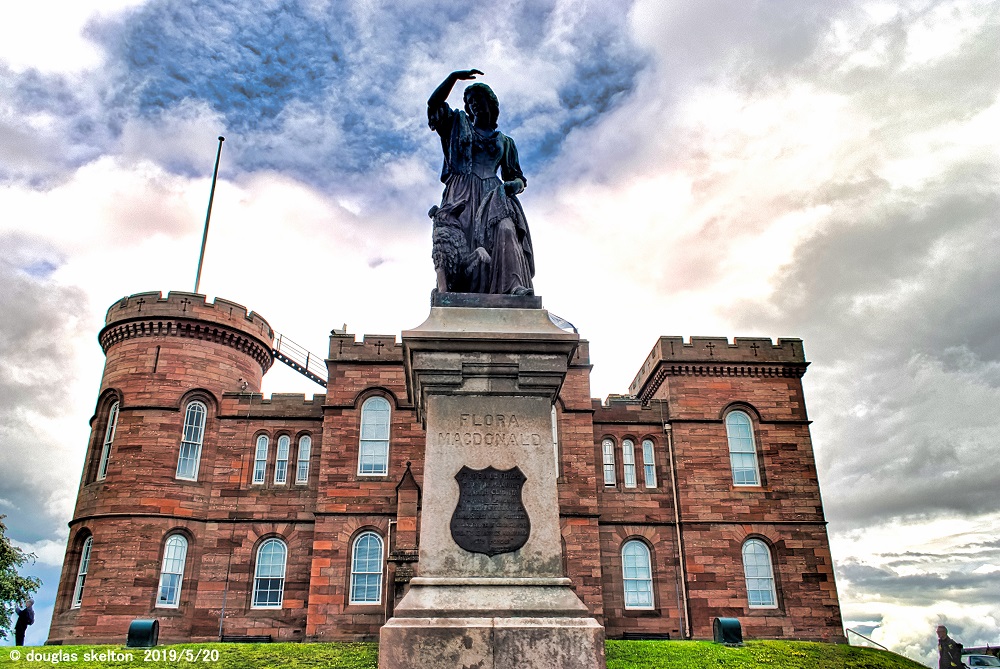
At the head of the Castle Wynd is the red sandstone bulk of the gothic castle, built in 1834. There has been a castle on or near this site since the 12th century and according to legend it is one of the many where Macbeth was reputed to have slain Duncan. If all of these stories were true then the man would have had more lives than a cat but the truth is Duncan died in Elgin. The wooden fortress perhaps/probably occupied by the real-life MacBeath, when he ruled Moray, would have been a few hundred yards to the northeast of the current building.
In 1428, the northern lords felt the weight of Stewart anger when James 1 called forty of them to his parliament convened at Inverness. He meant to subdue them and he did this by having them immediately thrown into the castle dungeons. In an admirable feat of self control for a king and a Stewart, he hung only three of them. However, it failed to impress Alexander MacDonald, Lord of the Isles, who came back later and burnt Inverness to the ground. Later, James captured Alexander and forced him to appear before him in Edinburgh clad only in his underclothes to pledge allegiance. The Lord of the Isles was then sent into captivity in Tantallon Castle perched on the coast of East Lothian.
Later, in 1562, Mary Queen of Scots visited Inverness Castle when Lord Gordon of Huntly was up to his rebellious tricks. One of Huntly’s sons refused to let her in and so the Queen was forced to find lodgings in a house at the bottom of the hill on Bridge Street. When Huntly heard the Inverness people were in support of the queen he sent word to his son to let her in. It ended not so happily for Huntly Junior for his head was removed from his body.
In front of the castle is a statue of Flora Macdonald, one of the many heroines of the Jacobite era. It was Flora, then aged 24, who smuggled Charles Edward Stuart out of Benbecula over the sea to Skye while the English searched desperately for him. She was at first unwilling to take part in the adventure that would not only change her life but make her immortal but when she did finally commit she took charge. She talked the Prince into disguising himself as her maid servant Betty Burke and managed to spirit him away to relative safety. She was caught, imprisoned first in Dunstaffnage Castle near Oban then in the Tower of London but the Prince of Wales liked the cut of her gib and set her free. She married Allan MacDonald and her fame was such that when Dr Samuel Johnson and James Boswell visited the Western Isles in 1773 they met with her. Johnson described her as a woman of ‘middle stature, soft features, elegant manner and gentle presence.’
Her adventures were not confined to the episode with Bonne Prince Charlie. She and her husband emigrated to the Americas, became embroiled in the war of independence and was imprisoned by the revolutionary forces. Her loyalist beliefs meant she was not so welcome in the land of the free so she returned home but her ship was attacked by privateers and she was wounded on the arm.
She died on Skye in 1790, her body wrapped in a sheet said to have been used the bonnie prince, her tombstone carrying an epitaph from Samuel Johnson:
Her name will be mentioned in history and if courage and fidelity be virtues, mentioned with honour.
The statue at Inverness shows her with her hand at her eyes, shielding them from the sun, while a faithful dog looks up at her.

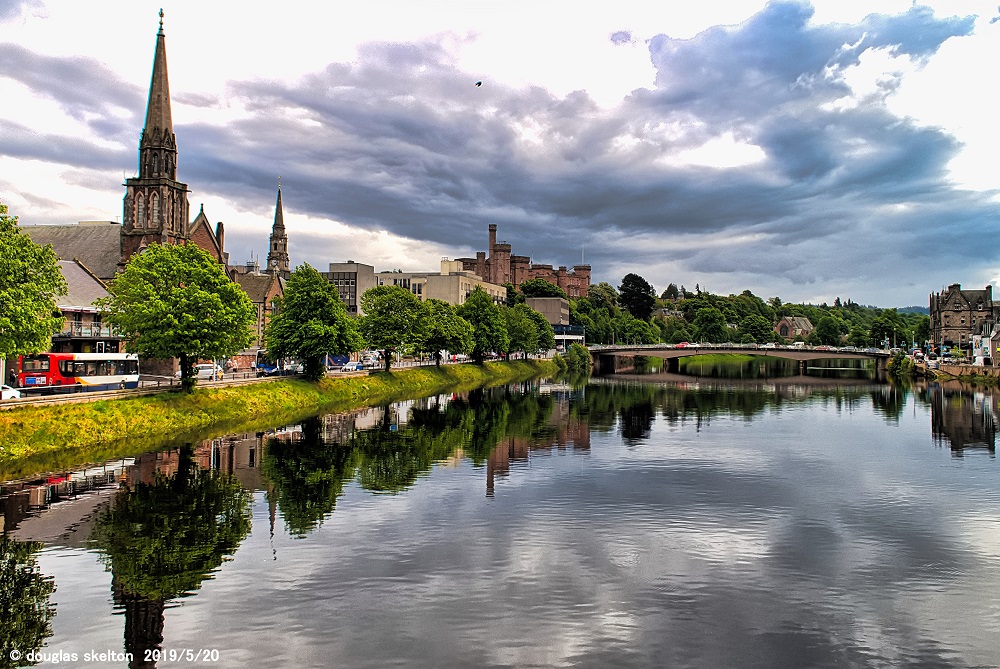
From the castle hill can be seen one of my protagonist Rebecca Connolly’s favourite views. In both The Blood is Still and A Rattle of Bones she sits on a bench here looking across to the twin spires of St Andrew’s Cathedral and the tree-covered hump of Tomnahurich behind it. This is Inverness’s famed hill of the fairies, now one of Scotland’s most beautiful cemeteries. But the fairies are still there, they say, unafraid of humanity’s burial rites and traditions. They say on dark nights the unwary walker can hear the scampering of tiny feet and shrill cry of fairy pipes. Two local men who were entranced by the sound and joined the party awoke to find themselves in an Inverness one hundred years in the future. At least, that’s how the story goes.
Near the castle, a riot broke out during the local Marymas fair in August 1665 – and it was all over the price of cheese. It began when one Finlay Dhu asked the price of a block at a stall. When the woman behind the counter told him how much it cost, he either dropped the cheese from shock or threw it away in disgust. Whatever the cause it rolled down the hill. The woman gave him the benefit of her extended knowledge of epithets to which Finlay duly took exception. An argument developed and sides were taken by onlookers. This led to swords being drawn and blood being spilled. This, in turn, led to the Town Guard being called. More swords were unsheathed and more bloodshed was imminent before the high tempers were cooled. Although there were no fatalities, a number of people were injured in the unpleasantness.
You will find buying links for the Rebecca Connolly books here: https://www.douglasskelton.com/sample-page/