What follows is my account of the battle of Culloden, which has a role to play in my modern day mystery thriller THE BLOOD IS STILL. Any views expressed are my own and I feel sure historians will have a different take on it. That doesn’t necessarily make me wrong!
THE thing I remember most about Culloden is the silence and it’s something I mention in ‘The Blood is Still.’
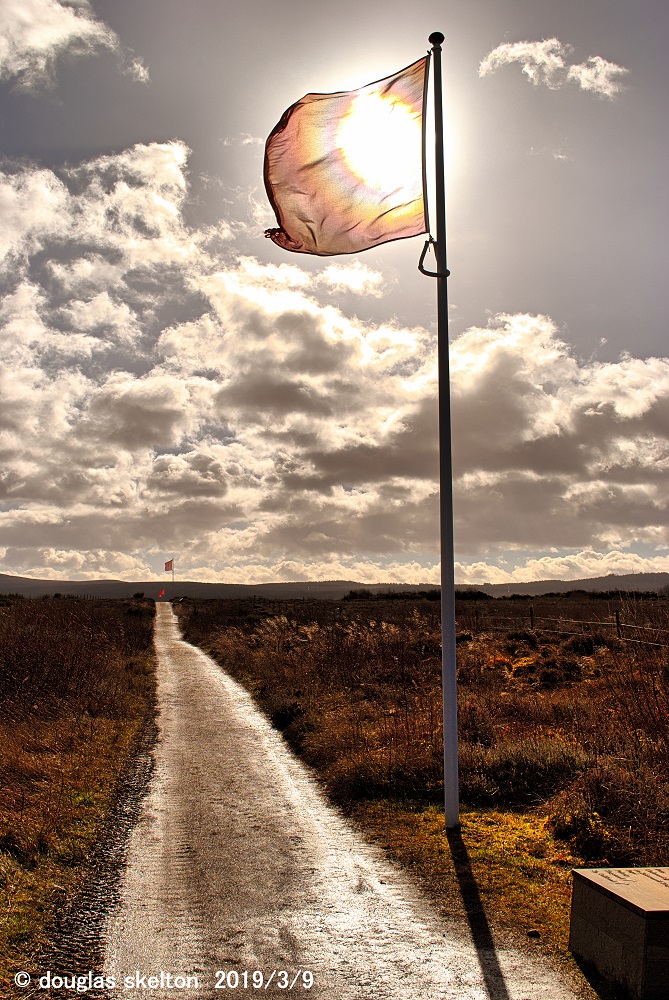
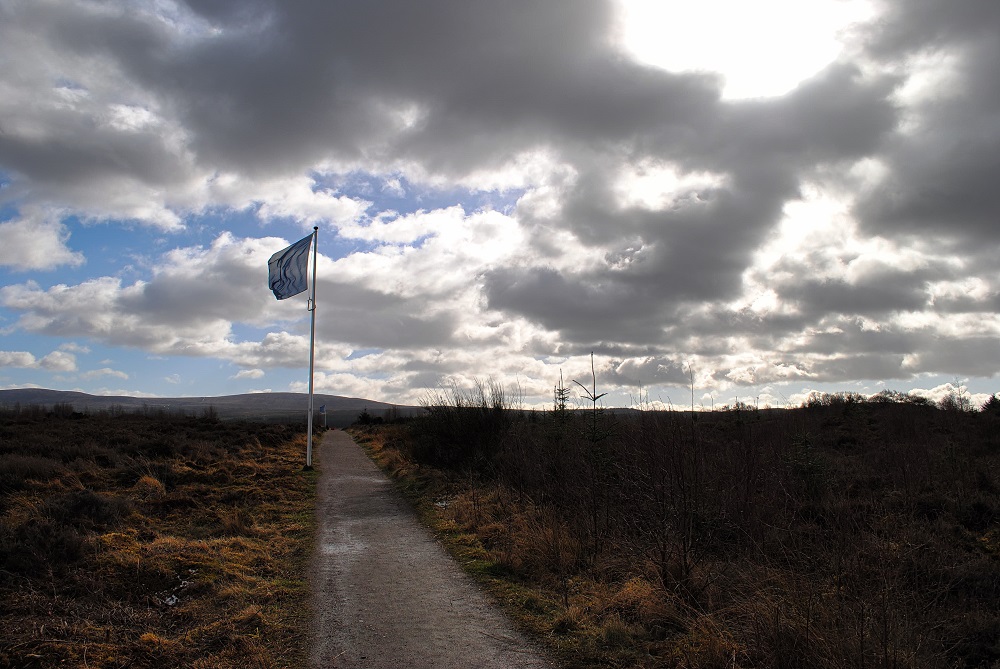
A road runs past what is left of the battlefield but somehow the sound of the passing cars, lorries and buses do not destroy the atmosphere. All I hear is the sigh of the wind through the heather and the occasional startled cry of a grouse in the bracken.
This was where the dream of the House of Stuart died on a cold, sleet-filled day in April 1746. Prince Charles Edward Stuart, ignoring the advice of wiser counsel, chose to meet Cumberland’s seasoned troops on bleak Drummossie Moor. The land was soft and marshy, quite unsuitable for the highland charge – the great weapon of the kilted warriors – but ideally suited to the disciplined tactics of the British regulars.
Charles Edward’s men were tired and under-fed, worn out from an attempted night raid against the enemy camp near Nairn, but they had returned without even having sight of them. They were also outnumbered, numbering only 5000 while Cumberland had 9000 troops, many battle seasoned in Flanders. But the clans would fight, for that was what they did best. They had proven their mettle, first at Prestonpans and later at Falkirk. They had forced their way into England as far as Derby and sent panic pulsing through London but the failure of English Jacobites to rally to their cause, disagreements between generals, a weak and petulant prince at their head and superior intrigue by Government spies had forced them to retreat northwards again.
The fighting began at 1pm on April 16 with an exchange of cannon fire, one cannonball narrowly missing the Duke of Cumberland – no mean feat for he was not a small man. But the Stuart artillery was no match for the well-trained British guns and they soon fell silent, their gunners dead or fled, and Cumberland’s barrels were turned onto the highland lines. Volley after volley was fired into the clansmen, who waited with growing impatience for the order to charge. Men fell in droves, blown apart by the lethal cannon fire or their flesh torn to shreds by grapeshot.
And still the order did not come.
Charles dithered behind the lines and ignored the pleas from his generals to allow the men to charge, to at least give them some chance, rather than just standing around waiting to be killed. Finally, the men of Clan MacIntosh and Clan Chattan could take the carnage no longer and they roared across the 400 yards of heather towards the enemy, the wind and sleet stinging at their faces, Atholl highlanders and Camerons racing up on the rear. Now it was the turn of the redcoat soldiers to wreak bloody havoc. Blistering volley after blistering volley of musket fire ripped into the charging highlanders, the bullets singing out of the cannon smoke and felling the rebels as they blundered forward. And those who did make it to the disciplined lines found the soldiers they faced had worked out a new way of bayonet fighting, thrusting not at the man in front but the man to the right, avoiding the hard targe and striking deep under the raised sword arm.
And so the bloodletting began in earnest.
Alisdair MacGillivray of Dunmaglass, of Clan Chattan, had crawled to a small spring but was shot dead as he drank. His head fell into the water, while around his fellow rebels were cut down. Later, the stream was found to be choked with dead Scotsmen and it became known as the Well of the Dead – and woe betide anyone who drank from it.
A highlander, John McGillivray, forced his way through the first line, killing twelve men before he was brought down. Another highlander, wounded and lying against the dykes, threw himself at a troop of English soldiers, killing thirteen before he himself was finally brought down. Cumberland witnessed it and expressed a wish that the brave man’s life had been spared but he had given the order that no quarter was to be given.
MacDonald of Keppoch, whose clan were smarting after the Prince refused to place them at their traditional position on the right flank, was felled as he charged, crying, “My God, have the clansmen of my name deserted me?”
Those clansmen, stung by the rebuke, followed him into the carnage.
Scots fought on the Hanoverian side, for this was civil war and families were ripped apart by divided loyalties. The youngest son of the chief of Clan Chisholm was a Jacobite, but his two brothers fought on the Government side. In this way, it was hoped families would continue to prosper no matter which royal house won. Roderick Chisholm was struck down by a cannonball and his brother found his body. They say that the Black chanter of the clan could not play if a member of the chief’s family was to die and no-one can say if the clan piper Ian Beg could draw a note at Culloden.
Meanwhile, old clan hatreds took warriors onto opposing sides. Campbells, loyal to the Crown, had found themselves a vantage point behind the walls of the Culwhiniac Enclosure and from there let loose a volley of gunfire against their countrymen, blowing the heart out of Athollmen, their ancient enemies. As the highlanders retreated, the Campbells let loose further murderous volleys before leaping over the walls and hacking at them with their claymores. Meanwhile, at a barn near old Leannach Cottage – now rebuilt and dressed up as an 18th century military dressing station – wounded Jacobite officers were burned alive by soldiers after they took shelter.
Charles was led away by his advisors, the words of Lord Elcho ringing in his ears. The young Scottish lord had commanded the Prince’s Guard and as he saw him being taken away, he cried, “Run, you cowardly Italian!”
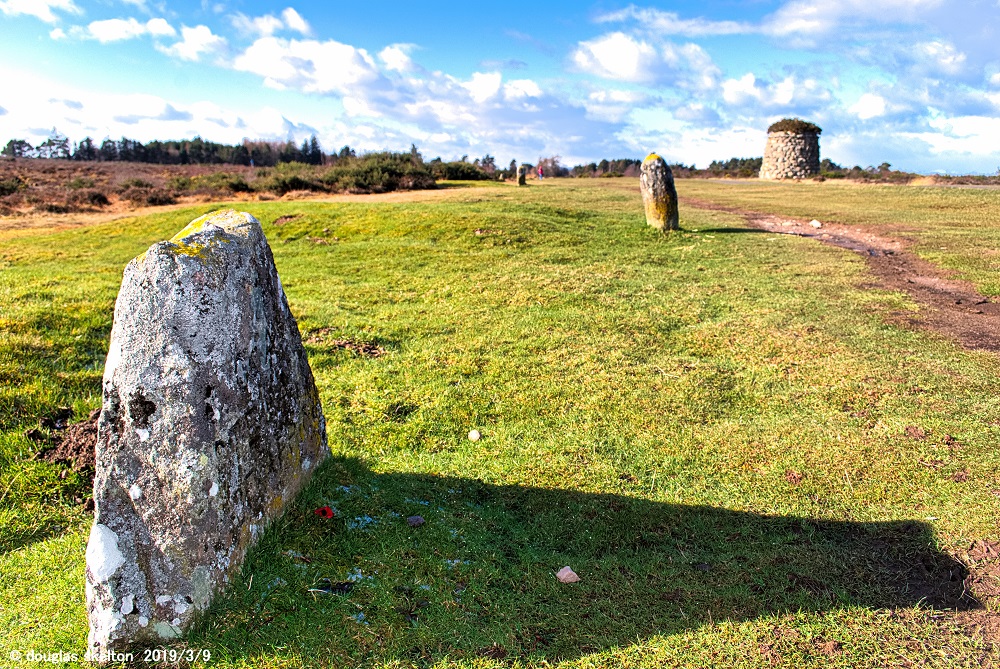
By the time the battle was over, in just over an hour, nearly 1200 clansmen lay dead on the moor – but only around 20 British troops. The highlanders were buried in trenches on the field, the site marked by a series of markers with the clan names etched on them. According to legend, no heather will grow over the graves while rowan trees protect them from evil. Meanwhile, a field is marked simply as the Field of the English.
However, the slaughter continued. With Cumberland’s order to give no quarter, redcoated troops roamed the moor, bayoneting wounded highlanders. Patrols caught up with those fleeing the field and shot them where they stood. Even innocent civilians were murdered as the blood lust rose. Such is the everlasting shame of that day no regiment today claims Culloden among its battle honours.
The atrocities continued for months after the battle as the Government came down hard on the highlands, determined to stamp out any further thoughts of rebellion, or as they hunted for the fugitive prince. The tartan was banned, the pipes were outlawed, the people were beaten into submission. Within one hundred years, the highland way of life would be nothing but a memory, the Highland Clearances finishing off what the heavy hand of Butcher Cumberland had begun.
The battlefield is preserved now, although its fringes are constantly under threat, and is one of the area’s top tourist attractions. On one visit, I heard an American woman asking a guide whether there was any hard feelings against Prince Charlie for the disaster. She was told that the only hard feelings are reserved for the English. But the English were aided by the Scots, so to hold it against them we must also hold it against ourselves.
As far as I am concerned, the memory of Charles Edward Stuart should not be honoured in Scotland, for it was his greed and petulance that brought the clans to the debacle at Drummossie, while his disregard for their health and well-being killed them as surely as the Hanoverian cannon, muskets and bayonets. Perhaps the enterprise was doomed to failure from the start. Perhaps the disagreements between his advisors – and his own hesitancy and arrogance – weakened the army’s position. Although he has gone into history as a romantic hero, largely due to his adventures after Culloden as he dodged the English patrols and ships combing the highlands for him, Scots should rue the day Charles Edward Stuart ever came to these shores.