

I was reading a magazine this morning and found a somewhat disappointing article about journalism in films, mourning the lack of romanticism in filmic depictions of the trade. The author mentioned movies that were about magazines rather than news journalism.
Now, I get that there is a great deal of disenchantment over the state of modern day journalism. Believe me, I share much of it. But to say that all journalists are in the thrall of big business, accountants and politicians is like saying that all police officers are corrupt. It’s just not true.
There is still some decent journalism out there, you just have to find it.
HINT: You won’t find it on much of social media. There are ‘journalists’ on there who are not journalists at all but politically motivated shit-stirrers. The lies and propaganda in any casual scroll of platforms outweigh any accurate reporting by a considerable degree.
However, I’m not here to talk about that. I want to look at the rich seam of movies over the years with journalists at their core, none of which were mentioned in the article I read.
You want the romance of journalism? That’s where you’ll find it, not in movies about fashion magazines and rock music.
Let’s talk about the big one first.
ALL THE PRESIDENT’S MEN.
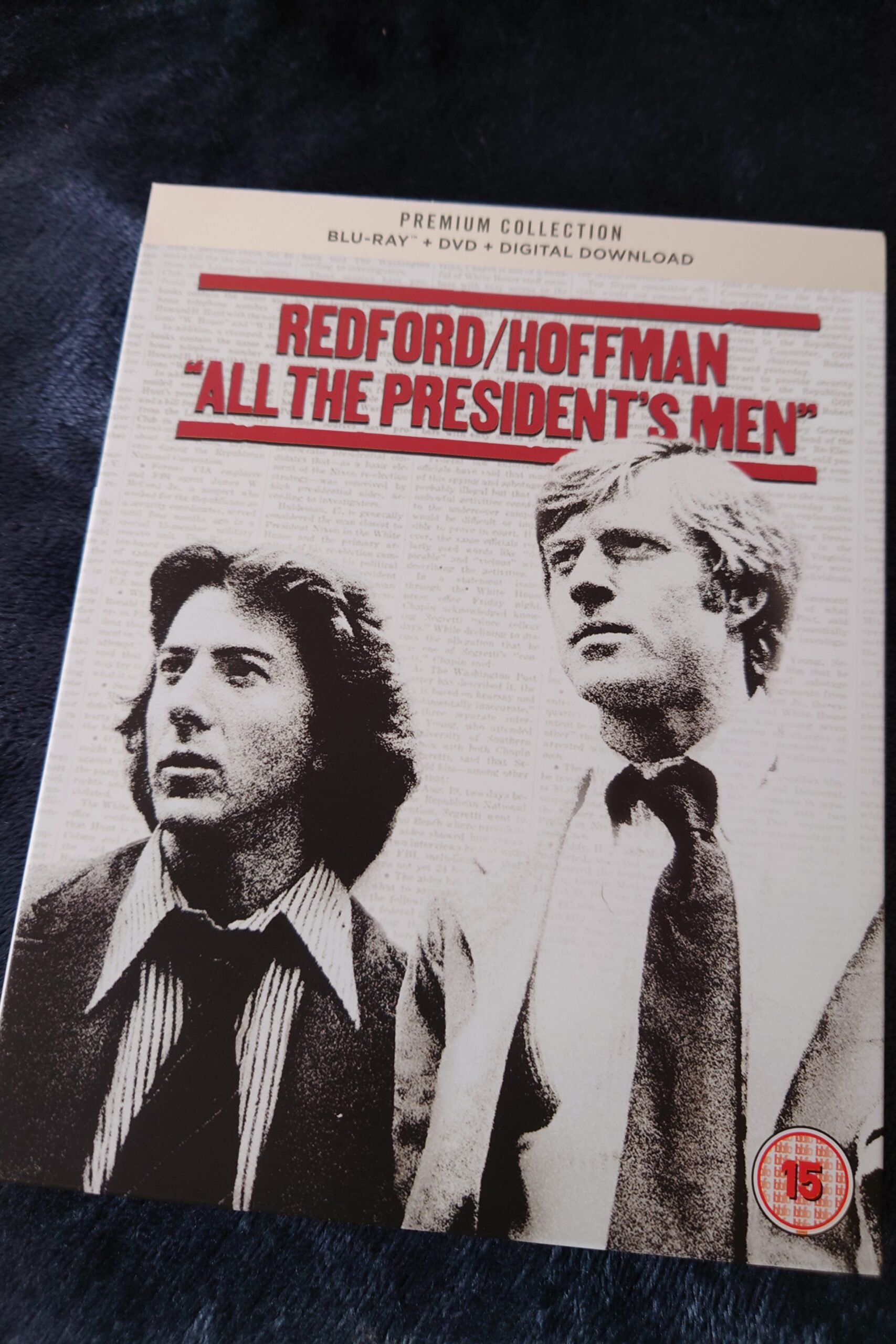
Really, that’s all I need to say. It doesn’t matter whether this 1976 classic was completely accurate or not, or whether the real Bob Woodward and Carl Bernstein were presented on the screen, this is the film that kept me going when I was working on the biggest story I’d ever done. When I was about to give up, certain that I was not up to the task, watching this spurred me on.
Screenwriter William Goldman did a masterful job in distilling the somewhat confusing book (all those names!) into a tight two hours. Sure, it didn’t tell the full story, it couldn’t.
Alan J. Pakula turned it into a thrilling drama that verged on film noir, albeit mostly brightly lit. Redford and Hoffman were superb in the lead roles, Jack Warden, Martin Balsam and the marvellous Jason Robards Jnr providing strong support, as did a host of bit players.
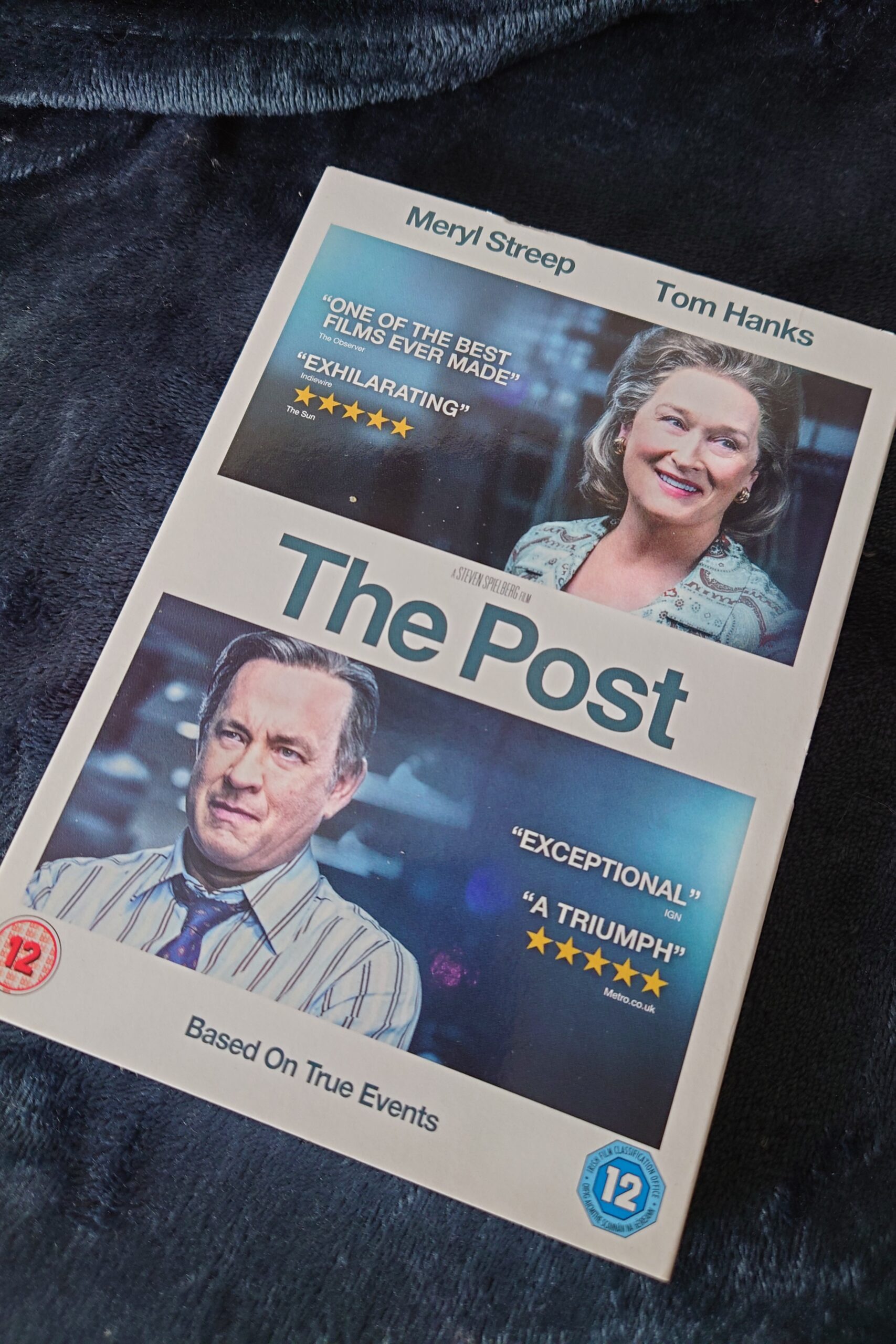
I watched it again recently, right after viewing THE POST (2017), the Steven Spielberg/Tom Hanks/Meryl Streep drama that acts very much as a companion piece, in that it concerns the Washington Post’s attempts to publish the Pentagon Papers, which revealed that the US Government had lied to the public about the extent of its involvement in Vietnam.
A government lying? Imagine that! Must be fiction.
Spielberg’s film doesn’t carry the chilly 70s vibe of President’s Men, but it’s still an engrossing drama, with a fine performance by Streep as the new owner of the paper battling sexism and her own doubts. Hanks is great as Ben Bradlee, the editor, but the shadow of Robards from President’s Men looms large over him.
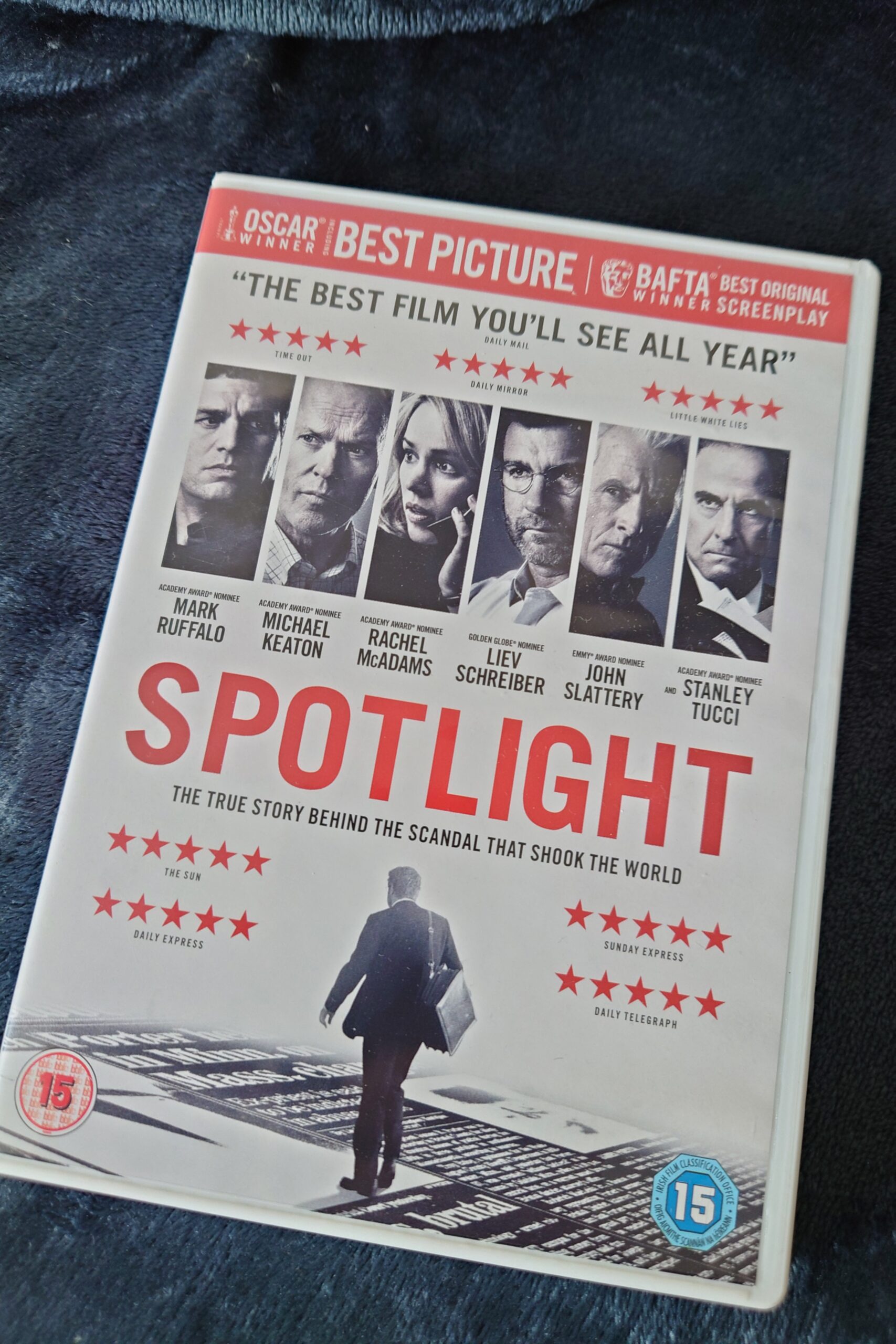
Another, relatively recent, entry in the canon of dedicated journos following the story, no matter what, is SPOTLIGHT (2015).
This true story detailed the work of a team of Boston Globe reporters to reveal the extent of a cover-up of sexual abuse in the city’s Roman Catholic Church.
Mark Ruffalo, always an actor who displayed a fine intelligence (even in super hero nonsense), leads the team, with Michael Keaton as the editor who backed them. It doesn’t turn the reporters into heroes, but showed them as real people, doing their job.
It’s a terrific film, if disturbing, and if you haven’t seen it then seek it out.
It wasn’t Keaton’s first time behind the newsprint. In THE PAPER (1994) he is a city editor battling deadlines and fellow editors as he and his team try to prove that the suspects in a double murder are innocent.
It mixes comedy with drama and boasts a sterling cast that includes Glenn Close, Robert Duvall, Marisa Tomei, with Jason Robards Jnr popping up as the paper’s owner.
Reporters in a race against time to prove someone’s innocence is a common theme in the genre.
In CALL NORTHSIDE 777 (1948), James Stewart is the honourable hack working desperately to prove a man is innocent. Treated in a semi-documentary manner, the story was based on a real-life case.
Despite the title, TRUE CRIME (1999) was not based on real events but rather a book by Andrew Klavan. In it, Clint Eastwood battles his own demons to find out the truth about a man on death row who he believes didn’t commit the crime. Unlike Stewart’s character, Eastwood’s is a reporter on his last legs and this is his final chance to redeem himself.
Ben Hecht was a reporter turned playwright and screenwriter and along with fellow former hack Charles MacArthur, he wrote the Broadway hit THE FRONT PAGE, subsequently filmed in 1931.
It was remade, with an adaptation by Hecht’s friend and sometime collaborator Charles Lederer, as HIS GIRL FRIDAY (1940). The characters talk fast, think fast, so fast that the dialogue and plot I believe would leave modern audiences dazed.
At its heart it’s another race to save an innocent man from the death chamber, but played very much for laughs. At times farcical but never dull, Cary Grant plays the cunning editor, Rosalind Russell the star reporter he wants to keep on the paper. She’s also his ex-wife and he doesn’t want her to marry dull Ralph Bellamy (Director Howard Hawks changed the gender from the original, a decision which adds something extra).
The story was remade in 1974, main character gender returned to its factory setting, by director Billy Wilder and starring Jack Lemmon and Walter Matthau. The storyline popped up again in 1988 as SWITCHING CHANNELS, disastrously ditching the newspaper setting for a TV studio with Burt Reynolds, Kathleen Turner (who apparently didn’t get along) and Christopher Reeve (who later regretted making it).
Are any of these films realistic?
I don’t know and I don’t care. The point is they show us what reporters should be doing, that no matter what they should be seeking out the facts, not rewriting press releases and coming up with clickbait headlines on stories that aren’t stories at all.
That’s the romance of journalism, not necessarily the truth, but certainly not reporting on posh frocks and rock stars.
It’s a cliche that reporters – and journalism whether print or broadcast – should speak truth to power. In an age when we can’t depend on institutions to bring to light abuses of authority, we should depend on the media to do it. They can still do it if they put their minds to it.
GOODNIGHT AND GOOD LUCK (2006) told how TV reporter Edward R. Murrow and his producer, Fred Friendly, fought pressure from the network to expose the lies and character of Red-baiting senator Joseph McCarthy in the 1950s.
David Strathairn brought quiet dignity to his portrayal of the legendary reporter, while George Clooney directed and appeared as Friendly. Robert Downey Jnr, Patricia Clarkson, Frank Langella and Jeff Daniels make telling appearances in lesser roles.
It’s a fine film, shot in black and white, and earlier this year transitioned to Broadway for a limited run, which makes sense as on film, set more or less in the TV studio and its hallways, it has the feel of a stage play.
In THE INSIDER (1999) it’s Al Pacino’s turn to be the dedicated journalist, on TV again, fighting big tobacco corporate power and his own network to reveal the claims of whistleblower Jeffrey Wigand, a marvellous Russell Crowe.
Directed by Michael Mann, the film is based on a true story but like most of the other fact-based films, has been fictionalised. The makers are giving us drama – entertainment, if you will – and facts will be manipulated, even ignored, to bring a truth. Yes, that’s a dangerous route, but as long as the spirit of the piece remains intact, the basic truth, then that’s fine as far as I’m concerned. We know we’re watching drama.
These are not documentaries. Nor are they reality TV – an oxymoron if ever I’ve heard one. As soon as the cameras start to roll, as soon as TV producers rely on so-called reality to stretch to a series, then there will be manipulation. Believe nothing.
So while the reporters in these stories are the way we would wish them to be, remember these are still movies. If you wish to know more about the stories they present, if based on fact, then my advice is go to the source materials, look into the facts behind the drama. Think more, delve more, learn more.
Like on-line sources, not all reporters on film are savoury, though.
In ACE IN THE HOLE (1951), also known as ‘The Big Carnival’, Kirk Douglas did what he did best – playing a complex anti-hero. His reporter milks a story about a man trapped in a cave in order to save his flagging career. That he is a good journalist is clear, that he’s lost his way is also clear.
Many years before he remade ‘The Front Page’, Director Billy Wilder brought his customary cynical zing to the proceedings, his first as co-writer, producer and director, but it failed to hit at the box office, which disappointed him. Of course, it’s now seen as a classic, and rightly so.
I can’t hope to cover every film involving reporters I’ve seen over the years. These are just a few, basically the ones that instantly spring to mind. Some are fact-based, some are completely fictional. They may present an idealised version of reporters, who are just human after all, with all the weaknesses and vices that brings.
And if they don’t present the world as it is, then it presents it as it should be.
If it’s not the way it is, then that’s down to us as well as the commercial and political movers and shakers behind the headlines. The way we consume media. The stories we click on. The newspapers we buy, the channels we watch, the social media accounts we give credence to. The people we vote into power.
Think carefully before committing to any of them.
If only life were as simple as the movies.