

I do a lot of reading, all writers do – or at least should. Reading all kinds of genres is the best learning resource I know. If you want to write, and you enjoy a writer’s work or even just a particular book, then study their work. Read once for pleasure and then again to learn. How do they construct their stories? How do they build character, setting, plot?
How the hell do they do it?
I’m often asked to read other people’s work to give me views. I’m always honoured, nay flattered, that people think I might have something worth saying. God knows my work isn’t perfect!
I also read a great deal of research material.
Both these things mean that my time to read for my own pleasure is limited – and yet I keep buying books. (I also buy lots of DVDs, Blu-Rays and CDs, but that’s a whole other sickness. Doctor, I don’t know what it is, but I got the fever).
Anyway, enough of the preamble. Recently I’ve been able to make a little inroad into the old TBR pile.
NOTE: These are not books I was asked to read in order to provide a quote. These are books I bought with my own folding green because I wanted to read them.

The Second Murderer by Denise Mina (Vintage) – I learned that Denise had been commissioned to write a new Philip Marlowe novel while I interviewed her at the Cove and Kilcreggan Book Festival in 2022. I had visions of Denise sitting in her office, the legend Denise Mina, Author, etched on the frosted glass doorway casting a shadow on the wall. A blonde publisher knocked on the door, told her she had a job for her. In my mind Denise fired up a Lucky Strike (I’m sure she doesn’t smoke – but hey, it’s my fantasy), sat back in her chair and asked what kind of job. A tough one, the publisher replied, but she could handle it. Write us a new Raymond Chandler, make it as near pitch perfect to his style as you can. Don’t modernise it too much. Don’t monkey with the character. Stay true to the setting. A deal was made over a bottle of rye and the blonde left, leaving behind the memory of perfume and money and all that goes with it.
I’m pleased to say that Denise really cracked this case. I believe this is as close as you can get to Chandler’s Marlowe without actually transporting yourself back to 1940s LA and drinking too much.
The plot is complex, as you would expect (even Chandler didn’t quite understand some of The Big Sleep). The setting is nicely realised. The dialogue sparkles. I loved it.
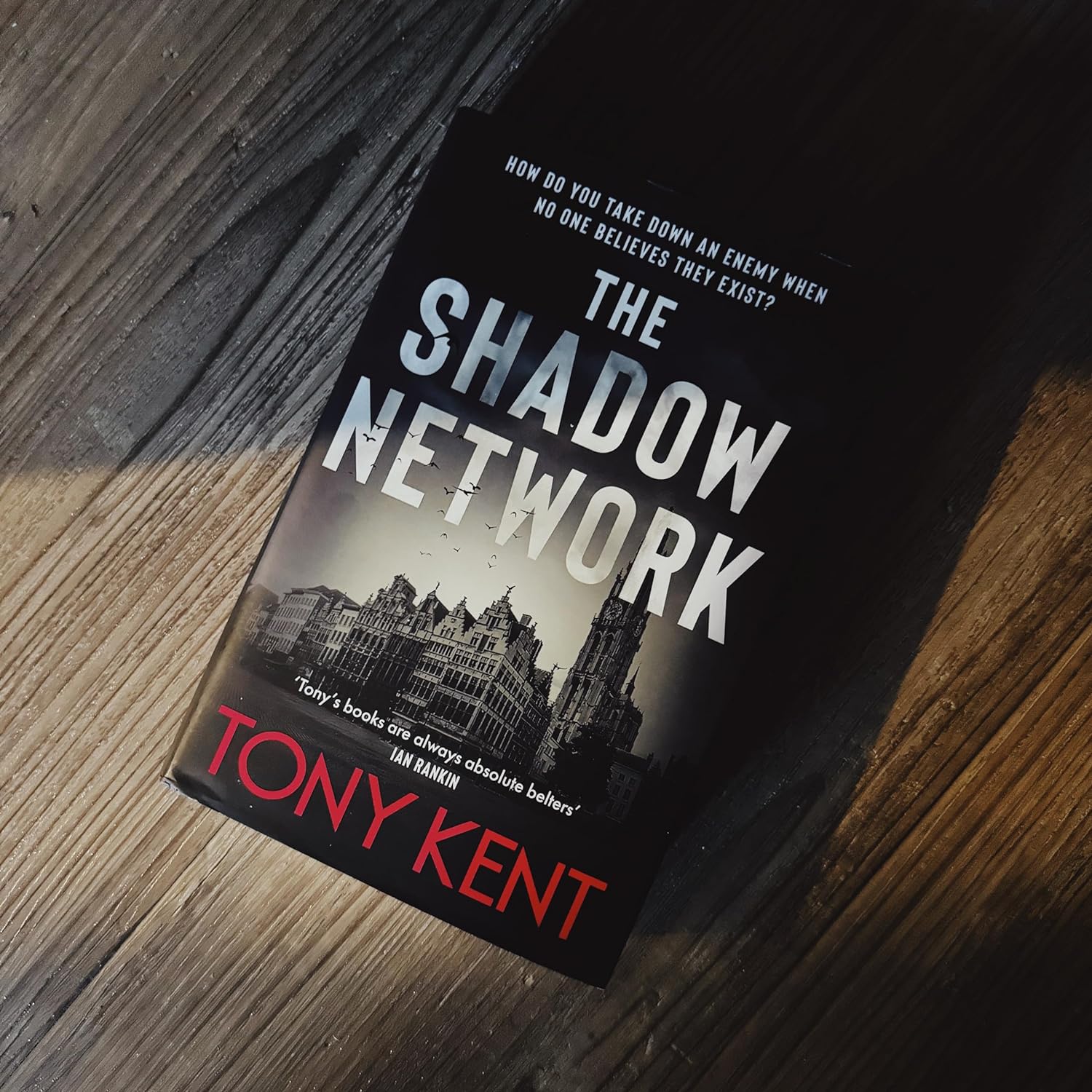
The Shadow Network by Tony Kent (Elliott & Thompson) – I love a good thriller, and if you can add a hefty dose of action and dash of paranoia into the mix then I am totally besotted. This fast-moving tale of international crime, skulduggery and general mayhem fits the bill nicely.
Tony keeps the action moving at a pace that would have a rollercoaster slamming on the brakes. I mean, this really moves, jumping from London to the Netherlands to the USA by way of a body count that would have an undertaker taking on new staff.
As usual, it has been compared to Jack Reacher but I think that’s unfair. I don’t go for comparisons anyway, as I think it’s unfair to the authors involved.
In two-fisted lawyer Michael Devlin and tough Agent Joe Dempsey, Tony has a double-act comparable to Bodie and Doyle (damn, I just did a comparison!). The author himself is a lawyer and a former boxer, so I do wonder how much Devlin is a projection of himself. If he is, I’m not planning to get on his wrong side next time I see him.
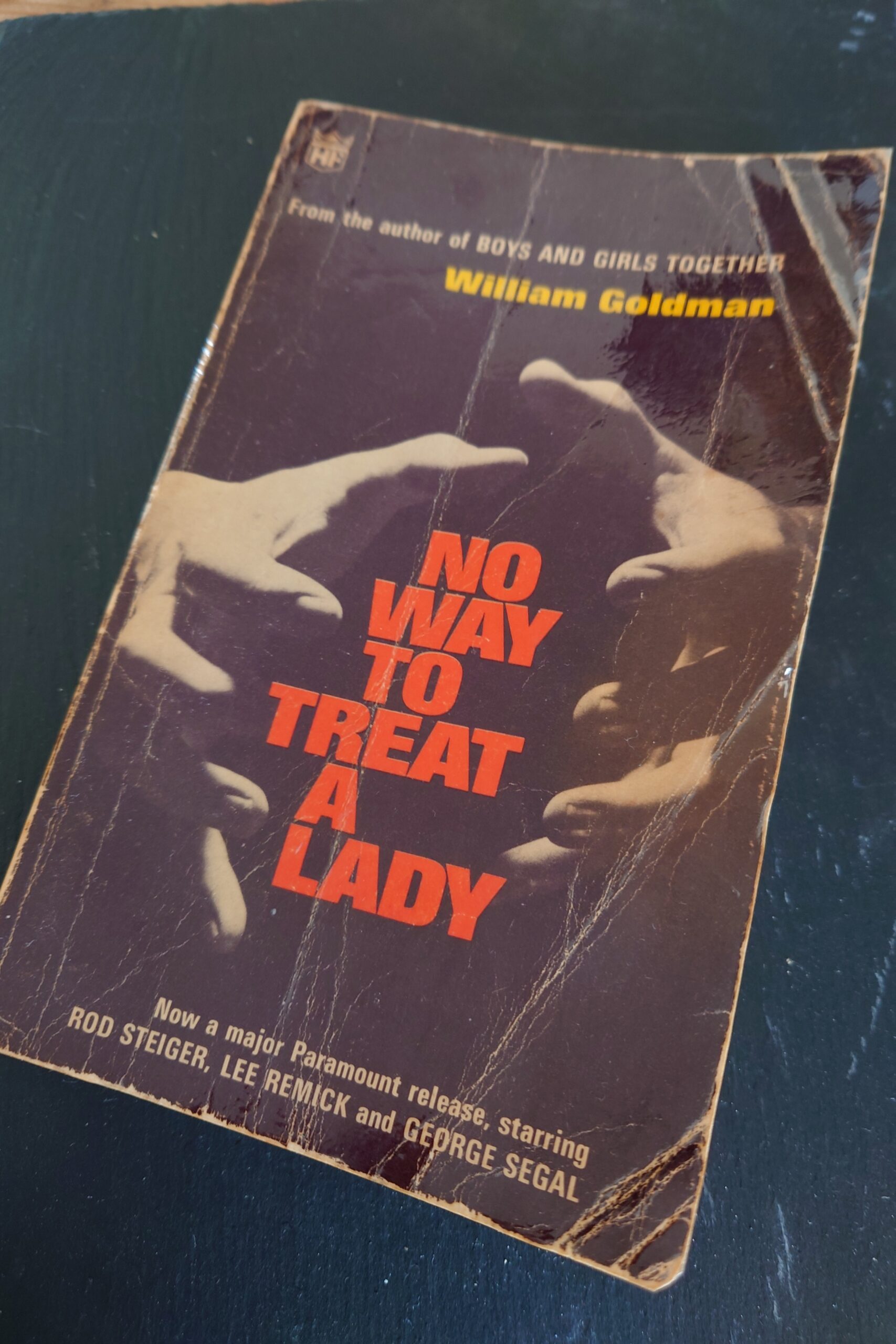
No Way To Treat a Lady by William Goldman (Coronet) – This read was from the vintage shelf. I’m a huge fan of William Goldman, both his published works and his screenplays, and have been gathering up titles missing my own collection.
This thriller was published in 1964, under the pseudonym Harry Longbaugh – the real name of the Sundance Kid (Goldman wrote the screenplay for Butch Cassidy and the Sundance Kid).
The book was filmed in 1968 with Rod Steiger giving a bravura performance as the serial killer who adopts a variety of disguises in order to trick his victims. George Segal was the weary cop on his trail, falling for Lee Remick but harried by his over-bearing mother, played by Eileen Heckart.
The film is played very much as a thriller with laughs (Goldman didn’t adapt it himself, it was John Gay) and those elements are here within these pages. But there is also a darkness, an edge, that is missing from the film.
Stylistically, the writing is all over the place, and in some places so off-beat that I suspect no publisher today would touch it (You can’t have chapters in italics, with no capital letters, all dialogue but no quotation marks. You can’t have chapters which is just a telephone conversation between two characters and nothing else. You can’t have an ending that is…well…just plain weird), but in the hands of a storyteller like Goldman it all comes together. It is dialogue heavy, with the writer already showing the skills he would employ in his screenwriting. It is also disturbing. And strange. And kind of wonderful.
