
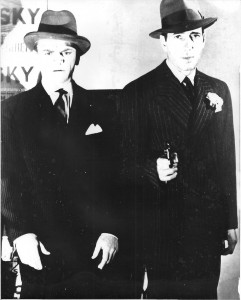
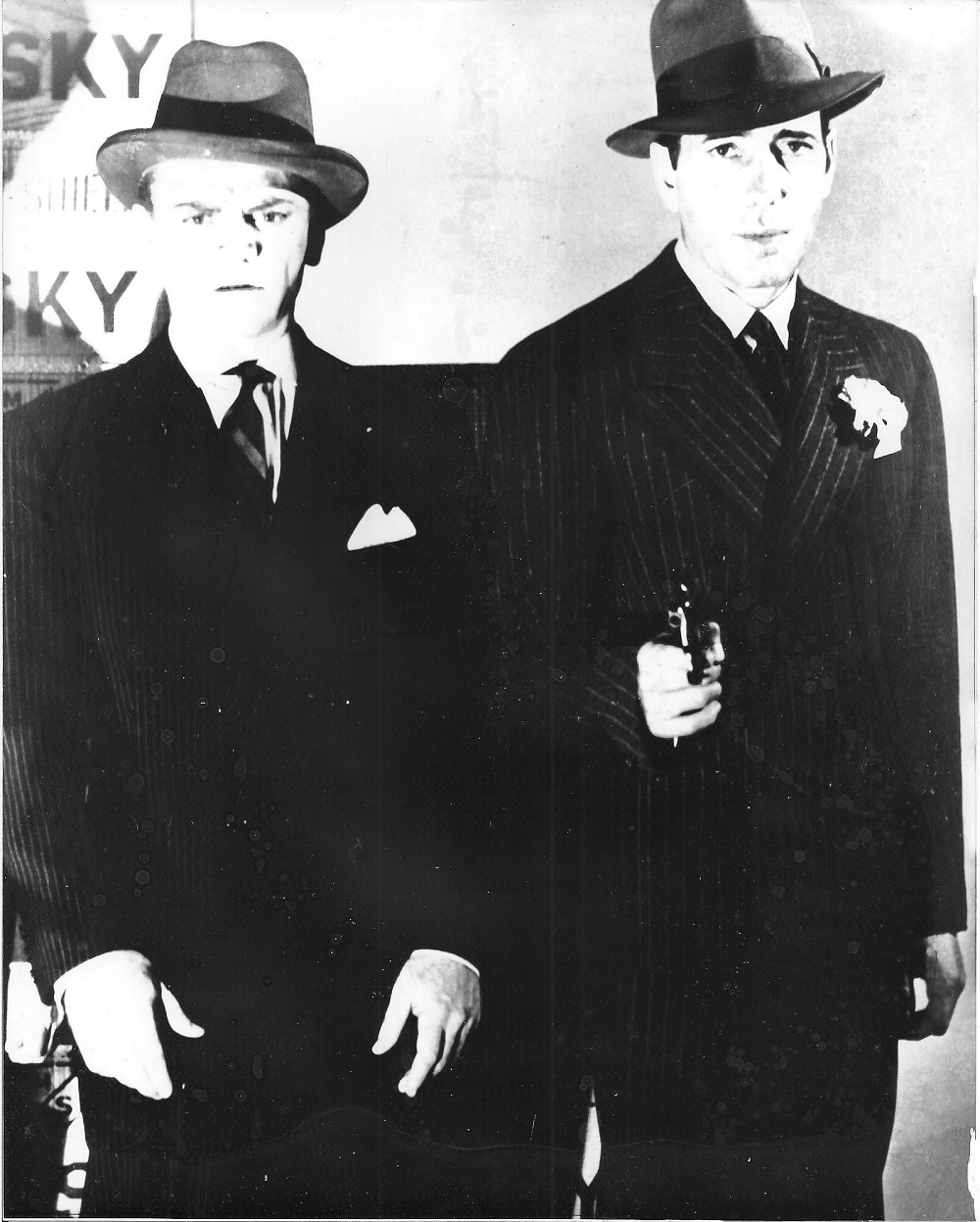
Back when terrestrial TV channels used to show old movies, rather than a seemingly endless succession of so-called reality tv masquerading as documentaries or game shows, I was introduced to classic gangster movies.
I’m talking the Warner Brothers flicks here. Not for nothing Louis B. Mayer used to call the brothers ‘those gangsters in the valley’ for if they were to be remembered for only one genre, it would be the gangster flick.
Its heyday were the 1930s. By the time the war came the genre was more or less dead, with film noir taking its place. It was still crime, certainly, but different in tone from the gangster movie.
There were between 250 and 300 hoodlum pictures churned out by various studios in the decade, but only a handful survive in public consciousness. Probably for good reason.
Newspaperman Ben Hecht once wrote a piece about the scripts he wrote. I read this many years ago and, on some level, it must’ve echoed in my head when I began to write my own books. He said he wanted to ‘skip the heroes and heroines, to write a movie containing only villains and bawds.’
These movies were different from the rest of Tinsel Town’s output of the era. The ‘hero’ wore a black hat and was generally a bad guy. There might’ve been a good heart beating there but he was most certainly not a good man.
Anyone who has read the Davie McCall books will recognise someone in the above description.
I must’ve been a teenager when I first saw James Cagney shove that grapefruit into Mae Clarke’s face in ‘The Public Enemy’ (1931). It was an ad-libbed addition to the scene and I’ve wanted to do that to someone ever since. Someday, maybe…
Sure, when seen now the film is dated, many films of the period are. But not Cagney.
He wasn’t originally meant to play the lead in the film – that was supposed to be Edward Woods. Cagney was to be the anti-hero’s best pal. However, within days, director William Wellman realised he’d got the casting wrong and the roles were switched.
He went on to screen legendness (if that’s a word). Woods, sadly, to movie obscurity.
Cagney was, for me, the foremost gangster star of the thirties. Sure there was Paul Muni, who starred in the first ‘Scarface’ (1932) and Edward G Robinson as ‘Little Caesar’ (1930) – ‘Mother of Mercy, is this the end of Rico?’ Humphrey Bogart also made a snarling entry to the genre as Duke Mantee in ‘The Petrified Forest’ (1936).
But Cagney – ah, Cagney. 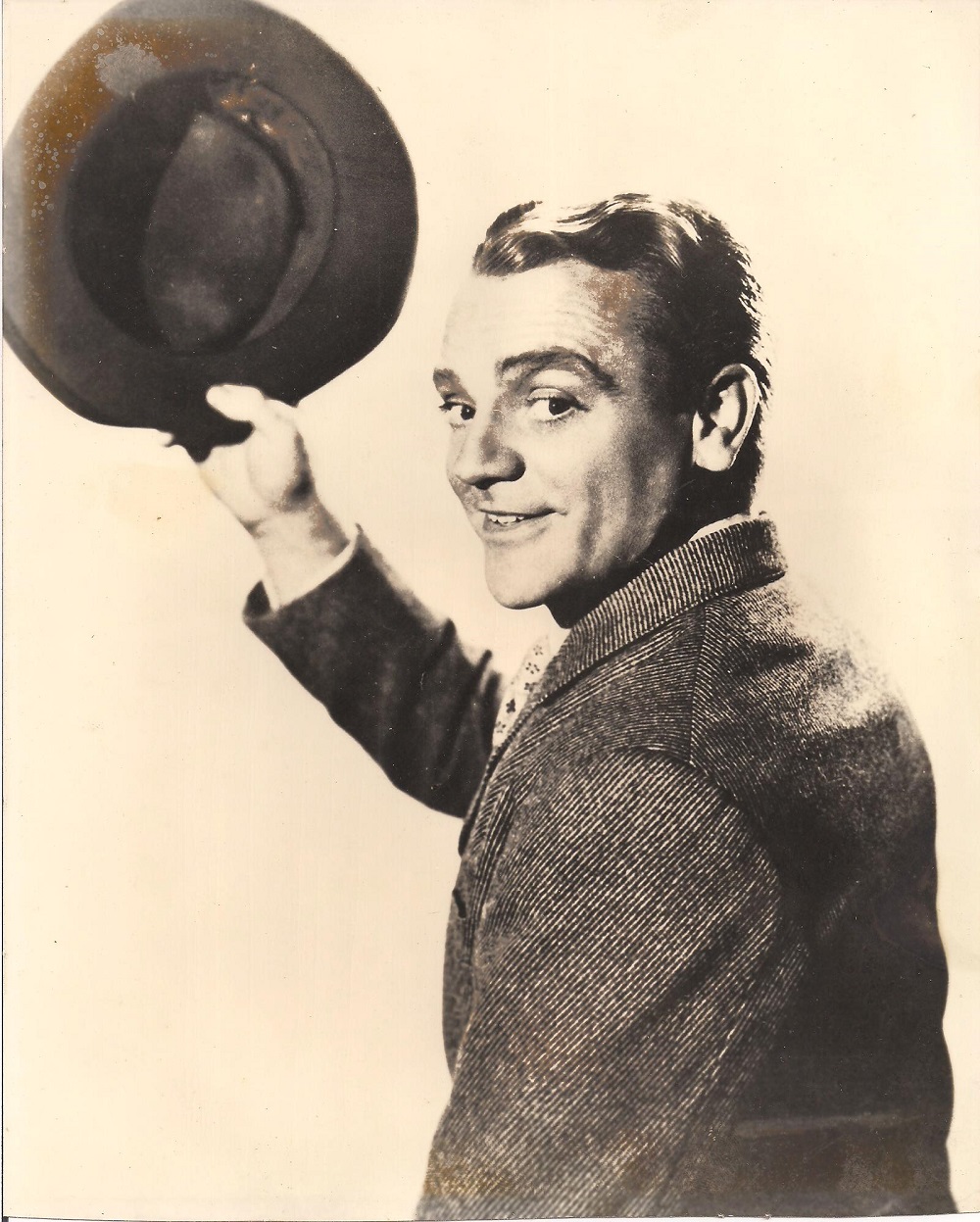
The Hays Office dictated that the central character had to be punished at the end, no matter how decent or noble they might’ve been throughout the film. So even though he’s just saved the girl he loves and her husband from the wrath of craven Humphrey Bogart, he dies on the snow-covered church steps in ‘The Roaring Twenties’ (1939) – ‘He used to be a big shot.’
‘Angels With Dirty Faces’ (1938) saw him going to electric chair, having once again gunned down nasty Bogart. Just before he’s taken away, his childhood pal, Father Connolly (Pat O’Brien), implores him to do something in his final moments to show the young street toughs he’s befriended that he’s not the big man they believe him to be. Rocky Sullivan (Cagney) at first refuses but as he taken to the chamber he becomes a snivelling coward. ‘And he was going to spit in my eye,’ says a tough guard.
It’s still, for me, an effective scene, all the better for being shown through the priest’s eyes with occasional cut aways to Rocky’s hands clutching a radiator or a shadow here and there. It’s all in the sound, in Cagney pleading for mercy (‘Don’t make me burn in hell’), and then the final, agonizing silence as the switch is thrown.
And there remains the question – did Rocky feign fear for his old pal? Or was he showing his true colours?
The film never really tells us. The final line has the priest taking the young would-be toughs to church, harking back to the film’s opening when the young Rocky is caught and the young Connolly got away, with the lines, ‘Let’s say a prayer for a boy who couldn’t run as fast as I could.’
It’s Hollywood schmaltz but it’s great Hollywood schmaltz.
Incidentally, the famous shoulder shrug and the greeting ‘Whaddaya hear, whaddaya say’ were lifted by Cagney from a pimp he used to see in New York when he was appearing on Broadway.
He contributed two other memorable entries in the hoodlum genre – Cody Jarret in ‘White Heat’ (1949) – ‘Made it, Ma, top of the world!’ – and as real-life gangster Marty Snyder in the biopic of singer Ruth Etting (Doris Day) ‘Love Me Or Leave Me’ (1955). In one he was a complete psychopath. In the other he was lovelorn, controlling – and a complete psychopath.
Cagney, of course, appeared in other great films – dramas, musicals, comedies, even a bit of Shakespeare – and he was superb in every one of them. I can’t help but wonder what he’d’ve made of ‘The Adventures of Robin Hood’ (1939) had the original casting notion gone ahead. It would’ve been different, that’s for damn sure.
His legacy is one of excellence no matter what, of standing up for yourself (his contract battles with the studio were titanic) and his down-to-earth approach to his work is to be applauded. He once advised a young Michael J. Fox that the secret to acting is learning your lines and not bumping into the furniture.
Word to live by.