
I took a trip down memory lane this weekend, which is funny because I’ve spent the past few days clearing out a lot of my past, but in this instance I added some memorabilia.
In the late 1980s – yes, let’s get it over with, I am that old – I was an aspiring writer. I was working for a local newspaper in the west end of Glasgow. My first book was a few years away yet.
A cable company had set up in the city, piping the likes of BskyB, TCM and HBO into people’s homes. It was the beginning of the telly revolution that now boasts more channels at which you can shake a remote.
Anyway, the home-based cable company had a public access channel which allowed you, for a nominal sum, to make your own programmes and, if they met certain (not terribly high) standards, they would screen. I decided I would become Cecil B deMille and write and produce my own drama.
I enlisted my friends Stan Leech and Graham Turnbull as cameraman and sound recorder respectively, adapted a one act play I had written for an amateur company but was never produced, found a director and gathered a cast of largely professional actors who wanted experience of being in front of a camera and, importantly, would work for free. Many of them have since gone on to success on stage and screen, including David Gallacher, Cal MacAninch, Sandra McNeeley and Ronnie McCann.
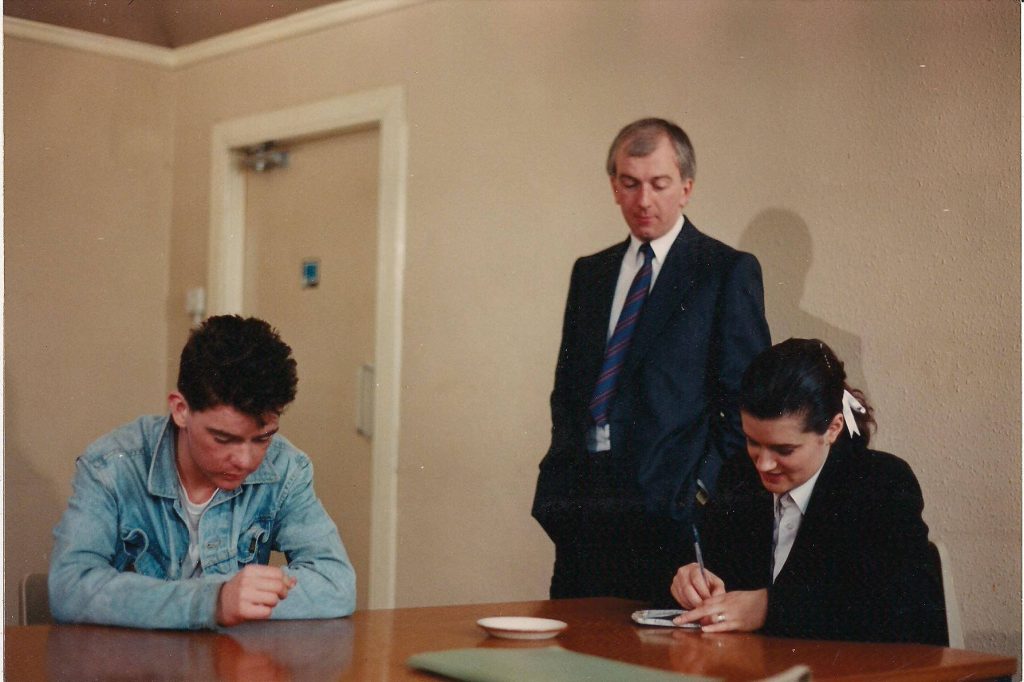
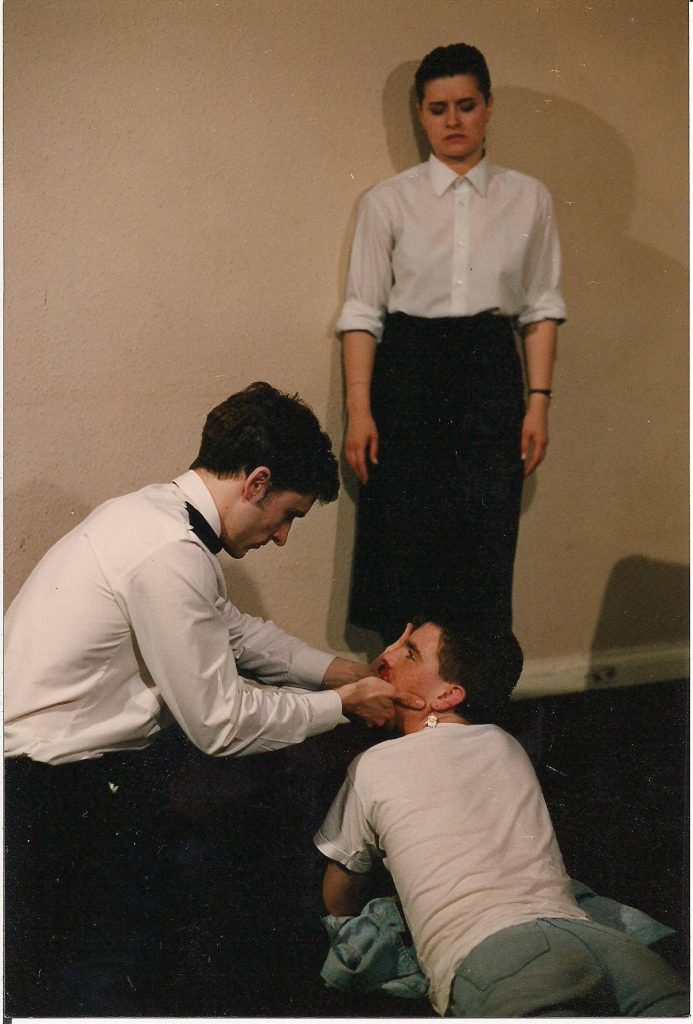
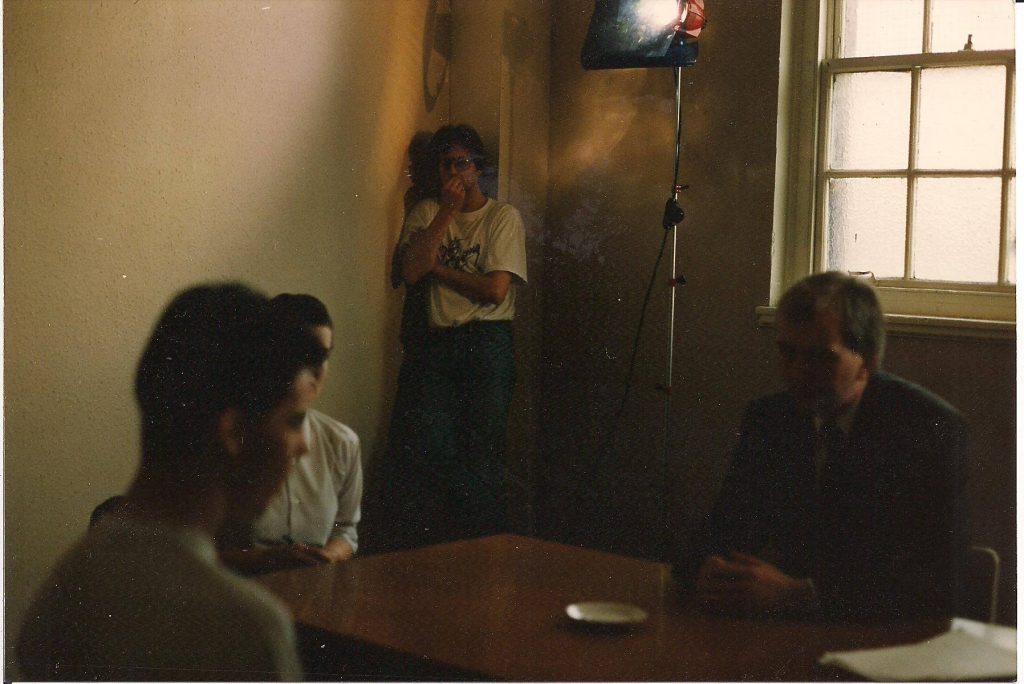
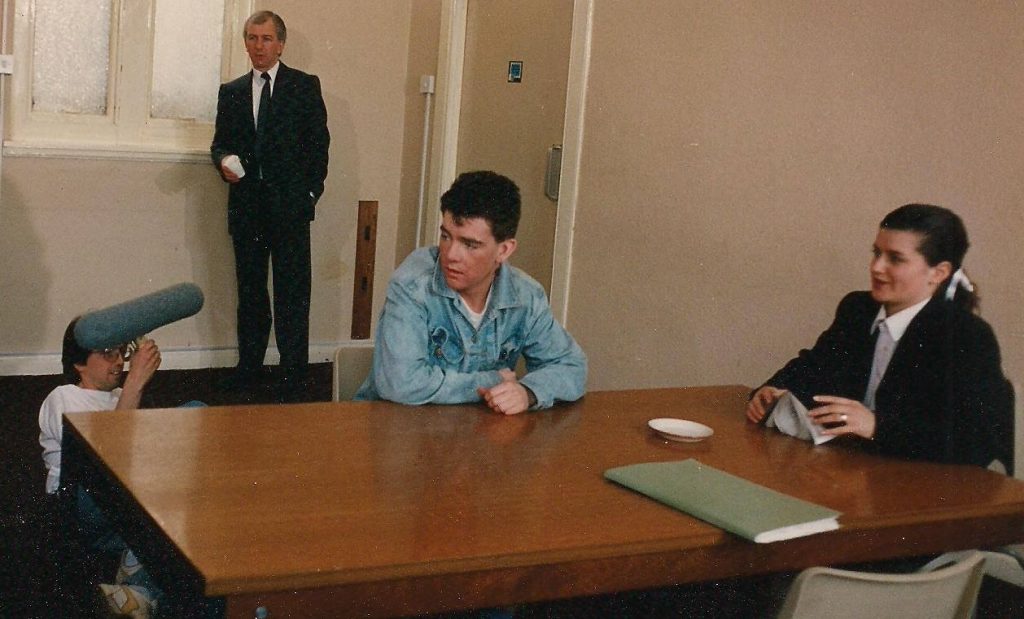
No one made any money out of this. In fact, I was considerably out of pocket. I paid for the training session, the insurance and provided the meals – sandwiches made up by my wife.
The result was ‘Extremes’, a half hour drama about an investigation into a racially motivated murder filmed in two rooms and a corridor at Maryhill Community Central Halls in Glasgow over three weekends and then edited over a longer period in the cable company’s headquarters.
It was screened soon after. Hardly anyone noticed.
One man did, though, and he didn’t like what he saw. He wrote a long letter complaining about the language, the violence and accusing me of being anti-Roman Catholic. Apparently, the surnames of two central characters were that of former Celtic FC players – and because one was a thug and the other a cop on the edge, it meant I was bigoted.
Two things – the drama was attacking bigotry. And I don’t like football so had no idea the names – Lennox and McCarthy – had any football connections.
Anyway, the complaint forced the cable company to take another look at the drama and they saw something in it that they thought would resonate with the Royal Television Society Scottish Centre’s awards for dramas designed to educate.
Long story short, we won the Best Dramatised Programme award. I didn’t know what the educational value was but there was no way I was going to question it.
It was the first and only time I ever stepped aboard the Carrick, the former clipper that was transformed into a restaurant and was moored for many years on the Broomielaw. I grabbed the honour as tightly as a cabinet minister does an excuse.
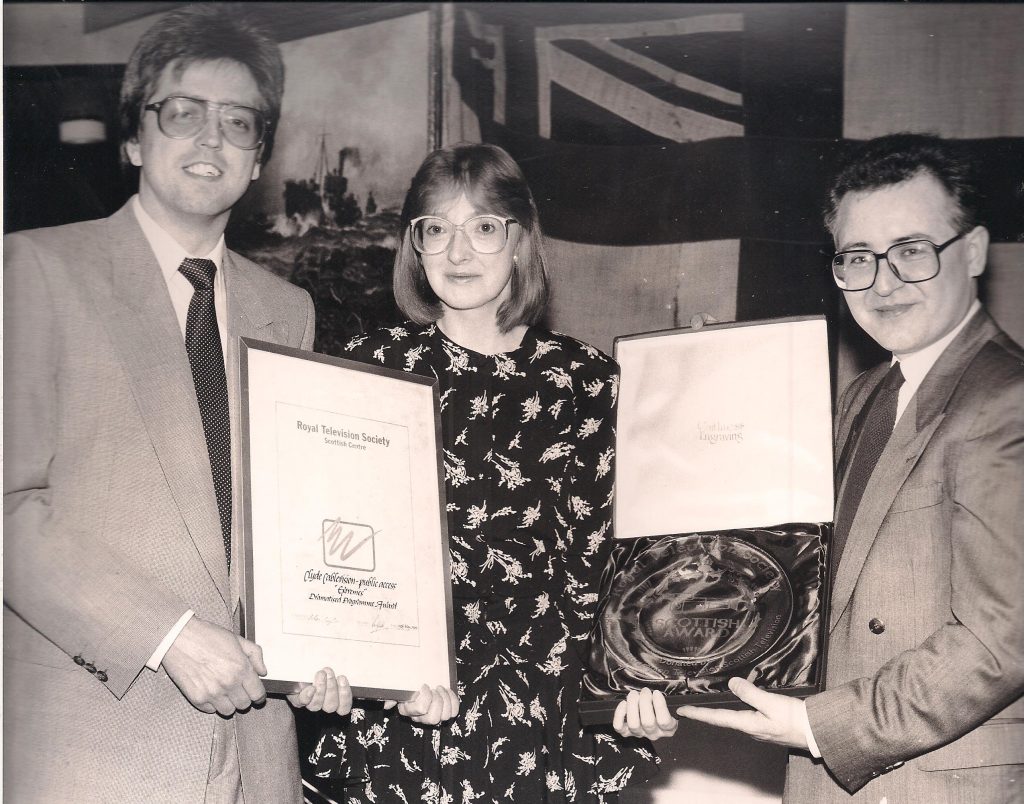
Naturally, after that, we decided to do another one. This one I decided to direct as well as write and produce (there had been, em, creative differences during the first shoot). There was nothing remotely educational in this story, which I adapted from a one act play I had originally seen produced during Pitlochry Festival Theatre’s Plays in Progress season.
Incidentally, it was also the basis for the Dominic Queste short story ‘Springtime for a Dead Man’. I am never slow to recycle an idea.
Now called ‘Killing Time’, I called again on the talents of David Gallacher, who had played the police inspector in the first video. David, thankfully, agreed.
Essentially a two-hander, with a flashback sequence involving a beautiful glamour model I knew (Steady!), we took the camera out of the ‘studio’ and filmed in city streets, the offices of the Glasgow Guardian in Otago Street (where I worked), my home and that of a friend and Queens Park. We had permission from Glasgow City’s Parks Department, but someone forgot to tell the local officials who screamed up in a van and demanding to know what the hell we thought we were doing. We were refused access to a train station – understandably – so we had to get creative over that bit.
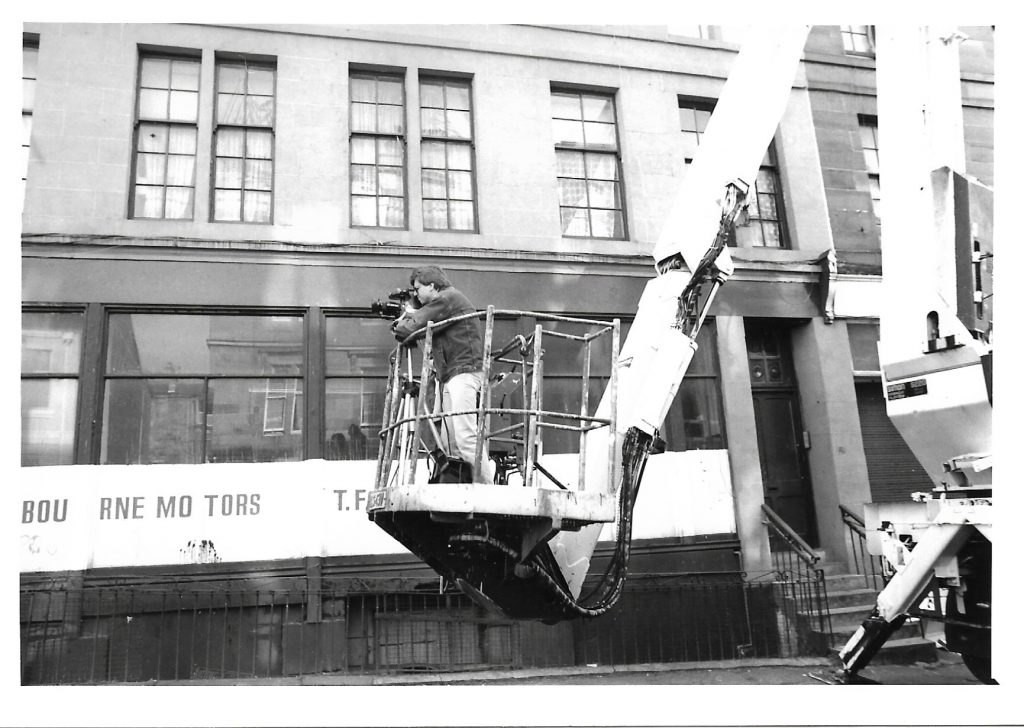
Stan and I hit on the notion of doing a crane shot for the opening and a local company agreed to provide the rig for a mention in the credits. We had expected a small piece of kit but this massive skyscraper pulled into Glasgow’s Otago Street on the morning of the shoot. It was scary being up in the platform but we did get an eye-popping opening shot.
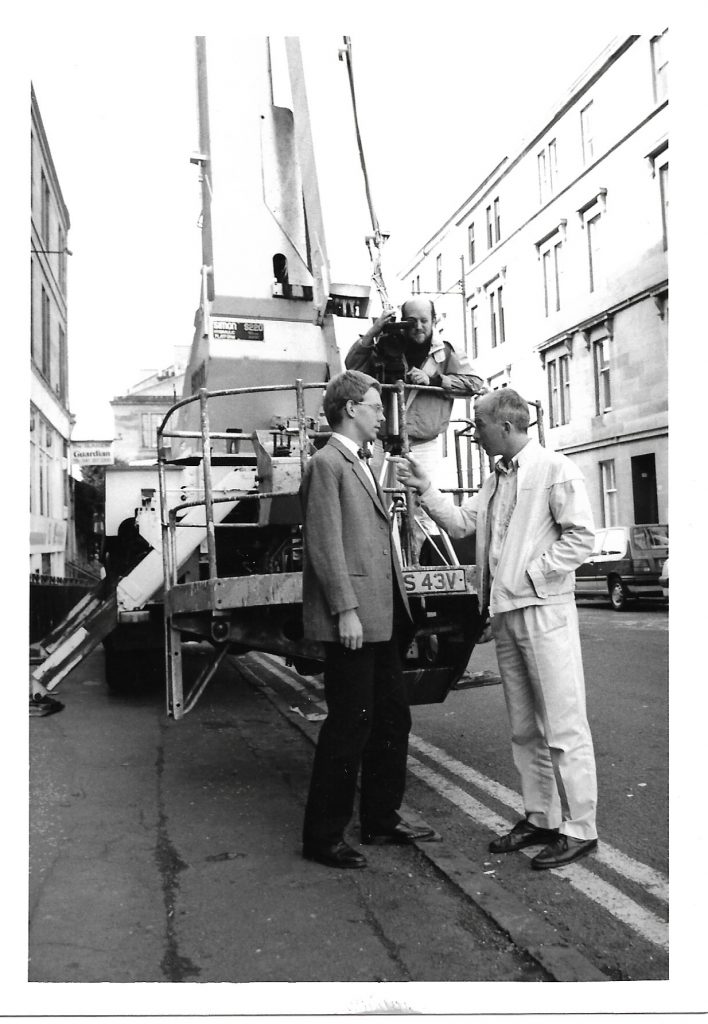
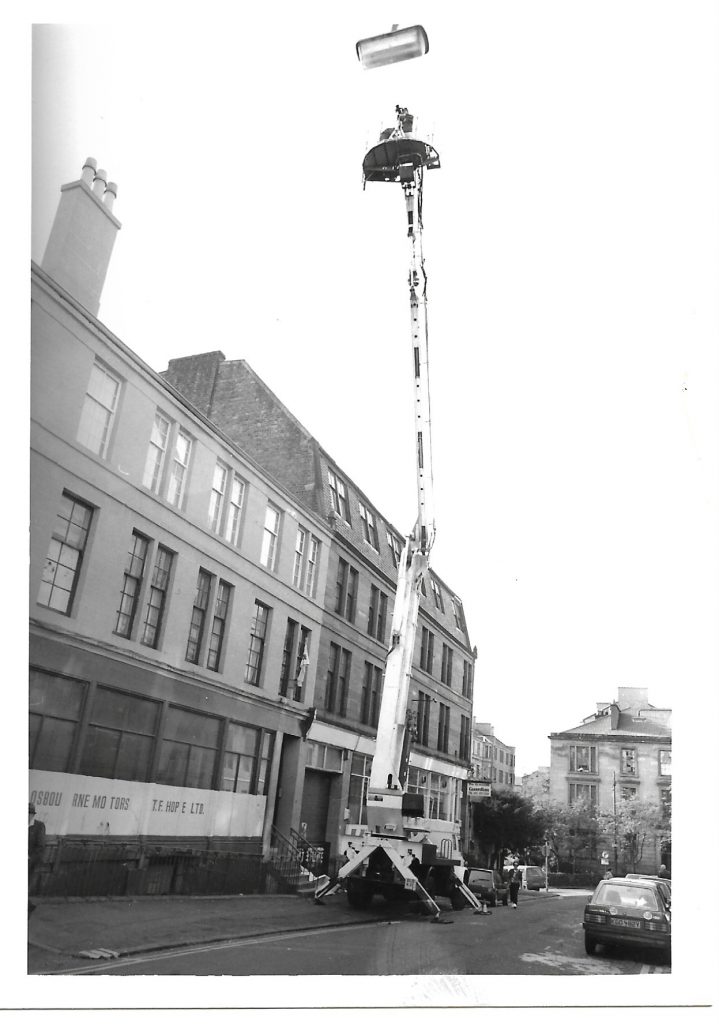
Anyway, for many years I did not have a copy, my video tapes being lost over time.
However, thanks to lockdown, cameraman Stan Leech was able to dub me off new copies to DVD. And that was what I watched the other night.
And my verdict?
Picture quality far from wonderful, this was a third or fourth generation copy from original video, but Stan’s camerawork was brilliant given the kit we had. The editing, for first timers, was pretty good, even though I saw things in the second one that I might do differently.
The scripts needed work, but the actors rose above the material. They were superb given what they had to deal with.
It was good to watch them again. It brought back happy memories of a time when optimism hadn’t given way to disappointment. I often feel like an outsider, even in the newspaper world where I have spent the bulk of my working life, but while shooting these I actually felt I belonged.
As Randy Newman once wrote, it feels like home to me.
And I’m not sure I will ever feel like that again.
